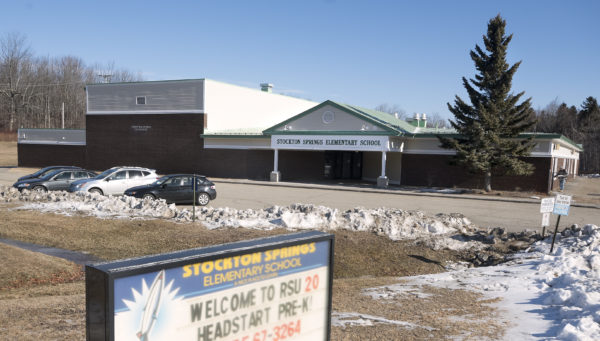
Maine towns will vote whether to accept gift of mold-ridden elementary school — Bangor Daily News

After Stockton Springs Elementary School closed for good in June 2017, the pre-kindergarten pupils who were the last to use it packed their bookbags and left its classrooms and hallways behind.

The school closed and was quiet for perhaps the first time since it was built in 1975. But as it turned out, it wasn’t completely empty. Mold lived there, blooming undisturbed for more than a year on carpets, furniture, doors, bookshelves and more.

And by August 2018, when a Regional School Unit 20 official came to the school after a power outage and noticed the air quality was bad, the mold had become a significant problem requiring professional, and expensive, remediation. An assessment done in the fall recommended the school essentially be gutted, then intensively cleaned, to manage the mold.

When district officials opened bids to do the remediation work April 9, the lowest came in at $145,850. That same day, RSU 20 school board directors voted to offer the mold-ridden school to the towns of Stockton Springs and Searsport — the communities that make up the school district — for free.

Next month, voters in those communities will decide if they want to accept this gift or tell the school district thanks, but no thanks.

“The school does have a serious mold problem,” Stockton Springs Town Manager Courtney O’Donnell said. “That’s really one of the bigger issues. If the town says ‘Yes, we vote to accept,’ there will be a thorough process to figure out what to do with the property. Everything from fix the building to demolish the building and retain the land.”

Last week, more than 50 people attended a public hearing in Stockton Springs to talk about what to do with the school. Searsport will hold its own public hearing on the matter at 6 p.m. Friday at the town office. Both O’Donnell and Searsport Town Manager James Gillway said they hope lots of voters turn out to the polls Tuesday, June 11, to cast their ballots deciding the school’s fate.

“I’m really happy it’s not a town manager decision. I think the selectmen are happy it’s not a selectmen decision,” Gillway said. “Decisions like that are always better to leave to the people.”

It will be the second time in two years that voters in Stockton Springs and Searsport have been asked to decide what will become of the school. In April 2017, voters decided overwhelmingly to close it, after several towns left the school district and created enough room in the newer Searsport Elementary School for all the students to fit in one building.

At the time, district officials indicated that the move could save the towns $70,000 per year and bring in additional revenue if the building is sold or leased. But it seems now that the school is more of a liability to the district than a possible source of income.

Tony Bagley, a longtime RSU 20 school board member from Searsport, said the mold was not a problem when children were attending the school. Now that it is, he said fixing it doesn’t make financial sense to the district, which has a few choices: to offer it to any community within the school district, to put it up for sale or to demolish the building and retain ownership of the land.

“The reality of what a school building is actually worth to somebody — that’s what really made it unviable for the RSU to start remediating,” Bagley said. “You’re probably not going to get out of it what you put into it. … The district is not interested in spending the money to remediate the building. It’s up to the townfolks.”

If voters in the towns decide to accept the school, it doesn’t obligate them to do anything in particular with it. In her presentation at the public hearing, O’Donnell detailed the process and some of the options that the towns have. She said that the school is about 23,000 square feet and includes a gymnasium, kitchen and classrooms. It sits on a 9.5-acre parcel that includes a playground, a field and a small shed. The property is currently tax exempt, because it belongs to the school district, but the town assesses the building at $1.527 million, a valuation that will “drop dramatically” by more than $1 million, she said, because of the mold damage.

If both towns want the building and land, they will need to work together to agree on what to do with it. If just one town votes to accept it, that town will bear alone the future responsibility and cost of the school, she said.

If Stockton Springs voters want to accept it — an outcome that is recommended by the Stockton Springs Select Board — potential options include fixing the building, demolishing the building but retaining the land, demolishing part of the building or working with investors and developers to determine the future use of the school property.

“Ultimately it’s up to the town to decide what they want to do with it,” O’Donnell said, adding that the severity of the mold may narrow the options. “That building could have been used for a variety of other things, and it’s a shame that it went the way it did.”


 

source https://bangordailynews.com/2019/05/29/news/midcoast/maine-towns-will-vote-whether-to-accept-gift-of-mold-ridden-elementary-school/

Sen. Kaine says help is on the way for military families facing housing problems — WTKR News 3

Please enable Javascript to watch this video

HAMPTON ROADS, Va. — Help is on the way for military families experiencing problems with their housing, Sen. Tim Kaine told military families during a roundtable discussion in Norfolk on Wednesday.

Families have been complaining for years about issues like mold, water damage and more. Both Kaine and Senator Mark R. Warner introduced legislation to protect military families living in private housing.

«It makes me angry because when it hits the news you would think the companies would decide, ‘We’ve gotta be on our best behavior for a while.’ To me, it’s proof we need to make these reforms.»

Part of the Defense Authorization Act will increase the controls military families have in these situations, creating a tenants’ bill of rights. He also wants to see a database created where families can find a listing of issues people have reported about housing companies.

«They’ll have rights that tenant should have, including the ability hold monies if you’re not being treated right,» Kaine said.

Kaine says part of the problem is with the military. He says they’ve grown lax on making sure the housing is up to par, but says the bill will put more pressure on them. He says housing companies better be responsive. «We’re going to make sure that we’re bird dogging them now and they’re going to have to improve or their contracts are going to be canceled,» Kaine said.

News 3 has been reporting on issues at Lincoln Military Homes for nearly a decade. In 2011, dozens of families came forward to detail how their homes were filled with mold.

During his swing through Hampton Roads, Kaine also toured the Thomas Jefferson National Accelerator Facility.

The facility is a Department of Energy nuclear physics national laboratory that provides world-class research and programs designed to help educate the next generation in science and technology.

Download the News 3 App for updates on this story.

source https://wtkr.com/2019/05/29/sen-kaine-to-tour-hampton-roads-government-facility-meet-with-military-families/

Mahoning Valley residents assess storm damage — Youngstown Vindicator

Photo by Robert K. Yosay | Tom Timlin runs a water vacuum in the computer room at Canfield Middle School. Canfield schools were closed Wednesday because of damage caused by Tuesday night’s flooding. Schools were set to reopen today.

Staff report

YOUNGSTOWN

Mahoning Valley residents used a brief respite from stormy weather to bail out, patch up and clear away the mess left by Tuesday night’s flooding.

The Boardman and Canfield communities appeared to be hit the hardest.

Canfield Schools administrators said they intend to resume classes today after each of the district’s buildings took damage in Tuesday’s heavy storm.

Maintenance and custodial workers were at district schools late Tuesday and early Wednesday removing water and cleaning. Superintendent Alex Geordan said the district plans to contract with an outside cleaning company “to

really do a complete, thorough cleaning and disinfecting to make sure that we don’t have any problems down the road with mold and everything that comes with

water.”

He said flooding was most severe at the middle school. One room with several computers connected to power outlets that are close to the floor took on 3 to 4 inches of water, he said.

“We’re going to have to wait and make sure everything is dry before we start addressing that,” Geordan said. “We’re expecting we’re going to have some loss.”

There was still standing water around district schools Wednesday morning, but much had receded from the night before, when several fleet buses and vans were underwater, he said. A district mechanic examined one fleet van that was largely submerged but didn’t note any major problems, he said.

Don Hutchison, the Cardinal Joint Fire District chief, requested district fleet vehicles to ferry evacuees from rescue efforts along Indian Run Road, where responders used inflatable rafts Tuesday night to save people trapped by water in their basement-level apartments. They were taken to an American Red Cross shelter at Canfield Presbyterian Church.

“When you hear people are in distress, it doesn’t matter what it takes. You just go all hands on deck and collaborate very well with the city and township and their needs,” Geordan said.

Canfield High School’s media center also took on water, but its weight room was spared any major flooding damage, he said.

Insurance assessors will continue evaluating the district’s claims over the coming weeks, Geordan said.

“I just can’t say enough about our maintenance crew and custodial staff,” he said. “Many of those folks live in this community. They had homes that they left to come take care of our schools. … I commend them and thank them 100 percent.”

REMEDIATION

Dennis O’Hara, Mahoning County Emergency Management Agency director, said Tuesday’s storm “appears to be a little more severe” than the one in August 2018 that also caused major flooding.

He said the agency has begun compiling data from municipalities along the U.S. Route 224 corridor from Berlin to Poland, where the most damage was reported. What they learn in the coming days could be used to apply for state and federal grant assistance for remediation efforts.

To meet that criteria, the county must show at least 25 homes or businesses have sustained “major” damage or are considered “destroyed,” 40 percent of which must be uninsured. Relief could come in the form of low-interest Small Business Administration loans, he said.

O’Hara urged residents not only to contact their insurance providers but to also report storm damage to the Help Network of Northeast Ohio by calling 211, which can point officials toward the most-affected areas.

Damage assessment teams comprised of municipal and public works officials, first responders and volunteers surveyed Canfield city and township, and several others were expected to be touring Boardman until sundown Wednesday, O’Hara said.

“They’re going door-to-door, down streets,” he said. “Once we compile all this data … then we will send it to the Ohio EMA, and they will reassess all of it and see if we meet the criteria.

“We’ll try to get as much data as we can to see what level we need – state or federal disaster declaration.”

Keith Rogers, Canfield Township administrator, met with Hutchison and county EMA coordinators to survey and assess damage in the hardest-hit areas such as Summit and Abbey roads, Starrs Center and Pebble Beach drives and Tippecanoe Road.

“I had a river run down one of my streets,” he said.

Mike Dockry, Austintown Township administrator, said though standing water was reported along township roads, the municipality was spared any major damage and didn’t receive any reports of sanitary system backup.

“I call it the ‘dynamics of the storm.’ Sometimes, it hits different in one place than another,” he said.

“We’re out right now – because of the forecast – checking the major drainage courses and clearing any blockages that we see,” Dockry said.

Township workers received one call Tuesday about water entering a resident’s home but found the pipe underneath the home was blocked. Water from Pembrook Road also couldn’t drain into a storm pipe along Raccoon Road because it was fully charged, he said.

“This goes back to ’92 and ’93 when we had those first two storms that led to the changes in the county code as far as new buildings,” Dockry said. “That also led us to do some major construction with detention ponds that have really made a big difference in areas.

“I can’t go over [how many] areas we would have had probably a large amount of flooding without those detention ponds that we put in in the nineties and since then.”

Boardman’s mess

Tuesday’s storm flooded multiple parts of Boardman and left the area with road rubble, yard debris and many wet basements.

The township rescued multiple people stranded in cars on South Avenue and Route 224.

Township cleanup crews were out Wednesday clearing debris from roadways.

One spot hit particularly badly was the intersection of Pheasant and Huntington drives.

There, the water got under the road and lifted the pavement, said Dave Fait, road department operator. Chunks of pavement littered the sides of the road and front lawns along the street.

Fait estimated there are about 30 other spots in the township where the water washed away the road.

Nearby, Indian Run rose above the culverts on Huntington.

But Kathryn Mondora, who lives on Huntington, said her home was spared. There is a 20-foot drop from her home to the stream.

She added she hasn’t seen a storm of this magnitude in 20 years.

“If you could’ve been out here last night, you couldn’t hear yourself talk, the water was rushing so loudly,” Mondora said, as she raked debris from her yard Wednesday morning.

Barry Morgan was cleaning debris from his daughter’s yard on Squirrel Hill Drive. The flood waters rose to The Vindicator paper box on their mailbox, he said.

“They had a couple inches of water in the basement. It did come up through the basement drains, but I don’t think it was sewage. I think it was just storm water,” Morgan said.

Township Administrator Jason Loree said the township is seeking state support for storm-water damage. Specifically, Loree and the road department are collecting accounts of storm water infiltrating homes.

“That’s the type of data we need,” Loree said. Flooding in streets or yards that has receded and did not impact property is less crucial, he added.

The sewage plant in Boardman experienced a flow five times the volume of its typical flow, said Bill Coleman, office manager at the Mahoning County Sanitary Engineer’s Office.

Although sewage plants are designed to treat wastewater, during a rain event, storm water infiltrates the wastewater system through sewer manholes and downspouts and footers improperly connected to the waste-treatment system.

“We don’t want to treat clear water,” Coleman said. “It doesn’t need to be treated in a wastewater process.”

Consequently, excess storm water in the wastewater system upsets the balance of the treatment plant and drives up the cost of treatment, Coleman said.

Trumbull County

Though Trumbull County escaped most of the flooding and other damage brought by Tuesday’s severe weather, there were some scary moments for a couple trapped in their vehicle on state Route 46 in Weatherfield Township.

At 4:21 p.m., the Trumbull County 911 Center received calls about a power line that came down, possibly because of a lightning strike involving a tree just north of the Weathersfield Fire Station.

Because of the debris, Route 46 was closed from Salt Springs Road south to the county line.

About 4:30 p.m., the 911 center learned that a high-tension power line was under a car containing two people, Jasmin Simmons and her boyfriend, Jerome Stewart, both of Youngstown, trapping them in the vehicle.

Ohio Edison was asked to respond to the scene, but OE said it might be a while because of other storm-related calls.

Simmons told The Vindicator she and Simmons were traveling north on Route 46 toward Niles when they heard a “loud boom.” Then they saw cars turning around in driveways to head the other way.

After Simmons and Stewart also had pulled into a driveway, they heard a police officer yell “Stop.” The officer said, “There’s a high-tension wire under the car. Do not move. Turn the car off. Don’t even move the key a little bit.” Simmons said they didn’t know they had driven over a power line. It was scary for a little while, she said.

Simmons told officials Stewart has breathing issues but was doing OK and didn’t need an ambulance.

OE arrived about 7:15 p.m., cut the power line, allowing the car to be moved. The road then also reopened to vehicle traffic, according to the Trumbull 911 Center.

Simmons said the damage that caused the problem with the power line apparently came from part of a tree and part of a telephone pole that came down.

Coming next

Eric Wilhelm, chief meteorologist for 21 WFMJ-TV, The Vindicator’s broadcast partner, said between 4 and 41⁄2 inches of rain accumulated after the Tuesday storms in Mahoning County.

Moving forward, he expects showers today with a chance of a thunderstorm or two.

On Friday, however, there will be sunshine and dry weather, he said.

source https://www.vindy.com/news/2019/may/29/mahoning-valley-residents-assess-storm-damage/

11 Hidden Dangers Lurking in Your Home — Newsmax

Our homes are meant to be safe places that provide comfort away from the world but if not taken care of, they can also pose a number of health risks. Most of us are aware of the glaringly obvious hazards that lurk beneath our roofs but there are also a number of hidden dangers in our homes that we should not ignore. From devices that trip electrical circuits to creosote build-up, the Reader’s Digest set out to uncover these lurking hazards. We take a look at 11 of those hidden dangers in our homes:

1. Puddles. Random puddles on the floor could be related to mold buildup and poor ventilation, which could exacerbate asthma and allergies. Yoel Pioraut, managing partner at MyHome Design + Remodeling suggested examining pipes for moisture or excessive condensation. «If everything checks out, but you have a lack of ventilation, it’s time to call in a contractor to add an exhaust fan,» he said.

2. Lights that flicker. An overloaded electrical circuit can cause lights to flicker and dim, breakers to shut off and appliances to cause mild shocks when touched. If this is happening in your house it is time to call in a licensed, qualified electrician.

3. A smoke alarm that beeps. If your smoke alarm is beeping intermittently it might be a sign the battery is dying or the device is malfunctioning. If this is the case it is important to replace the battery and ensure your smoke alarms are working. «Roughly two-thirds of all home fire deaths occur when smoke alarms are not working,» noted Keith Pinkerton, owner of Mr. Electric of Huntsville, Alabama.

4. Improper grading. Grading issues can result in structural damage and deterioration of foundation walls so it is important to be aware of improper grading. Robert Boudreau, InterNACHI-Certified Home Inspector, explained the easiest way to spot grading issues is if there is water pooling alongside a home’s foundation. His solution? Adding soil to the exterior foundation below the siding.

5. Cracks. Structural deterioration can also be detected inside your home in the form of cracks and gaps in floors, window frames, and doors. Cracks over 1/8 to 1/4 inches need to be checked out by a qualified expert. «Uneven floors and doors that don’t shut right can be annoyances, but if that settlement continues, then the structure can become at risk,» said Patrick Knight, training, licensing, and inspection support manager of WIN Home Inspection.

6. Leaks in your roof. Homeowners should inspect their roofs at least twice a year, noting any bumps, discoloration, broken shingles, and gutters. Knight said the biggest issue you need to look out for is leaking. «Leaks lead to structural issues as well as moisture-related issues in the home,» he said.

7. Leaking ducts. It is important to check your boilers and furnaces on a regular basis for signs of deterioration. Look out for cracks, rusting, or leaking flue pipes, and a yellow or jumpy pilot flame. Carbon monoxide is your main concern here.

8. Termites. These critters can cause serious damage to the structural components that support your house. «Subterranean termites eat the wood and process it into food,» Knight explained. It is not always easy to spot an infestation until it is too late. Look out for sagging floors, hollow, or weak wood, or wood that is damaged.

9. Leaky pipes. Chances are that, by the time a leaking pipe behind a wall shows its telltale signs, the damage has already been caused. Knight explained water damage can cause structural issues as well as mold and moisture issues. «Once you have leaks that show up in walls or start causing floor damage, a pro should be called,» he said. Pay attention to signs like blistering wall paint, loose tiles, damaged wallpaper, and mold.

10. A gurgling toilet and sink drain. If your toilet, shower, or sink drains are making gurgling noises or overflowing it could be a sign that your sewer system is backed up. Raw sewage can be a serious health hazard, so it is important to call in a plumber.

source https://www.newsmax.com/thewire/homes-safety-dangers-health/2019/05/29/id/918026/

Gleneagle Sertoma Club donation boosts recovery of Crawford House for Pikes Peak region veterans — Colorado Springs Gazette

Thanks to the Gleneagle Sertoma Club, local military veterans will sleep easier, sooner.

During the March 13 bomb cyclone, record-setting winds severely damaged and even ripped off parts of the roof of the Crawford House, run by the Colorado Veterans Resource Coalition, in downtown Colorado Springs, depriving local vets of a place to live. Water seeped in and extensively damaged the interior of the building, making in unlivable.

On May 22, members of Gleneagle Sertoma presented a $6,000 donation to Crawford House representatives, providing a much-needed boost to the nonprofit’s recovery efforts.

“Our donation will be a small effort to alleviate a large need,” wrote Gleneagle Sertoma member and Tri-Lakes resident Joe Gray in an email to The Tribune.

Gray is a longtime supporter of Crawford House and helped organize fundraising efforts, including Spirits of Spring, a food-and-wine-tasting event held at the Antlers Hotel. Proceeds from Spirits of Springs sponsors and donations resulted in the $6,000 check given to Crawford House last week. Gray added that the donation will go towards replacing the roof, necessary electrical, heating and plumbing work, mold removal, and replacement of bedding, damaged partitions and other items in the house.

The Crawford House is named after William J. Crawford, a U.S. Army veteran and Medal of Honor who lived in Colorado Springs. The building was constructed in 1969 as a motel and the Colorado Veterans Resource Coalition (CVRC) purchased the building with donations. The rooms are like standard hotel rooms with beds, dressers, nightstands and shared bathrooms. CVRC operates Crawford House via a contract with the United States Department of Veterans Affairs; the VA provides Crawford House with $30,000 to $35,000 a month to operate the facility.

The Crawford House seeks to transition veterans battling substance abuse and homelessness into self-sufficiency and permanent housing. They boast an impressive 85 percent success rate, with some former residents now even serving in CVRC management roles.

Crawford House residents are referrals from the VA substance abuse and homeless programs, and many go through a 30-day substance abuse treatment program upon entry. Homeless residents work with licensed case managers who connect with other agencies to provide residents with clothing and toiletries, along with resume assistance and job opportunities. The homeless program runs for 90 days, though in some cases, it can be extended. CVRC does limit resident stays to a maximum of one year.

After the bomb cyclone, CVRC/Crawford House Program Director Jerome Ford immediately moved Crawford House residents and staff offices into two houses next door that are rental homes provided by CVRC for other veterans. Then, the displaced vets were moved into the Travelers Uptown Motel around the corner until they could progress into permanent housing. CVRC funded the motel stays with its savings, organizational funds, donations and income from the two rental homes. Crawford House can provide lodging for up to 20 occupants, though at the time of the storm, 15 residents were in place.

As CVRC had damage from the storm assessed, they realized, due to the building’s age, wiring and gas lines would need to be completely redone and ongoing water seepage was causing mold growth and damage to the building’s interior. Since the space was unlivable, the VA canceled its Crawford House contract. Once the building has been repaired, the VA will have the building inspected and consider renewing the contract.

Despite the adversity, Ford said he remains optimistic about the future of the Crawford House. Electricians were scheduled to begin the rewiring and placing new gas lines on Thursday; the project should take about three to four weeks, after which the roofing can begin, which should take about three to four days. The building has been “red tagged,” preventing access, so once the roof is finished, people can enter the building to further assess damage to the interior. Ford anticipates that all wooden items like furniture will need to be replaced.

CVRC is hoping that Crawford House will be habitable by mid-July. To learn more or make a donation, visit cvrcforvets.org, call 473-8150 or stop by their temporary staff office at 425 S. Weber St., from 8 a.m. to 4 p.m., Monday through Friday.

Sertoma, which stands for the first three syllables of each word in “Service to Mankind,” has five local chapters, including the Gleneagle Club. They are involved with local charities and fundraisers and specialize in providing assistance to the hearing impaired via their HEARS program (Hearing Education and Assistance from Rocky Mountain Sertoma). Hearing loss is a prevalent issue among aging vets and service members due to their proximity to the firing of ammunition and artillery.

source https://gazette.com/thetribune/gleneagle-sertoma-club-donation-boosts-recovery-of-crawford-house-for/article_f803932a-7e5f-11e9-af2c-2fd2becc697c.html

Rainy, cool spring delays asparagus season — GazetteNET

Nearly overnight, dozens of handmade “asparagus” signs have appeared outside farm stands along the area’s streets, a sure sign the growing season is upon us. However, this year, the growing season, which begins with asparagus, took its time to arrive due to an unseasonably wet, cold spring.

The slow start is not an anomaly, but the result of increasingly erratic weather caused by global warming. As the climate becomes less predictable, with heavier rainstorms and periods of drought, growing seasons and weather patterns that farmers have come to rely on remain up in the air.

Helena Farrell, land use and natural resources planner at the Franklin Regional Council of Governments, said that an increasingly unpredictable climate can have a negative impact on farmers. The region’s “shoulder seasons” of spring and fall are becoming less distinct, with the climate jumping from “extreme cold to extreme heat,” she said, making it more difficult to grow crops.

“The more unpredictable the season is, the harder it is to have a successful harvest,” Farrell said. “Not knowing makes it really difficult.”

Excessive precipitation can harm crops in a number of ways, Farrell said. For example, heavy rain can drown plants, depriving them of oxygen. Extreme weather can also damage soil and cause mold, fungus or disease to grow, she said.

At Upinngil Farm (located up in Gill, not by coincidence), Clifford Hatch said asparagus arrived about a week late this year due to a colder, wetter spring season.

The late start to the season simply meant “the customers had to wait” to buy asparagus, he said, which Upinngil offers at its farm stand. The farm stand sells out asparagus “every day,” he said. The asparagus season is fairly short, ending in about a week.

“Asparagus is really popular in this area. We never seem to grow enough,” Hatch said.

Hatch said asparagus can be especially susceptible to weeds and disease because it is a perennial.

“It craves the water, but it can’t be sitting in it,” Hatch said.

The cold, wet start to the growing season did not only affect asparagus, Hatch said, but all his crops this year, including potatoes, melons and more.

“The cold, wet spring? It stinks,” Hatch said. “It’s just been too wet to be able to plant. You can’t go on your land when it’s nothing but mud. It ruins the soil.”

As a result of the delay, Hatch said right now he and his half-dozen workers “have to hustle.”

“We don’t have so long, so we have a lot of chores to get done,” Hatch said.

Over in Charlemont, Wilder Brook Farm’s asparagus patch also arrived a week late this year, co-owner John Hoffman said.

Hoffman said he has seen first-hand how climate change has impacted his farm. For example, he is noticing that the frost is coming several weeks later in the fall. And this spring, Hoffman used an extra half-tank of fuel to heat the greenhouse.

To mitigate the effects of global warming, Hoffman and co-owner Kate Stevens have already made some adjustments to their practices. For instance, they have improved their field’s drainage systems, and intend to “do more around irrigation” to mitigate heavy rains and ward off weeds and mold.

“Where it’s going to be problematic, I think potentially is around rain,” Hoffman said. “What we want, what we need, is interspersed rain. To get four inches of rain one week that doesn’t mean that – OK, now I’m good for the next four weeks. No, you have to get it the next week.”

The warmer weather has also led to the introduction of new insects. Hoffman said he has seen a new fly that lays eggs in blueberries and can ruin the crop.

To combat unpredictable weather, some farmers are using shelters like green or hoop houses to shield their crops. Daniel Botkin, the owner of Laughing Dog Farm in Gill, says he is a proponent of “hoop houses,” which consists of a tarp sheltering his gardens and enabling plants to grow for longer periods.

Farrell said erecting shelters like hoop houses is a solution some farmers may consider if they haven’t already, to protect plants from heavy rain or unpredictable cold and warm spells. However, Farrell noted that shelters present their own list of environmental issues, requiring manmade watering and increasing storm-water runoff.

In the northern part of the county, Bernardston farmer Ervin Meluleni of Coyote Hill said his 100-foot asparagus field was similarly late to emerge.

“I usually can have a meal by May 1 and this year it was May 10,” Meluleni said. “It was very cold and wet.”

And while Meluleni grows “just about everything” and is not reliant on asparagus, he said many other plants including apple blossoms arrived late this year.

Meryl LaTronica, farm manager for Greenfield’s Just Roots farm, said her small asparagus patch sprung up a week late as well, among other crops.

“It’s mostly been it’s been tough to get into the fields,” LaTronica said. “The act of getting the farm going, whether it’s tilling the fields, getting the beds going or watching things grow really slowly.

She said the farm’s market offerings will be leaner this week due to the late start to the growing season.

“We’re not even sure what we’re going to bring, really,” LaTronica said.

LaTronica said she thinks about climate change “every day.” Farms cannot count on “normal” growing periods anymore, she said, and need to adjust – though when weather is unpredictable, it’s hard to know how.

“It’s hard to make changes on any broad level,” LaTronica said. “We don’t know how the trends are going to be. We don’t know if it’s going to be hotter or wetter.”

source https://www.gazettenet.com/B1-Asparagus-farms-25833759

DHSS encourages Missourians to stay safe during tornado and flood cleanup — Daily Journal Online

JEFFERSON CITY, Mo. — May 21, Governor Mike Parson declared a state of emergency in Missouri in response to severe weather and ongoing flooding. The Department of Health and Senior Services reminds Missourians to stay safe during cleanup of tornado and flood damage, as responding to damaged areas can pose serious health risks including issues such as:

• Downed or broken power lines caused by storms or in floodwater pose an electrocution hazard.

• Floodwater can contain raw sewage and pose other risks, including infectious diseases, hazardous chemical exposure, and debris that can cause injuries.

• Direct contact with floodwater can cause skin rashes, an infection of cuts or wounds or stomach illnesses including vomiting and diarrhea.

• Sharp objects and debris, such as glass or metal objects, may be lurking in debris from severe storms or in floodwater.

• Animals, insects, snakes and other reptiles that have been displaced due to storms or flooding may be submerged or hiding in debris in or near floodwaters.

When responding to severe weather or handling debris caused by severe weather or flooding, be sure to wear proper clothing and safety gear. And upon breaks or finishing work for the day exposed hands, feet and any other skin should be washed with clean soap and water. Clothing exposed to floodwater should be removed as soon as possible.

After working in or near debris or floodwaters, immediately wash any cuts or scrapes with soap and clean water, and monitor any cuts, scrapes or wounds for redness, swelling or drainage. Seek prompt medical attention if any of these symptoms develop.

Anyone involved with cleanup should have had a booster dose of tetanus-diphtheria (Td) vaccine within the past 10 years. Contact your local health department or your primary care physician if you need a Td vaccine. If you get a deep cut or puncture wound, seek immediate medical attention and ask about a tetanus booster.

Additionally, recent historic flooding may have created an environment hospitable to mold in affected homes and other buildings. Structures damaged by severe weather and strong winds may also have been opened for rain water to enter, and can also create an environment for mold to grow. Proper cleanup is key to protecting health and preventing illness.

If mold is present, individuals with certain allergies may exhibit symptoms such as sneezing, runny nose, upper respiratory irritation, cough and eye irritation. Additionally, exposure to excessive amounts of mold can cause an increase in the frequency or severity of asthma symptoms.

DHSS offers the following tips to clean mold safely and properly:

• Wear personal protective equipment such as gloves, a mask and goggles to protect your eyes, nose, mouth and skin.

• Throw away any items that were wet with rain water or flood water and couldn’t be cleaned and dried completely within 24-48 hours. Take photos of any items discarded for insurance purposes.

• Flood-related mold on non-porous surfaces should be cleaned with a solution of one part bleach to ten parts water. Use caution: do not breathe fumes and avoid contact with skin.

• Open all doors and windows while you are working in the building, and leave as many open as you safely can when you leave.

<![CDATA[

]]>

• Use fans and dehumidifiers to remove moisture when electricity is safe to use

• Do not cover mold. Remove it instead. Painting or caulking over mold will not prevent it from growing.

As cleanup efforts continue, DHSS and local public health staff are working in affected areas throughout the state to help restaurants, groceries and other food-related businesses reopen quickly and safely for you and your family. These establishments are required to be inspected before reopening where DHSS and local public health staff help identify and correct any potential risks.

There are many precautions you should take when handling food, kitchen appliances and cooking utensils stored in storm damaged or flooded homes as well.

Sanitization: Items that can be sanitized should be washed with soap and clean water and rinsed with clean water, then sanitized in one of the following methods:

• Place in water. Bring water to a boil, and boil for a minimum of three minutes, or

• Place in a freshly-made solution of one teaspoon of unscented liquid 5.25 percent chlorine bleach per gallon of safe drinking water for 1 minute.

Allow items to air dry completely before using or storing.

Safe drinking water: It is important to establish a source of safe drinking water in your home. You will need this not just for drinking, but for proper sanitization of items in contact with flood waters also.

Bottled water that did not come in contact with flood water is safe to drink. Tap water may be used, but may need to be boiled first. If you have a private well, water samples should be collected and tested before consuming after a flood. You may contact your local public health agency or DHSS at 573-751-3334 to obtain a free well water testing kit.

Sorting food items: Many food items are not edible if stored in a storm damaged or flooded building. Remember, when in doubt, throw it out, and never try to determine safety by tasting foods. Tasting and smelling are not reliable methods of detecting bacteria.

Residents should throw out any food that may have come in contact with debris or flood waters. This includes any food not in a waterproof container such as cardboard boxes, bottles and jars with screw caps, home-canned items and containers with pull tops.

Commercially canned items in metal cans and food in retort pouches like those commonly used to package tuna may be sanitized and saved.

If the home lost power: Refrigerated items generally remain unspoiled if the power was out for less than four hours and the door remained closed. Frozen items may be safely refrozen if ice crystals remain visible in the food.

Handling cooking utensils: Discard wooden cutting boards, plastic utensils, baby bottle nipples and pacifiers. You can sanitize and save all other cooking and eating utensils.

DHSS urges residents to be extremely cautious with food and cooking utensils stored in storm damaged or flooded buildings. Stored food and cooking utensils can become home to growing bacteria like salmonella and listeria, which can cause potentially serious food-borne illnesses. The bottom line is: when in doubt, throw it out.

<![CDATA[

]]>

source https://dailyjournalonline.com/community/democrat-news/news/dhss-encourages-missourians-to-stay-safe-during-tornado-and-flood/article_e9d707a9-b6ce-5881-9973-2e0151229739.html

Carpenter bees are destructive to wood structures — Fenton Tri County Times

 Carpenter bees are large, fuzzy bees that are very scary looking when they get near. While they aren’t on the lookout for you, they do have an eye on your home, and that is terrifying, too.

 The carpenter bee looks a lot like its cousin the bumble bee, with its yellow and black coloring, but the bottom is the giveaway. Bumble bees are fuzzy all over, including their abdomens — carpenter bees are not.

 Carpenter bees are generally not aggressive, but they are cause for concern for different reasons. They are destructive. Their name is a dead giveaway. You should worry about carpenter bees because of the potential for damage to your home and other structures on your property.

 These bees like to nest in wood. Your house has plenty. Carpenter bees build nests in soft wood, which is what your home, shed, and decks are made of — just to name a few. Carpenter bees drill holes that are roughly half an inch in diameter. Once carpenter bees build the nest, the next thing they do is lay eggs in it. When the offspring arrive, they are not likely to leave the nest.

 “I had a huge problem with carpenter bees on my log cabin here on the farm,” said Stew Oldford Sr. of Parshallville. “They look like bumblebees and they love white pine logs. They drill holes deep into the log usually on the sunny side of the cabin. The holes go at least a foot in the log and the sawdust creates a good-sized pile beneath the hole. They lay their eggs there to start the clan the following season. “If left alone they can demolish the structure in several years,” he said.

 Oldford said he pumped it full of caulk, and hasn’t seen the bees around for several years. “But I’m sure they will return someday.”

 Signs of carpenter bee damage include:

• holes in the side of your home

• wood shavings on the ground beneath holes

• marks on the outside of a hole that look like a fan

• scratching sounds coming from inside the walls (This could also be rodents, so an inspection is required.)

 Once a carpenter bee chews a hole in the side of your home, your home is susceptible to more than these bees. Untreated holes and structural damage invite rodents and other pests, mold, and staining on the wood.

 If you suspect the holes in your walls are caused by carpenter bees, here are things you can do today to make them go away.

 According to MSU Extension, carpenter bees can be controlled by applying a registered insecticide to the opening. Painting, or otherwise sealing (such as caulking), the wood is reported to discourage the bees from chewing their holes.

 Despite being destructive, carpenter bees are important pollinators in native plant communities, gardens, and in some crops. As they visit flowers and feed on nectar, they pick up and transfer pollen.

source https://www.tctimes.com/news/carpenter-bees-are-destructive-to-wood-structures/article_f3601e1e-7e4c-11e9-aff2-93c5510a605f.html

Bell County Central Fire Station to reopen in few months after treating mold issue Holly Stouffer — KXXV News Channel 25

BELTON, TX — Belton firefighters are just a few months away from moving back inside the Central Fire Station.

Major renovations started in the fall of last year after mold was found inside the walls of the bunk area where firefighters sleep.

«We noticed a smell, and we just kept having problems with moisture,» said Belton Fire Chief Bruce Pritchard.

Pritchard said the quality of the air was tested to make sure firefighters were not at risk of getting sick.

«Once they came and did the tests, that’s the only place the mold was. The firefighters were never in danger,» Pritchard said. «It wasn’t exposed to the outside area. They found it once they got in it, so the living area was never exposed to the mold.»

While the mold was not hurting anyone, the moisture that led to it started causing issues throughout the building.

«The moisture caused damage to sheet rock,» Pritchard said. «Then they found faults in the air conditioning system. There was moisture even in the attic space, so it just developed all the way through.»

Since the station hasn’t been remodeled since the early 2000s, the City of Belton decided it was time to update the whole space.

«We feel like this is going to be an improvement that gives them pride in coming to work,» said city spokesperson Paul Romer.

During the first week of December, firefighters assigned to Central Station moved to a temporary mobile home site at the Public Works facility.

«Our firefighters are being inconvenienced by all the work that’s going on here, but that’s only going to be a temporary thing,» Romer said.

In the past few months, exterior brick has been removed and replaced on three sides of the station. Insulation has been sprayed on the interior side, and living quarters have also been framed.

Pritchard said the framed living quarters are new to the station. While there won’t be doors to each individual space, the walls will separate bunks and give firefighters more privacy. There’s also small cutouts toward the top of the walls.

«We’re going to leave the top areas open, and that’s going to allow for air flow to help reduce what happened in the past,» Pritchard said.

Romer said the new brick wall was critical because the city discovered the old wall leaked during rainstorms, contributing to moisture issues that turned into mold within the exterior wall.

On May 14, the Belton City Council also agreed to spend $80,855 on a new HVAC system at Central Station.

«It was at the end of life,» Romer said. «We feel like with this new wall in place and the new HVAC system that those issues are going to be in the past, and that it’s going to be a nice, new fire department for the employees who call this home.»

Pritchard visits the site at least once a day to see its progress. He said it’s important to have a space where firefighters feel comfortable, since they stay there for at least 24 hours at a time.

«I’m ready to get it done just so the guys can get back in house,» Pritchard said. «This is their home. They deserve to have a place to come back and rest and relax.»

To save on costs, Romer said most of the work is being done in-house by the city’s Building Maintenance Department. The project is expected to be completed by August.

source https://www.kxxv.com/your-hometown/bell-county/central-fire-station-to-reopen-in-few-months-after-treating-mold-issue

Catherine Scorsese begs public for $30K to fix flooded Brooklyn apartment — Page Six

The daughter of “Mean Streets” director Martin Scorsese is dealing with some mean sewage.

But rather than ask her daddy, worth $100 million, for help fixing her flooded Brooklyn apartment, Catherine Scorsese has gone public to beg for $30,000.

“This is f–ked up,” said one industry insider after seeing her GoFundMe campaign. “She is Marty’s daughter! He’s loaded.”

But Catherine, 53, says that while dad is a goodfella, she’s not about to mooch money off him.

“If I’m going to ask my dad for something, I’m going to ask for something like helping to fix me up with Chris Evans,” she said of the “Captain America” heartthrob.

“I’m not a trust fund baby,” said the proud propmaster and film production crew member.

She said she had dinner with her 76-year-old filmmaker father just last week, and that he knows about her March 24 run-in with raw sewage leaking into her Williamsburgh duplex from neighbor’s clogged toilet.

But he doesn’t know she’s asking the public for money and has raised $6,055 in handouts.

“This was something nice my sisters tried to do,” Catherine, the director’s oldest daughter, said of the GoFundMe. “I’m my own person, and unless it’s something I feel like I can’t manage, I would prefer not to go to my parents.”

Her stepsister wrote that Catherine was in “dire” need of help, and posted video footage to the site showing water raining from the ceiling vents and running down the walls. The flood resulted in thousands of dollars in damage, including mold and peeling wallpaper, Catherine said.

She’s relocated to a rental in Manhattan, paid for by her insurance company, while her “completely unlivable” condo is under renovation for the next four months.

But she said she couldn’t take five of her eight pet dogs and cats with her, so she’s on the hook for boarding fees and the $25,000 insurance deductible.

Catherine is Scorsese’s daughter with his first wife, producer Laraine Marie Brennan, to whom Scorsese was married from 1965-1971. But she claims she was no Hollywood kid, instead growing up “middle class” in New Jersey, and inheriting the “Taxi Driver” director’s famed Queens-bred work ethic.

“Was I a spoiled brat? No, I worked from the time I was very young,” she said. “There’s no free ride with me.”

Of her present predicament, Catherine is trying not to be a raging bull: “Maybe something good will come out of my sh–ty situation, pun intended.”

source https://pagesix.com/2019/05/25/catherine-scorsese-begs-public-for-30k-to-fix-flooded-brooklyn-apartment/