2,000 boxes of Chinese artifacts removed from fire-damaged Manhattan building — amNY

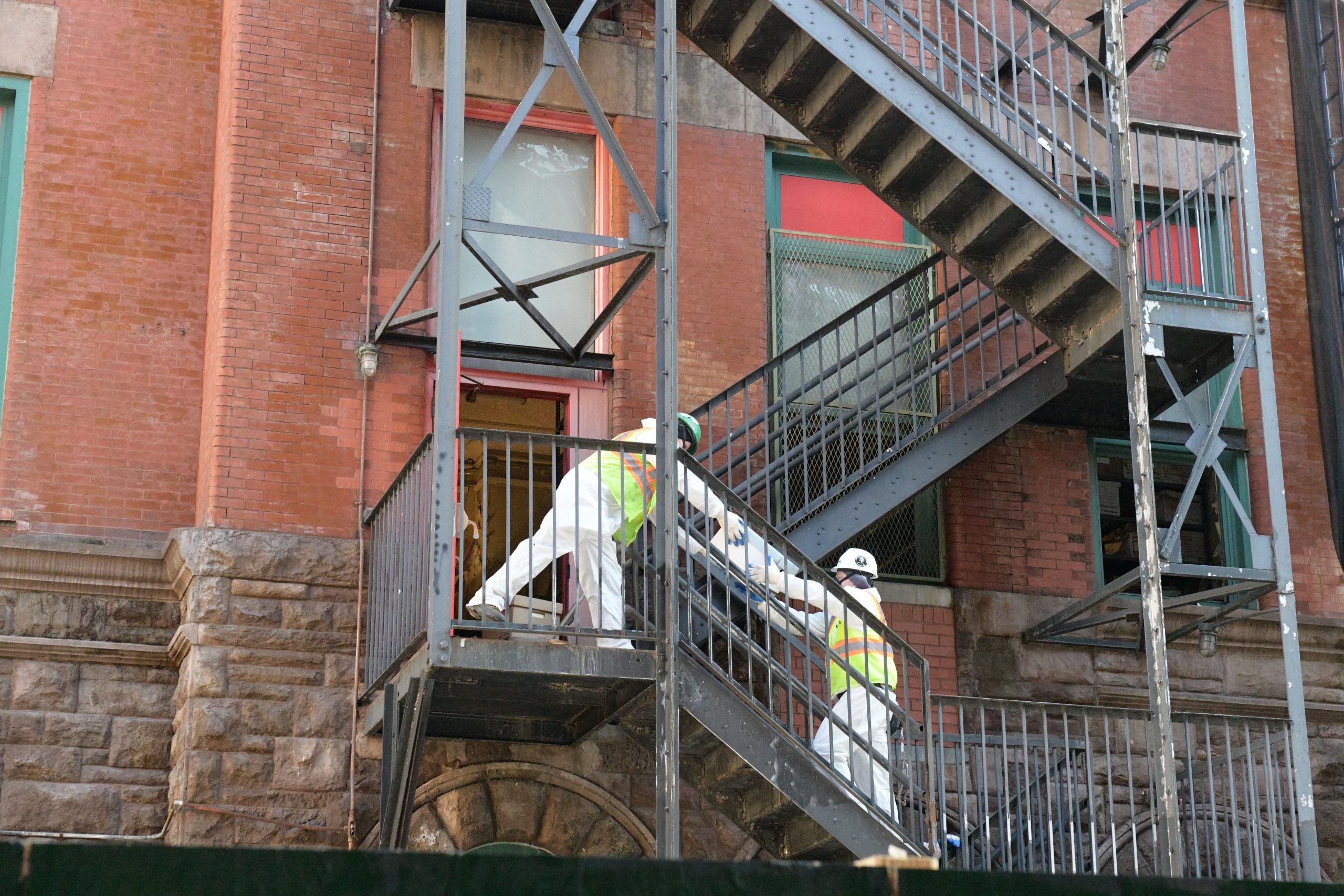
Construction crews clad in white Tyvek suits and respirators formed an assembly line Sunday from the second floor of 70 Mulberry St. and moved 2,000 boxes down from the fire-damaged Chinatown building to a waiting truck.

This was the beginning of the end on Sunday of the long wait by the Museum of Chinese in America to recover 85,000 documents and artifacts from the Chinatown building destroyed in a 5-alarm fire in January.

Officials from the museum were on site at 6 a.m. March 8, accompanied by workers and truckers from Total Environmental Restoration Solutions who will take the 2,000 boxes 18 miles to a facility in Westchester County.

There, documents damaged by water from the fire or from rainwater that entered the building through the damaged roof will be frozen and the water removed to preserve each article. It’s a slow and meticulous process, but necessary — according to museum officials — to preserve documents that would otherwise suffer damage from water and mold.

The building at 70 Mulberry St., which is controlled by the city’s Department of Citywide Services, was the home for the museum’s archives and a myriad of other organizations that are now without a home. Some of those organizations representatives joined members of the museum watching the movement of the boxes from the second floor down a fire escape.
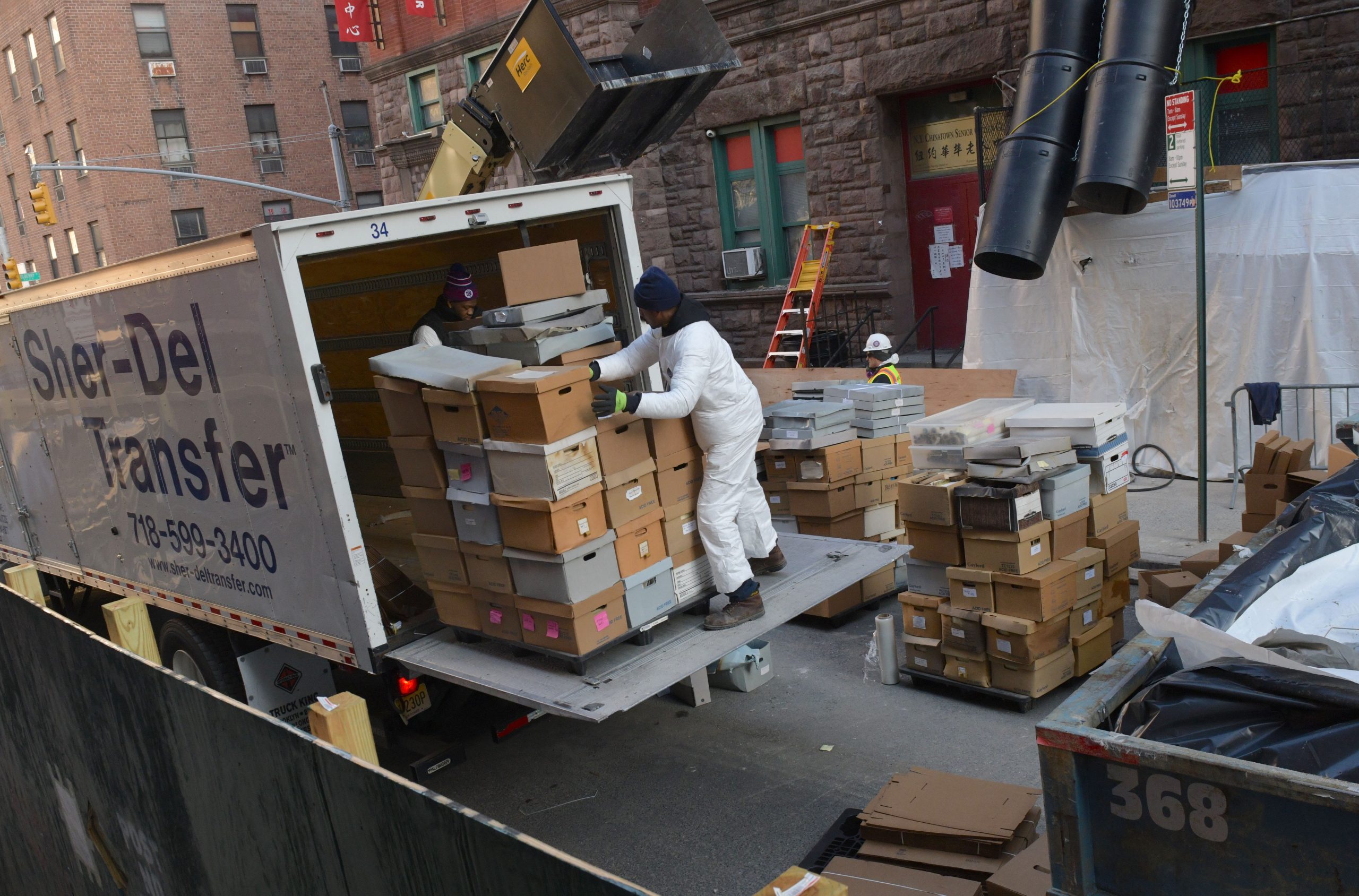
Workers began the task of removing 2000 boxes of Chinese documents and artifacts that belong to the Museum of Chinese Americans from their storage building at 70 Mulberry Street heavy damaged by fire in January. (Photo by Todd Maisel)

Only two weeks earlier, the museum received a green light only a day before members of the Chinese community planned a mass demonstration in front of the building to get the city to allow the removal of the archives.

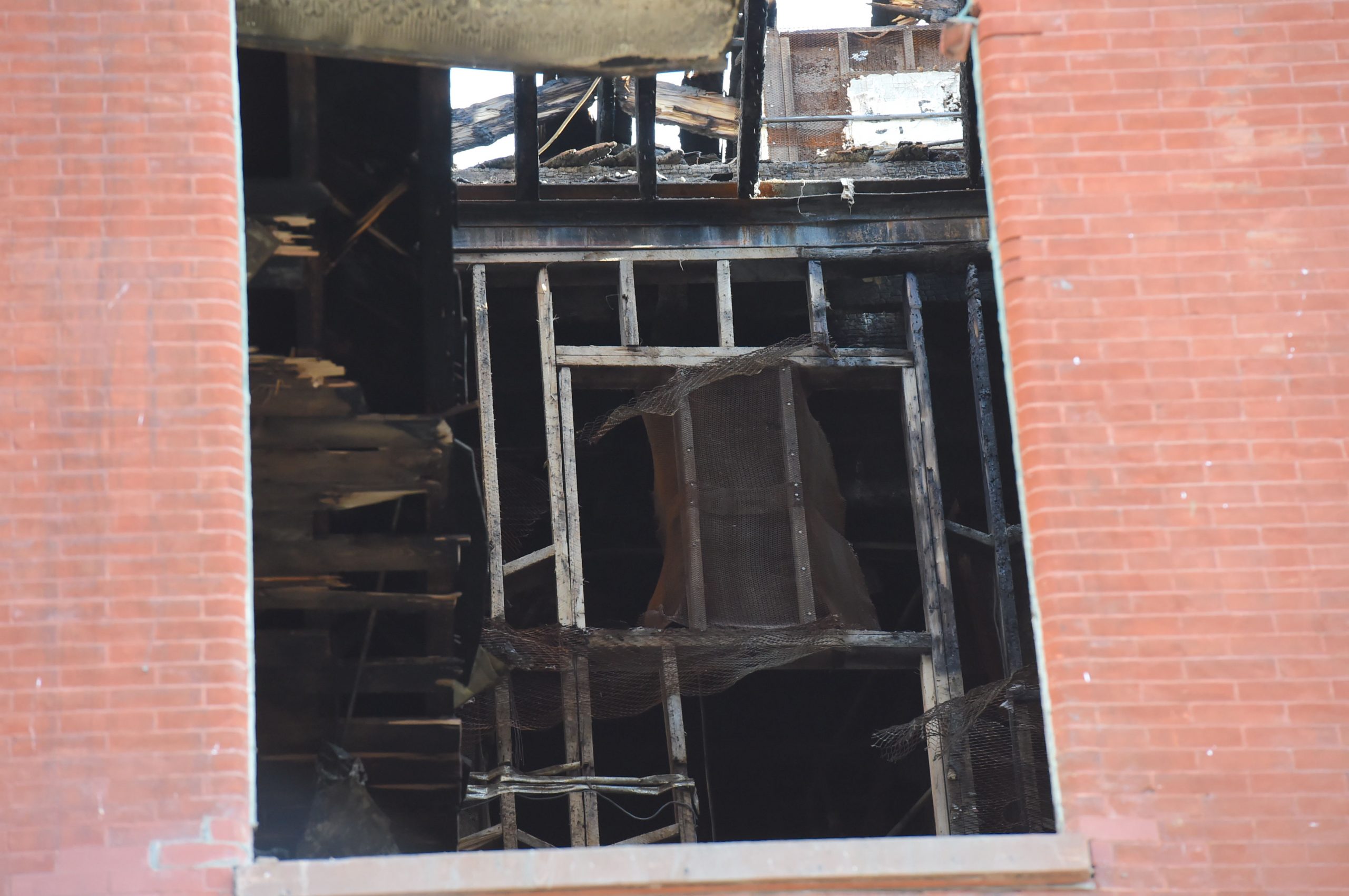
The city had maintained that the building was unsafe for museum officials to enter – the city hiring contractors to clear out debris from burnt out third and fourth floors, where the roof was partially missing. Workers were able to clear some of the heavier debris to take pressure off lower floors and prevent ceiling collapses into the museum storage areas on the second floor.

In addition, the building is believed to have asbestos in the walls, so workers are suited to protect them from exposure.

Nancy Yao Maasbach, president of the museum, stood outside the wall-off site, wearing her own Tyvek suit and mask in preparation to view the contents of some of the boxes when the trucks pull out of the construction site. She and several other members of the museum prepared to review the boxes and examine some of the more damaged artifacts.

“We wanted to check out what was coming out and get a sense of things,” Maasbach said, complaining that she and her colleagues couldn’t even find a cup of coffee at that hour. “One of the guys working there took bunch of photos, ran out and said, ‘here we started!’ That was nice of them – everyone involved knows how important the collection is.”

Upon inspection, she said they believe 30 percent of the collection is wet, another 20 percent is a little wet and the rest is “dryish.” The entire collection was re-boxed on site by workers and packed on pallets that hold 20 boxes each, going into a truck that holds eight pallets. She expected to fill up four trucks before they are complete.
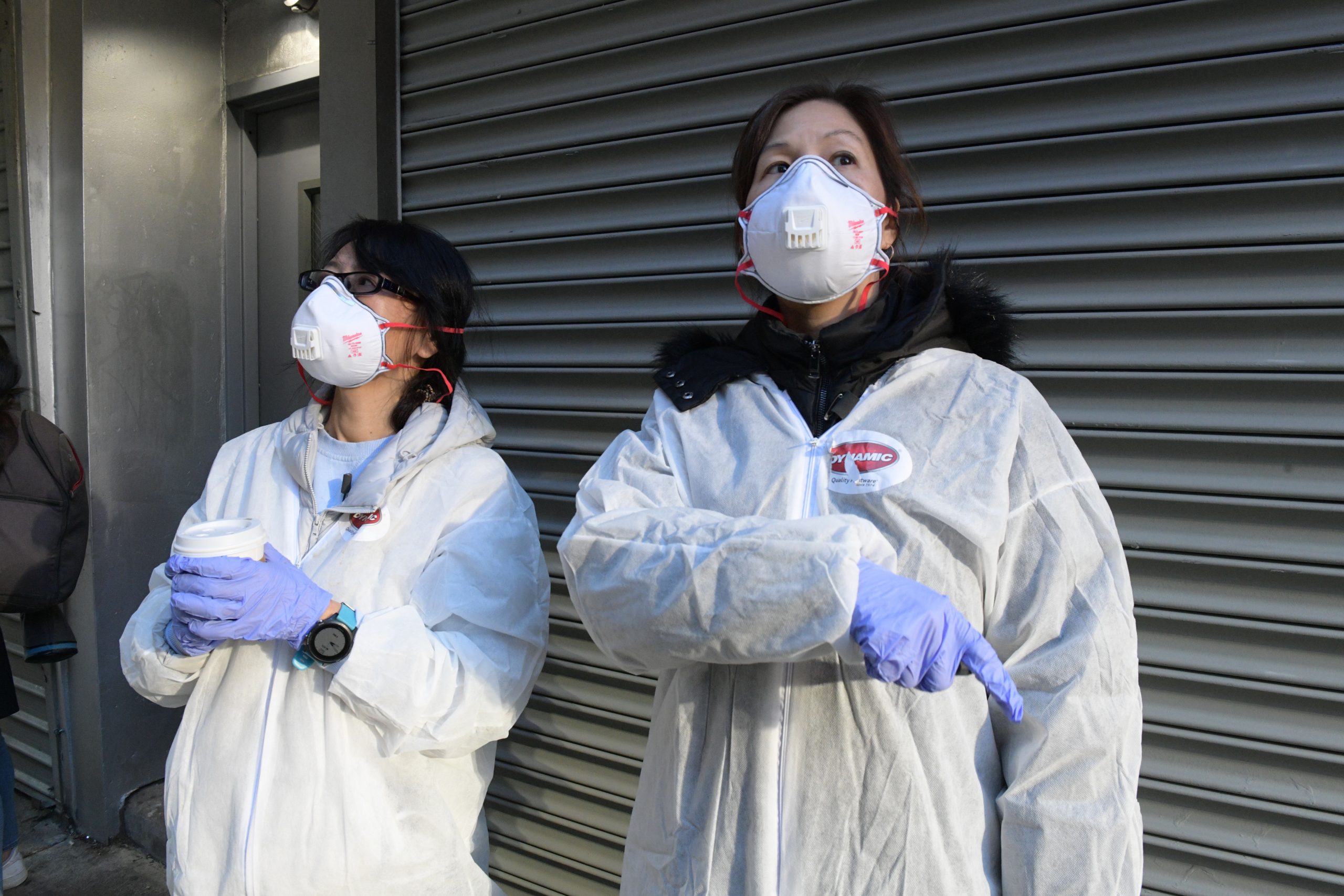
Maasbach (right) and Yue Ma watch as workers remove boxes from a fire escape. (Photo by Todd Maisel)

Maasbach said it was a long process to get to this point, as they worried that the wet documents would eventually get mold from the warming weather. She said the city used private contractors to remove debris from upper floors to make it safer for the movers to remove the archives.

“The city hired a bunch of people private contractors, we hired restoration movers, a different skill set, but we just want to get this done as fast as possible,” she said as she watched from the top of a step across from the site. “Time is of the essence and we didn’t want to waste time on triage. The faster we move trucks the better. We get them to the freezer where its stabilized. We will go to site tomorrow to take a look at the company warehouse.”

She said they were hoping to finish the move Sunday, but the work is arduous and time consuming.

“We hope to finish today, that’s what we hope, but we are here, and its so cold,” she sighed.
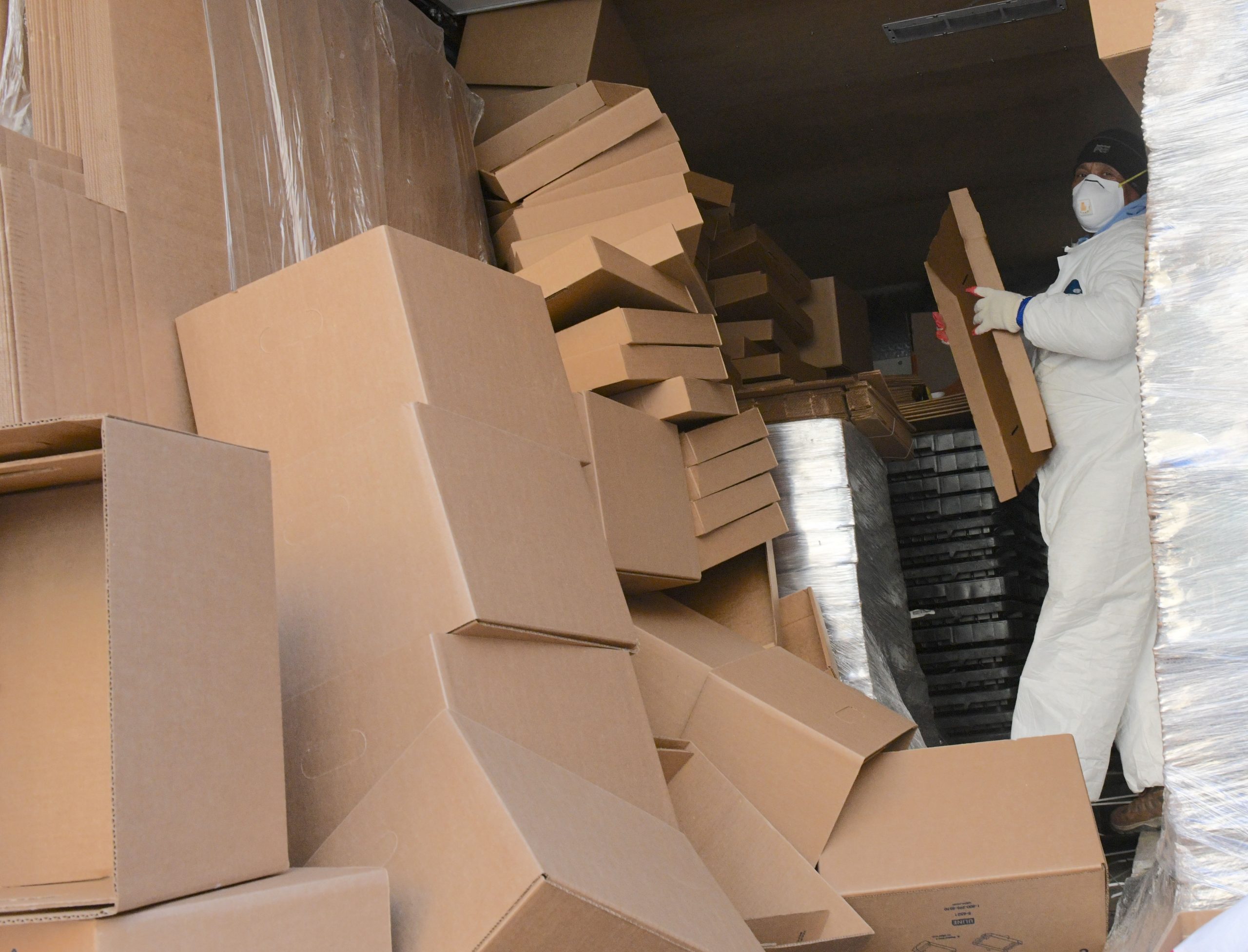
A workers prepares boxes to load documents. (Photo by Todd Maisel)

Meanwhile, the other four organizations in the building are hoping to recover some of their belongings. Echo Wong, treasurer and board member of the United East Athletic Association said they are hoping to recover some of their equipment, including a robotic exercise machine.

When asked where they are operating now, she said, “we are nowhere.” She added her all volunteer organization has been meeting in restaurants and phone conferencing, but its not the same as having a home.

Echo Wong stands with her flag across from 70 Mulberry, waiting word on her offices. (Photo by Todd Maisel)

“We’ve been waiting for weeks, every time they say we should come, they cancel,” Wong said as she watched workers haul boxes from the building. “Even now, we are not sure how much stuff they can grab – so we wait for city updates. At least something is happening. We are all volunteers and get no government funding, yet we survive – all 15 programs year round.”

The city has said they expect to complete the demolition over the coming months and the goal is to rebuild the building to return all of the programs to the community.
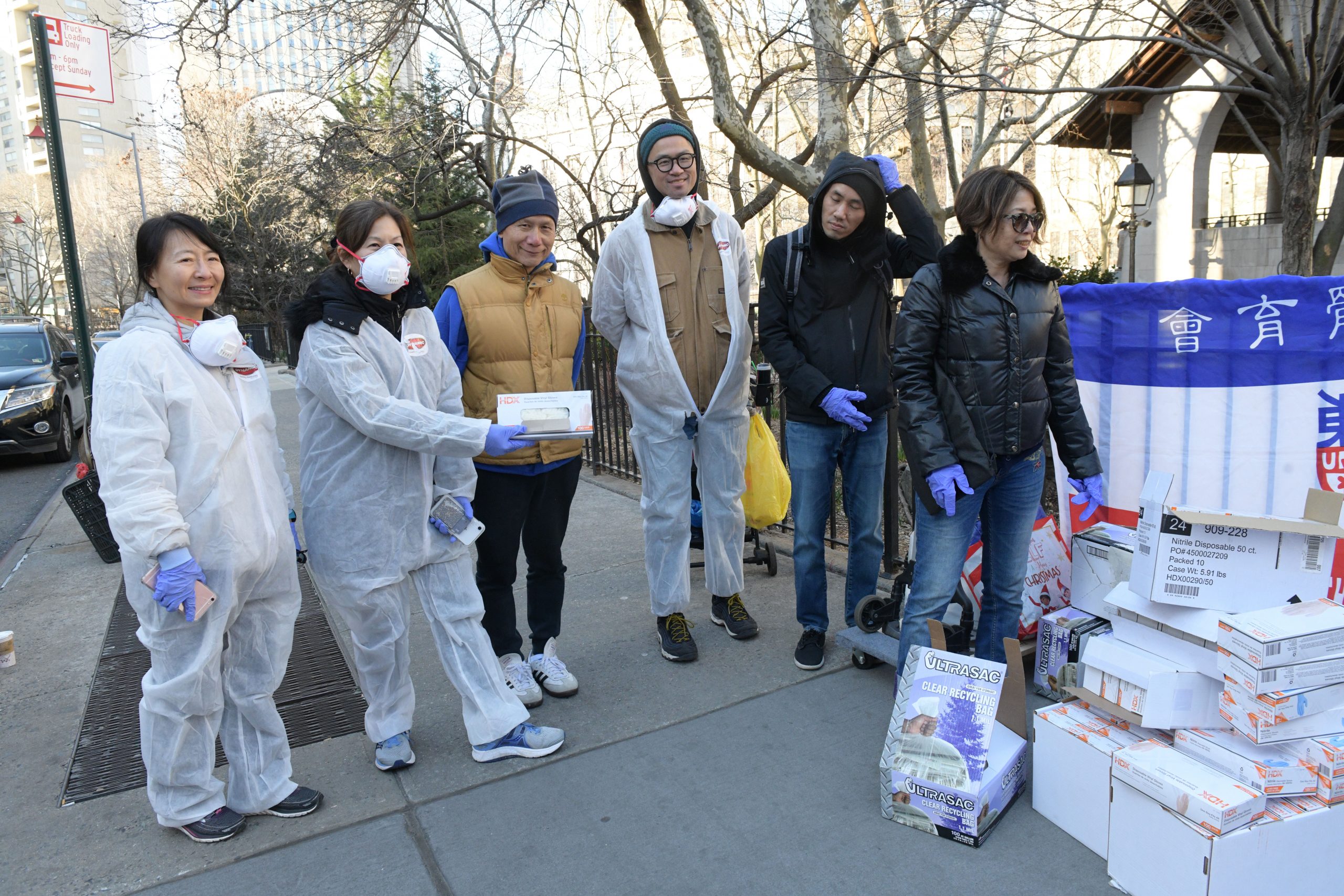
Museum officials and volunteers wait outside as workers remove more than 2000 boxes of documents from 70 Mulberry. (Photo by Todd Maisel)
Workers began the task of removing 2000 boxes of Chinese documents and artifacts that belong to the Museum of Chinese Americans from their storage building at 70 Mulberry Street heavy damaged by fire in January. (Photo by Todd Maisel)
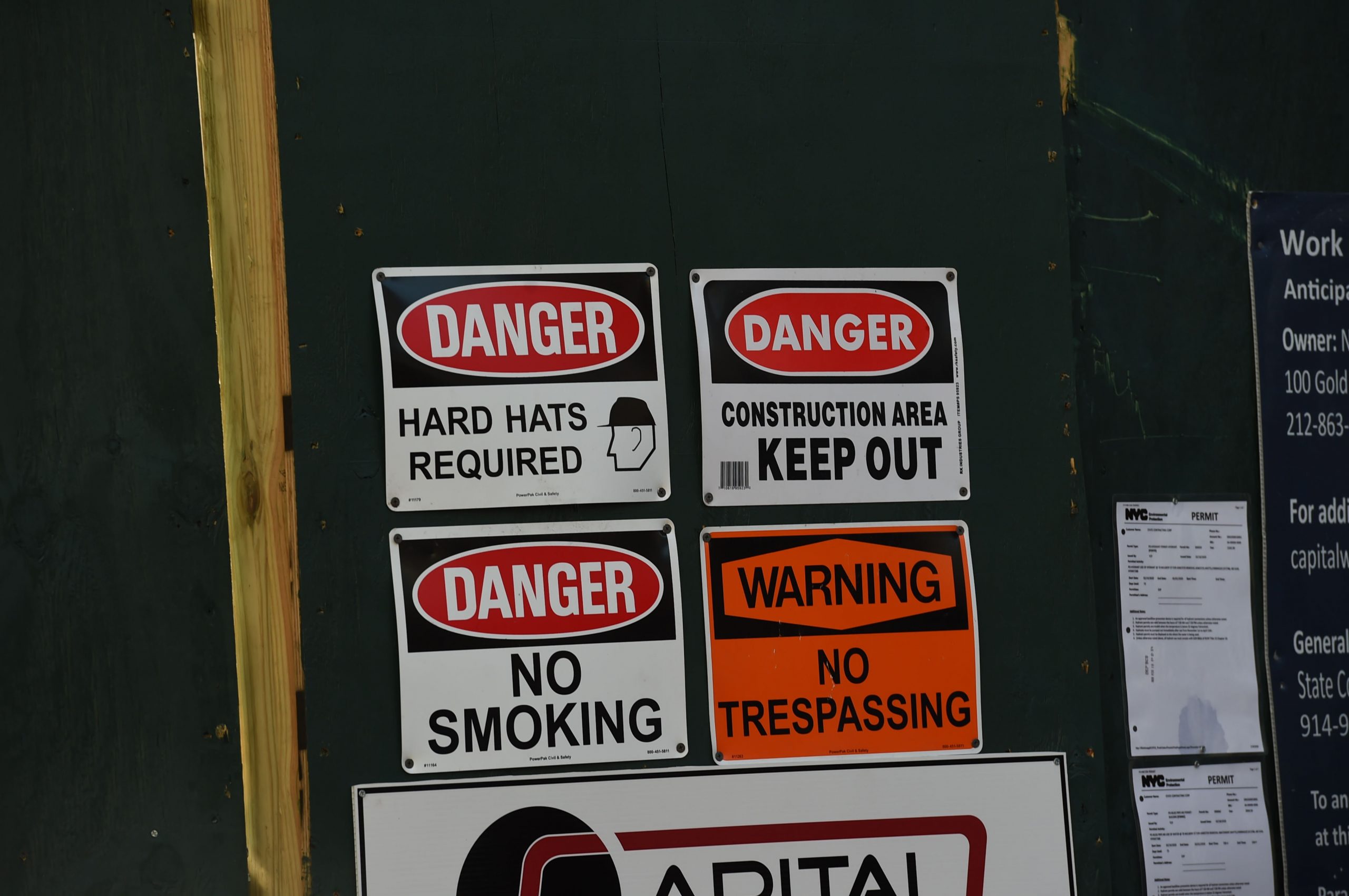
Signs outside warn of hazards. (Photo by Todd Maisel)
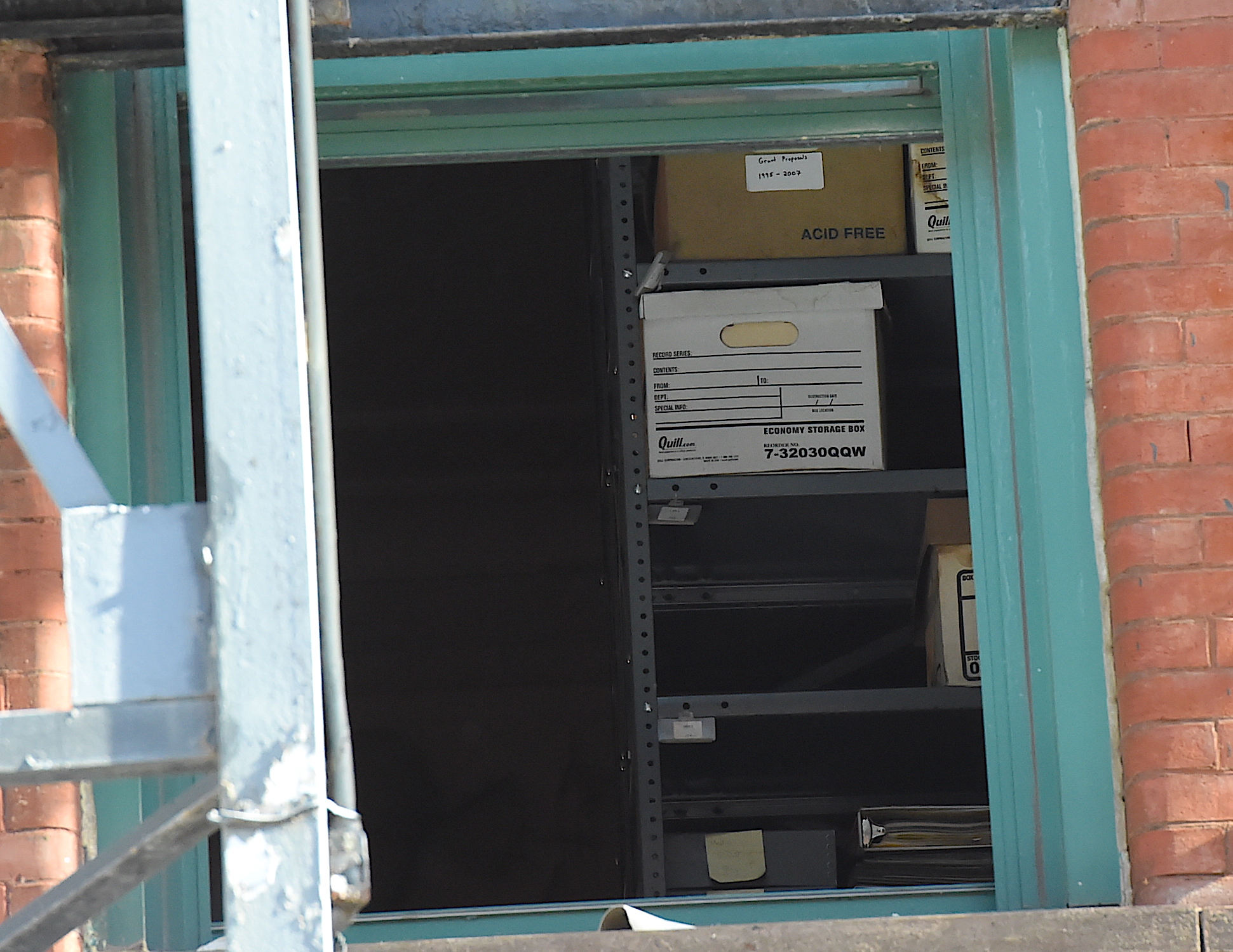
Boxes of documents can be seen sitting on shelves inside. (Photo by Todd Maisel)
Burnt out upper floors were partially cleaned out before work could begin. (Photo by Todd Maisel)

source https://www.amny.com/editorial/2000-boxes-of-chinese-artifacts-finally-removed-from-manhattan-fire-damaged-building/

Oak Place Apartments to be demolished this summer — University News | — University News

Even before the announcement came, the Oak Place Apartments looked slated for destruction. Overgrown weeds, scattered equipment, ripped apart walls, hanging wires, locks and dust have taken root at the once-luxurious living area. Where there once was the bustle of students  remains only faint mechanical beeping and the rush of wind through the courtyards.

In a message sent to all of UMKC last week, Chancellor Mauli Agrawal said the apartments, which have been closed for two years, were no longer considered viable for repair and would be torn down this summer.

With the exception of the large parking garage that runs through its center, the rest of the building, including still-operational student hangouts Pickleman’s Gourmet Cafe and Oak Nails, will be demolished.

As word spread among students and staff, the news did not come as a shock.

“I’m honestly not surprised just because I know their infrastructure was not great,” said Ryan Nguyen, a pre-pharmacy student.

With the exception of the two shops, the building, which housed hundreds of students, was closed down in the spring of 2018 after issues with the plumbing system caused massive water damage and an outbreak of airborne mold. Though the mold had not yet reached hazardous levels, the building was evacuated and deemed unlivable. 

Since that time, little work has been done to repair the estimated $10 million in damage. A series of lawsuits and insurance claims from the university delayed progress. 

After a settlement was reached with insurance providers, Agrawal said the university no longer considered repair worthwhile. Further investigation had revealed greater damage to the building, and rising costs would render refurbishment expensive.

“While we regret the loss of the building, this opens up an exciting opportunity to create a new set of amenities for our campus and students that will enhance the surrounding neighborhoods as well,” said Agrawal.

There are currently no firm plans in place to fill the soon-to-be-empty lot. There has also been no word on what will be done with the parking garage, a gated and monitored area that is largely devoid of any vehicles. 

The chancellor has appointed a Campus Student Housing Study to determine what to do with the space, which occupies a large amount of valuable real estate between Oak St. and Brookside Blvd. 

The university’s ability to actually build on this plot of land is questionable. According to all recent reports, the state has slashed funding to UMKC, and Agrawal has stated to UNews that money is in short supply, despite an increase in tuition last year.

The tearing down of a student housing building hinders the efforts preported by Agrawal, who has expressed his desire to make UMKC a more “residential campus.” According to the strategic plan he outlined for the schools future, Agrawal hoped to increase enrollment by 50% and provide the infrastructure to support those students.

“I would say without a doubt that I am disappointed,” said SGA President Justice Horn in a statement to UNews. “I think on the PR side of things it is an absolute disaster that UMKC is trying to move forward, and we are trying to look like we are making strides forward [on housing], but we are literally going to tear down one of our biggest buildings, and there’s just going to be an empty lot.”

The dismantling of Oak Place heralds the end of a saga of student housing issues that began after mold seeped into the air of the apartments. With issues ranging from water damage in other dorms, overcrowding, students being moved out of dorms and workers walking into students’ rooms at night, conversation surrounding housing at UMKC has often skewed negative.

In a press release, UMKC administration says, “The university’s primary focus remains to provide quality, affordable student housing to current and future students.”

Some find that the end of Oak Place flies in the face of that commitment.

“I think personally it’s going to be an embarrassment, not only to the university, but then also the university’s commitment to students and student housing,” Horn said. “It’s another gut-punch to campus involvement, and us trying to do anything for campus involvement.”

While there are no plans, Agrawal fielded the idea of a streetcar stop, along with a housing-business combination similar to that of Whole Foods and the Brookside 51 apartments. According to a study by Bank of America, Whole Foods is one of the most expensive places in the US to grocery shop. Rent for a 650 sq. ft. studio at Brookside 51 starts at around $1500, about double the cost of a two-bedroom apartment in nearby areas.

Despite the failure of the Oak Apartments, which are a little over a decade old, students hope for a new housing facility to rise in its place. 

“I still want to see apartments there; I just want to see more improvements on it—like actually get it right this time,” said Nguyen. 

Until then, inaccessible light bulbs still shine at Oak Place, waiting to turn off for the last time. 

samuelbellefy@mail.umkc.edu

source https://info.umkc.edu/unews/oak-place-apartments-to-be-demolished-this-summer/

New York workers mount rescue operation for Chinese-American artefacts after fire — Art Newspaper

The damaged building in New York’s Chinatown that houses the archives of the Museum of Chinese in America Nancy Kenney

New York City today dispatched contract workers into a building in Chinatown to salvage archives belonging to the Museum of Chinese in America that have languished there since a fire devastated the building in January.

Officials at the museum have been agonising over the condition of the archives, given that water and smoke coursed through the building when firefighters extinguished the blaze. Two previous operations to remove boxes full of artefacts from the building at 70 Mulberry Street on 29 and 31 January recouped only 20 percent of the 85,000-item archive, which documents the history and culture of Chinese immigrants to the United States. Those items, some of which were “very wet”, according to the museum’s director of collections and research, Yue Ma, were sent to a storage room at the museum at nearby 215 Centre Street and to a restoration facility in Pennsylvania where some were freeze-dried.

Ma, who was stationed on a sidewalk outside the building this morning, said that the workers were removing the remaining items from three rooms on the building’s second floor and that they would be transported to a restoration facility in Nanuet, New York, north of the city, for potential freeze-drying.

Ma said she was particularly worried about the museum’s rare books, newspapers, magazines and manuscripts. She added that she was also fretting about potential mold damage to the textile collection, which includes 20 to 30 opera costumes and around 300 traditional form-fitting Chinese dresses, or qipao, from the 1930s and 1940s.

The museum’s photography collection is also a major concern: “We’re worried about the prints sticking to each other,” she said, adding that she was also worried about damage to negatives and slides.

The city, which owns 70 Mulberry Street, has taken the initial steps toward demolishing the building. The contract workers dispatched by the city were also removing articles belonging to other tenants of the building, including the Chinese-American Planning Council’s Chinatown Senior Center, the HT Chen Dance Center and the United East Athletic Association. The city’s Department of Citywide Administrative Services said it expected demolition to take four months.

Workers trundling boxes from a fire-ravaged building where the Museum of Chinese in America was a tenant Nancy Kenney

source http://www.theartnewspaper.com/news/new-york-workers-mount-rescue-operation-for-artefacts-belonging-to-museum-of-chinese-in-america

When is it time to replace your carpet? — Texarkana Gazette

Eventually, even the best-laid carpets must be replaced. While regular upkeep can increase your carpet’s lifespan, most manufacturers estimate you’ll need a full replacement after about 10 years. And the signs you need to start shopping around aren’t always obvious. Here are a few ways you can tell your carpet is reaching the end.

Stains won’t come out

Whether it’s from spilled wine or a new puppy, there are some stubborn stains that even professional cleaning can’t get rid of. If they’re minor, you can typically hide them with area rugs or furniture. But if the damage is permanent and unsightly, it’s probably time to look for new carpeting. Homeowners typically pay between $760 and $2,540 to replace a carpet, according to the Angie’s List Pricing Guide. Per square foot, carpet materials usually cost an average of $2 to $7, though price can fluctuate depending on quality.

You have increased

allergy symptoms

It can be difficult to remove dust, pet dander and pollen that embeds in carpet fibers over time. If you or your loved ones notice more sneezing, itchy eyes or coughing, it may be that the problem is beneath your feet. The Mayo Clinic recommends using a vacuum with a high-efficiency particulate air (HEPA) filter or opting for linoleum or hardwood if you’re truly concerned. It costs about $180 for carpet cleaning, via the Angie’s List Pricing Guide, and it’s worth a try before replacing the carpet.

Foul odors won’t go away

If you notice that deep cleans just aren’t banishing the bad smells, that likely means the issue isn’t in your carpet alone — it could be in the padding or floor beneath the carpet. How you handle the problem depends on the type of smell. If your pet is the root cause of the issue, you’ll likely need a full replacement. If you notice a musty smell, that could mean you have a water or mold problem. In that case, carpet replacement may be necessary after a mold remediation specialist takes a look at things.

There’s visible damage

Carpet damage can range from smaller issues, like a burn mark or two, to extensive problems like the mold damage mentioned above. If there’s just a small area where the carpet is frayed, it’s possible for a flooring pro to help you patch it up. If your entire carpet was flooded with dirty water, or clean water flooding has taken a long time to dry out, replacement is the best course of action. A pro can also let you know if the damage extends to the floor beneath your carpet, and how to fix the problem before it creates bigger problems.

The carpet is old

At a certain point, patching and deep-cleaning your carpet isn’t going to do the trick. If you notice matting, fading color or that the padding just doesn’t feel like it’s there anymore, it’s probably time to move on. If you see ripples or wrinkles, it is possible to have your carpet re-stretched. This is a more expensive repair, so discuss with a carpet pro whether or not it makes sense to fix the issue or get a complete replacement.

source https://www.texarkanagazette.com/news/features/story/2020/mar/07/when-it-time-replace-your-carpet/819629/

Health and climate change in Vermont | Weekend Magazine — Rutland Herald

Vermonters who have been around for long enough may agree that winters are not what they used to be. Snow is less predictable, thaws come more frequently, and sugaring seasons are more erratic.

Over the past 50 years, average temperatures in Vermont have gone up by 2 degrees in summer and 4 degrees in winter, faster than the temperatures in all but three other states. In that same 50 years, spring in Vermont now comes 2 weeks earlier and winter comes 1 week later. Lake Champlain is 2-7 degrees warmer, depending on where you measure it, and it has failed to freeze over 16 out of the past 26 winters.

As average global temperatures continue to increase, Vermont is expected to continue warming, leading to hotter summers, shorter and milder winters, stronger storms, increased precipitation, and more frequent droughts. Among the resulting health effects to be expected will be increases in respiratory illnesses, infectious diseases, cardiovascular disease and mental health problems.

Vermont’s average annual precipitation has increased by 7 inches in the past 50 years, and the number of days with more than 1 inch of rain have nearly doubled. Flood events, which are expected to increase in frequency and severity, contaminate water and food sources with disease-causing bacteria and chemical pollution. Water runoff from heavy rains, in combination with warmer temperatures, will contribute to increasing algae blooms in lakes and ponds. Toxins from these algae blooms pose health risks to pets and people, causing rashes, flu-like illnesses, liver problems and animal deaths.

Increased overall precipitation, severe rain events, and stronger storms will favor the growth of mold in buildings that are prone to dampness and that experience water damage. Mold in basements, walls and ceilings can have major impacts on health. Mold exacerbates chronic respiratory problems, such as asthma, allergies and COPD, leading to worsening symptom control and increased hospitalizations. It can also cause headaches, memory problems, sinus infections and mood changes. Chronic low-level mold exposure can cause a host of other problems that you might not expect, such as chronic fatigue, fibromyalgia, concentration problems, depression, and poor immune function.

The longer growing season and warmer air will stimulate plants to release more pollen into the air. The higher pollen counts can worsen life for hay fever sufferers and bring an increase in the frequency and severity of asthma attacks and COPD exacerbations. We are already seeing more cases of new allergies, in people who haven’t had allergies in the past.

Milder winters allow for the survival of disease-carrying ticks, increasing their numbers and their geographical distribution. Diagnoses of Lyme disease, babesiosis, anaplasmosis, and other tick-borne diseases are on the rise in Vermont, due in part to increased awareness, but also due to an increasing tick population spurred by milder winters. Tick-borne diseases are often easy for doctors to misdiagnose, particularly when these illnesses do not present the way that we expect them to. When they are missed, untreated, or under-treated, they have the potential to turn into chronic infections that are more difficult to treat and can persist for years. A future of shorter, warmer winters will, without a doubt, mean a continued trend of increasing Lyme disease and other infections in Vermont.

The heat itself poses a threat of acute illness and death. Emergency room visits increase dramatically with hot weather due to heat stroke, dehydration and exacerbation of chronic disease. In fact, visits to emergency departments in Vermont have been found to increase eight-fold when temperatures reach 87 degrees or higher. How many more acute illnesses, hospitalizations and deaths will we see when the current average of six very hot (87+ degrees) days per year increases to the expected 20 days?

Mental health impacts are a less obvious, but perhaps more pervasive result of catastrophic weather events. People who experience traumatic environmental events, such as a flood or wildfire, are prone to anxiety, depression, suicide, post-traumatic stress disorder (PTSD), sleep disorders, domestic violence, hopelessness and grief. Hurricane Katrina provides a relatively extreme example, after which 49% of survivors developed an anxiety or mood disorder, one in six developed PTSD, and suicide and suicidal ideation more than doubled. While mental health might not be your primary concern after a catastrophic event, the effects can be widespread and long lasting. As the frequency of severe storms is expected to increase, we may expect a proportional increase in resulting emotional problems.

Temperatures are forecast to continue increasing into the future, with health complications being among the challenges that we will likely face. There are, however, some steps that you can consider that would not only reduce your carbon footprint but also improve your health. Home weatherization reduces both heating fuel emissions and the building’s mold susceptibility. Eating locally produced food improves nutrition while decreasing fuel burned in transportation. Gardening does the same, while also adding fresh air, sunshine and physical activity. Commuting by foot or bike builds exercise into your day, improves energy and mental focus, and creates no pollution. Carpooling cuts down on emissions and creates social interactions, which improve physical and mental health. Substituting outdoor activities for shopping provides an emotional lift that lasts longer than the rush of buying new things that you don’t really need. My goal here is not to add to your anxiety, but to stimulate simple actions. Vermonters can have small impacts locally and globally that could shift the balance and make a difference in our lives and what is to come.

Greg Burkland is a naturopathic doctor at Rutland Integrative Health.

source https://www.rutlandherald.com/features/weekend_magazine/health-and-climate-change-in-vermont/article_d9df271d-f36e-5f0f-9cb3-38c7a758ea42.html

AEI Decon Provides Mold Removal And Restoration Services In Salt Lake City, Utah — StreetInsider.com


Get inside Wall Street with StreetInsider Premium. Claim your 1-week free trial here.


Salt Lake City, Utah based AEI Decon is pleased to announce that local communities may now avail themselves of the company’s mold removal services. AEI Decon also specializes in methamphetamine decontamination, and the services they provide under each specialization can be requested for virtually any structure, including private homes, condos, apartments, hotels, and businesses of varying sizes. Learn more by visiting the following link: https://aeidecon.com/.

Nate Coombs of AEI Decon states that, “We have been operating in the decontamination field for many years, and the secret behind the efficiency of the work we do is that we respect the damage such contamination can cause. Both mold infestations and methamphetamine usage can introduce a variety of severe health risks to the inhabitants of the property in question, so we take every request for help very seriously. We prioritize every cleanup project we work on.”

Notably, the company boasts over 15 years of experience in mold remediation alone, and they have taken their expertise to multiple countries, including the United States, Canada, Australia, and New Zealand. They state on their website that, “It is our goal to have strict standards for remediation throughout the world. We are currently working with other professionals worldwide to spread this idea.”

Referring to mold, Coombs says that, “You may happen upon mold in your property in one form or another, but you should be aware that not all types of mold are harmful or can otherwise negatively affect your living space. Spotting mold is not always a reason to panic. However, it is always better to be safe than sorry, so we encourage you to contact us in order to find out whether you have a true mold issue on your hands.” He explains that while mold spores are always present, they need the right conditions in order to ‘take root’ and propagate into a colony that will represent a significant health hazard. More often than not, he says that mold outbreaks in structures like homes are caused by a prevalence of moisture and sunlight, two factors that contribute greatly to their growth.

Mold can cause a variety of symptoms in a property’s inhabitants, but the affected parties will usually first notice something is wrong when they begin to experience respiratory issues. Coombs advises people to stay wary of unexplained or chronic coughing; sneezing; irritation to the eyes, nose, or throat; and even headaches that last for extended periods of time. “You may even notice you feel more tired than you used to,” he says. “Chronic fatigue is often one of the first symptoms associated with toxic mold exposure.”

Furthermore, those who live or work on particularly large properties may be able to spot a pattern if a certain subset of its inhabitants seem to get sick more often. “If you run a hotel and notice that the staff who work on a certain floor are more likely to call in sick, this can be a sign that you have a mold issue in that area,” he says. “The likelihood of mold is increased if the area, or somewhere nearby, recently suffered a leak of some kind. Where there is moisture, there can be mold.”

AEI Decon makes it their mission to address any degree of mold contamination, no matter how bad the situation is. To this end, the company places a wide array of mold removal services at the disposal of their clients. They are able to remove mold from or treat areas such as asphalt or cedar roofing shingles, cedar decks, vinyl fences and siding, and many more. Coombs adds, “We can ensure that virtually every indoor surface in your home or business is freed of mold. An interior living space needs to be absolutely mold free given the confined space, so we do the job right the first time we visit you.”

Those who wish to learn more about the company’s decontamination services may reach out to Nate Coombs of AEI Decon to follow up on any inquiries. The company can always be reached for an evaluation through their customer service line, and interested parties may connect with AEI Decon through their social media channels to stay up to date with their latest news, offers, and announcements.

###

For more information about AEI Decon, contact the company here:

AEI Decon
Nate Coombs
(801) 888-6698
info@aeidecon.com
2401 Constitution Blvd
Salt Lake City, UT 84119

FacebookTwitterGoogleDiggRedditLinkedIn

source https://www.streetinsider.com/Press+Advantage/AEI+Decon+Provides+Mold+Removal+And+Restoration+Services+In+Salt+Lake+City%2C+Utah/16578772.html

$10 Million In Damage Contributes To UMKC Housing Problems, Says Student Body President — KCUR

University of Missouri-Kansas City students are reacting to Wednesday’s news that the university will tear down mold-damaged student apartments once advertised as the best in college dorm life.

«Oak Place was one of the biggest student housing options on campus,» said Justice Horn, UMKC student body president. «Hundreds of students have been forced to move off campus into higher-rent apartments. We can’t build an urban campus unless we have adequate student housing.»

On Wednesday, University of Missouri-Kansas City Chancellor Mauli Agrawal announced that the university had decided it was cheaper to demolish the Oak Place apartments and retail space at 5050 Oak rather than fix damages caused by water, mold and other issues beginning in 2017.

The university closed the two wings of the apartment complex two years ago due to leaking pipes and damage to floors and walls. Damage to the complex was estimated at $10 million.

The Curators of the University of Missouri are suing numerous companies, including builders J.E. Dunn, for breach of contract and «gross negligence» in the construction, design engineering and/or inspection of the complex. 

When the newly built apartments opened in 2008, the university lured students in by advertising their amenities.

«Each apartment offers a living room fully furnished with a brown micro suede sectional sofa, coffee table and entertainment center,» according to an article in UMKC Today. «Each suite’s kitchen features a dining counter with barstools, dishwasher, refrigerator and stove.»

Two years ago, university officials said students being forced to move out would be released from their contracts without penalty, but that the university would not make up the difference if students moved into more expensive housing off campus.  

The university declined to comment on Wednesday regarding how many of the displaced students were able to find campus housing or had moved off campus, or address other disruption to student life because of the housing problems.

The chancellor said he would be commissioning a study to determine the needs of affordable housing as part of a master plan to be presented to the Board of Curators in the fall.

KCUR is licensed to the University of Missouri Board of Curators and is an editorially independent community service of the University of Missouri-Kansas City.

Laura Ziegler is a community engagement reporter at KCUR 89.3. You can reach her on twitter @laurazig or by email at lauraz@kcur.org

source https://www.kcur.org/post/10-million-damage-contributes-umkc-housing-problems-says-student-body-president

5 signs it may be time to replace your carpet — Seattle Times

Eventually, even the best-laid carpets must be replaced. While regular upkeep can increase your carpet’s lifespan, most manufacturers estimate you’ll need a full replacement after about 10 years.

The signs you need to start shopping around aren’t always obvious. Here are a few ways you can tell if your carpet is reaching the end.

Stains won’t come out

Whether it’s from spilled wine or a new puppy, there are some stubborn stains that even professional cleaning can’t get rid of. If they’re minor, you can typically hide them with area rugs or furniture. But if the damage is permanent and unsightly, it’s probably time to look for new carpeting. Per square foot, carpet materials usually cost an average of $2 to $7, though price can fluctuate depending on quality.

Foul odors won’t go away

If you notice that deep cleans just aren’t banishing the bad smells, that likely means the issue isn’t in your carpet alone — it could be in the padding or floor beneath the carpet. How you handle the problem depends on the type of smell. If your pet is the root cause of the issue, you’ll likely need a full replacement. If you notice a musty smell, that could mean you have a water or mold problem. In that case, carpet replacement may be necessary after a mold remediation specialist takes a look at things.

There’s visible damage

Carpet damage can range from smaller issues, like a burn mark or two, to extensive problems like the mold damage mentioned above. If there’s just a small area where the carpet is frayed, it’s possible for a flooring pro to help you patch it up. If your entire carpet was flooded with dirty water, or clean water flooding has taken a long time to dry out, replacement is the best course of action. A pro can also let you know if the damage extends to the floor beneath your carpet, and how to fix the problem before it creates bigger problems.

You have increased allergy symptoms

It can be difficult to remove dust, pet dander and pollen that embeds in carpet fibers over time. If you or your loved ones notice more sneezing, itchy eyes or coughing, it may be that the problem is beneath your feet. The Mayo Clinic recommends using a vacuum with a high-efficiency particulate air (HEPA) filter or opting for linoleum or hardwood if you’re truly concerned.

The carpet is old

At a certain point, patching and deep-cleaning your carpet isn’t going to do the trick. If you notice matting, fading color or that the padding just doesn’t feel like it’s there anymore, it’s probably time to move on. If you see ripples or wrinkles, it is possible to have your carpet re-stretched. This is a more expensive repair, so discuss with a carpet pro whether or not it makes sense to fix the issue or get a complete replacement.

source https://www.seattletimes.com/explore/nwhomes/5-signs-it-may-be-time-to-replace-your-carpet/

AEI Decon Provides Mold Removal And Restoration Services In Salt Lake City, Utah — Press Release — Digital Journal

Salt Lake City, Utah based AEI Decon is pleased to announce that local communities may now avail themselves of the company’s mold removal services. AEI Decon also specializes in methamphetamine decontamination, and the services they provide under each specialization can be requested for virtually any structure, including private homes, condos, apartments, hotels, and businesses of varying sizes. Learn more by visiting the following link: https://aeidecon.com/.

Nate Coombs of AEI Decon states that, “We have been operating in the decontamination field for many years, and the secret behind the efficiency of the work we do is that we respect the damage such contamination can cause. Both mold infestations and methamphetamine usage can introduce a variety of severe health risks to the inhabitants of the property in question, so we take every request for help very seriously. We prioritize every cleanup project we work on.”

Notably, the company boasts over 15 years of experience in mold remediation alone, and they have taken their expertise to multiple countries, including the United States, Canada, Australia, and New Zealand. They state on their website that, “It is our goal to have strict standards for remediation throughout the world. We are currently working with other professionals worldwide to spread this idea.”

Referring to mold, Coombs says that, “You may happen upon mold in your property in one form or another, but you should be aware that not all types of mold are harmful or can otherwise negatively affect your living space. Spotting mold is not always a reason to panic. However, it is always better to be safe than sorry, so we encourage you to contact us in order to find out whether you have a true mold issue on your hands.” He explains that while mold spores are always present, they need the right conditions in order to ‘take root’ and propagate into a colony that will represent a significant health hazard. More often than not, he says that mold outbreaks in structures like homes are caused by a prevalence of moisture and sunlight, two factors that contribute greatly to their growth.

Mold can cause a variety of symptoms in a property’s inhabitants, but the affected parties will usually first notice something is wrong when they begin to experience respiratory issues. Coombs advises people to stay wary of unexplained or chronic coughing; sneezing; irritation to the eyes, nose, or throat; and even headaches that last for extended periods of time. “You may even notice you feel more tired than you used to,” he says. “Chronic fatigue is often one of the first symptoms associated with toxic mold exposure.”

Furthermore, those who live or work on particularly large properties may be able to spot a pattern if a certain subset of its inhabitants seem to get sick more often. “If you run a hotel and notice that the staff who work on a certain floor are more likely to call in sick, this can be a sign that you have a mold issue in that area,” he says. “The likelihood of mold is increased if the area, or somewhere nearby, recently suffered a leak of some kind. Where there is moisture, there can be mold.”

AEI Decon makes it their mission to address any degree of mold contamination, no matter how bad the situation is. To this end, the company places a wide array of mold removal services at the disposal of their clients. They are able to remove mold from or treat areas such as asphalt or cedar roofing shingles, cedar decks, vinyl fences and siding, and many more. Coombs adds, “We can ensure that virtually every indoor surface in your home or business is freed of mold. An interior living space needs to be absolutely mold free given the confined space, so we do the job right the first time we visit you.”

Those who wish to learn more about the company’s decontamination services may reach out to Nate Coombs of AEI Decon to follow up on any inquiries. The company can always be reached for an evaluation through their customer service line, and interested parties may connect with AEI Decon through their social media channels to stay up to date with their latest news, offers, and announcements.

###

For more information about AEI Decon, contact the company here:

AEI Decon
Nate Coombs
(801) 888-6698
info@aeidecon.com
2401 Constitution Blvd
Salt Lake City, UT 84119

source http://www.digitaljournal.com/pr/4613084