Decks need cleaning, upkeep, staining | Home-garden — Leader-Telegram

Summertime provides ideal weather to enjoy the porch or deck at home.

Like your home’s interior, you should keep your exterior clean and in good shape for optimal comfort.

To help you enjoy your outdoor living space, here are some tips for porch or deck maintenance:

Cleaning

Sweep your deck and remove debris trapped in between your deck boards. A simple spray of water with a garden hose can remove dirt.

Don’t use bleach because it will discolor your deck. Scrubbing with a wire brush can also damage wood.

To remove mold and mildew, buy a deck cleaning solution. Some cleaners can be harmful to plants so make sure they are removed or covered before applying a solution.

Repairing

Wear and tear from weather can damage your porch.

Conduct a visual inspection for loose boards and nails. Small issues can be repaired by removing the boards, flipping and refastening them. Splinters in wood can be sanded down.

If you see rotting wood under the boards, you may need to consult a professional for repairs. If your boards are cracked, it is a sign that your deck needs to be stained. If boards on your deck are split, you will need to completely replace the damaged board.

Staining

If your deck is cleaned and repaired you may want to consider adding a stain for a refreshed look.

It is time for a new stain if your deck does not repel water easily. Follow the manufacturer’s directions for any stain or seal you apply.

Drying time depends on the temperature and humidity level. Avoid applying any product to your deck or porch in the direct sunlight, which will dry out the finish too quickly.

Decorating

New patio or deck decor can liven up any outdoor space.

Avoid selecting natural fibers such as jute or bamboo. This type of material absorbs moisture and could lead to mildew on your deck or porch.

Add rugs and mats made of recycled plastics to maximize longevity and avoid mildew.

Select furniture constructed with materials designed to withstand the elements, such as cedar or teak, which are also resistant to insect damage.

Metallic furniture made from iron, especially with rust-resistant coating, is another durable option. You can top off any style of furniture with pillows and cushions made of synthetic fibers which can starve off mildew or harmful UV rays from the sun.

Christina Thrun is the executive officer for the Chippewa Valley Home Builders Association. House Calls is submitted by members of the Chippewa Valley Home Builders Association. For more information please call 715-835-2526 or email info@cvhomebuilders.com.

source https://www.leadertelegram.com/features/home-garden/decks-need-cleaning-upkeep-staining/article_20cad4f3-5081-59b7-8e7a-ecbff8a55bd6.html

New Middleton homes plagued by mold and standing water — Idaho Press-Tribune

MIDDLETON — Residents of the West Highlands Estates Subdivision in Middleton are concerned with standing water and mold in the crawlspaces of several homes and backyard flooding.

The homes in the subdivision are all little over a year old, and in February, several homeowners in the neighborhood noticed flooding in their backyards, and discovered mold and standing water in their crawl spaces. Some say Coleman Homes, the developer, has not properly installed grates to drain rainwater and sprinkler water.

The West Highlands Estates homes cost residents around $300,000.

Multiple representatives from Coleman Homes did not respond to requests for comment.

FIRST SIGNS

In February, Jason Botwright, a West Highlands resident, said he got a one-year home inspection, and the inspector found water in the house’s crawl space.

Lynn Rogers, another resident, had her home inspected on Feb. 14, after she learned Botwright had flooding problems. Rogers and Botwright live across the street from each other. Rogers said her inspector found water and mold in her crawl space. She said at least 11 homes in West Highlands have had mold and water problems.

An inspection report from March 1 by Bent Nail Inspections was taken of Roger’s home on Silver Springs Court. The report says microbial growth, or bacteria growth, was found in about 70% of the sub-flooring. The report recommended attention from a professional company. 

The report was taken by Davin Strand, of Bent Nail Inspections, and shared with the Idaho Press by Rogers. In the report, Strand wrote that in addition to the mold, «significant water was found in the crawl space.»

In the report, Strand said the water appeared to enter through the foundation, a gap in the footings and from a crawl space vent below the grade on the back of the home. He recommended a company make an evaluation of the gutter underground trains, drying up the water in the crawl spaces, installing a sump pump and French drains to remove the water.

The report said there was standing water in the sprinkler control valve in the backyard. 

Another neighbor, Chloe Valencia, said in an email that after her family moved into their West Highlands home, her son got sick. She said after they learned of the flooding, they checked their crawl space and found mold. The crawlspace entrance is in her son’s room.

“We moved my son out of his room immediately,” Valencia said. “He cleared up within a couple of days. We told his pediatrician and he said it was more than likely related (to the mold).”

A pediatrician note and Valencia’s son’s medical chart were not available Friday. 

She said Coleman Homes told her family the mold could not be related to the sickness.

“We moved him back in his room, and he got sick again,” Valencia said.

<![CDATA[

]]>

Want more news like this in your email inbox every morning?

COLEMAN HOMES’ SOLUTION

Coleman Homes, owned by Toll Brothers, contracted Northwest Disaster Services to work on the homes with the water and mold problems. NWDS restores homes damaged by fire, smoke, water, wind, mold and other damage.

Gary Botts, owner of Northwest Disaster Services, said in an email that the company has done work on several homes throughout West Highlands, though exact numbers were not immediately available.

“The most common problem in that area is water intrusion in the crawlspace,” Botts said in an email. “Many areas of the Treasure Valley have a clay layer that water does not soak through easily, so extra water from rain storms or sprinklers stays around.”

Rogers said NWDS inspected her home and told her she had 1,000 gallons of water in her crawlspace.  Botwright also worked with NWDS for his flooding problem and said he had to contact them multiple times to finish the work they started.

After NWDS installed sump pumps in Botwright’s crawl space, one of them failed. It was replaced, and Botwright is concerned that he will have to keep a watch on the sump pumps for the life of his home.

Botts said NWDS installs “hundreds of pumps each year and occasionally one fails and needs replaced. They are a manufactured product and hundreds of thousands are produced each year. A certain percentage fail but it is a very small amount.”

Rogers said she hired a separate company to restore her home because she was not satisfied with NWDS. She used Ness Restoration, which offers a 10-year warranty on their work. NWDS only offered a two-year warranty.

Coleman Homes did not reimburse her for the work by Ness Restoration, and Rogers said she has spent nearly $15,000. 

Botts said Coleman Homes takes the recommendation from NWDS for what needs to be done to the homes, and then NWDS does the work based on that recommendation. He said neighbors in West Highlands tried to get Coleman Homes to pay for work outside of the recommendations. 

«By this, I am referring to downspout extensions, backyard landscaping, and any external drainage on the property,» Botts said in an email. «Items that are normally the homeowner’s responsibility to address. NWDS will contract to do this work also, but at the homeowners’ expense. One homeowner in particular asked us to include some of this work in the Coleman Homes scope of work.»

Botwright said he hasn’t checked to see if the NWDS pumps have removed all of the water in his crawl space, but believes the bigger issue in the Coleman Homes neighborhood is grating.

CITY’S RESPONSE

Mayor Darin Taylor said the city of Middleton inspected and approved construction of infrastructure of phases one through eight of the Coleman Homes subdivision because it complied with the Idaho Standards for Public Works Construction and Middleton Supplement.

«Excessive irrigation of residential and common lots, and landowners’ failure to retain water on their respective lots is likely the cause or contributing cause of the unfortunate situation regarding water in crawl spaces,» Taylor said in an email on Friday.

Rogers said neighbors have considered legal action, and worry since Coleman Homes has «deep pockets» they may get stuck in litigation forever. 

source https://www.idahopress.com/news/local/new-middleton-homes-plagued-by-mold-and-standing-water/article_db858cd4-f269-5e15-a56a-5bf5d3744d5d.html

Mold Spores Detected In 2 Wall Classroom Trailers — Wall, NJ Patch

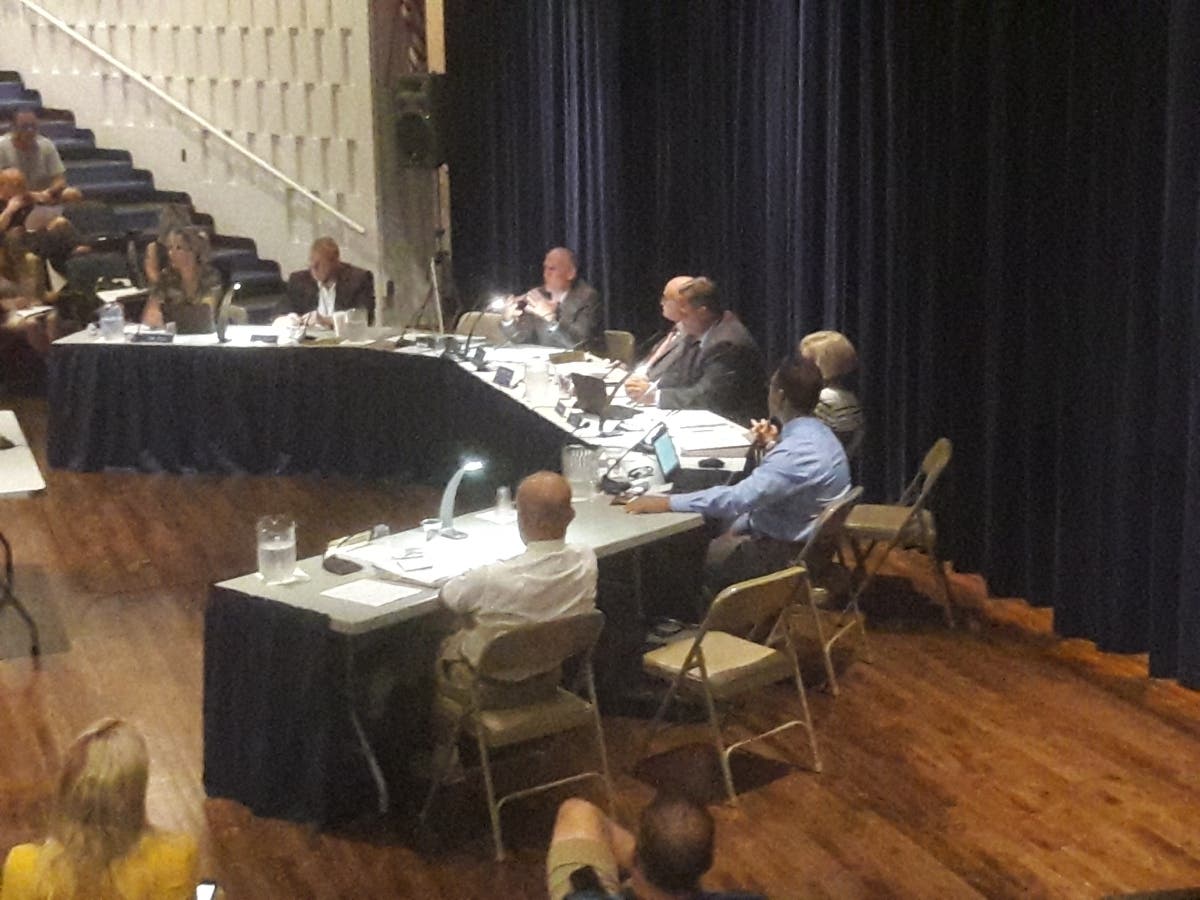
WALL, NJ — The Wall Township Board of Education has scheduled a special meeting for Tuesday, Aug. 27 to discuss its options after high levels of mold spores were detected in two of four classroom trailers at Central Elementary School.

Repair work on the trailers was halted Tuesday evening by the school board amid public outcry over the condition of the trailers, which had been used for classroom space since they were installed in 2007.

The trailers were scheduled for repairs this summer, with the district budgeting about $38,000 for what initially was anticipated to be the replacement of some of the wood and the addition of vinyl siding to the trailers, district business administrator Brian Smyth said at Tuesday’s board meeting.

But issues with the first company that was going to do the repairs led to a delay in the work, which finally began Aug. 15. As contractors began removing the existing wood siding, they discovered the needed repairs were more extensive, Smyth said.

Parents who got wind of the extensive damage, which included rotting floor joists, took photos and shared them on social media, which led to a firestorm of criticism.

Fifth-grade students were supposed to have their classes in the trailers when school opens on Sept. 5, but that was plan was scrapped and those students’ classrooms will now be in the main building.

Superintendent Cheryl Dyer said the four classes were accommodated by shifting other staff. The Spanish teacher will now travel from classroom to classroom instead of having her own room. Three reading intervention teachers, a math intervention teacher and the gifted and talented teacher also will be sharing spaces and using other areas, including the media center, for their work with students, which freed up two more rooms. The fourth room was freed up by moving an administrator, who will now share space with another administrator, Dyer said.

Smyth said the trailers were purchased and installed for $350,000. He did not have an estimate of what new trailers might cost to purchase and install on concrete slabs, rather than sitting on cinderblocks the way the current ones exist.

The trailers were meant to be temporary, Dyer said, and cautioned that replacing the trailers would require receiving approval from the state Department of Education, which is not guaranteed.

«Is this cost effective?» asked Ralph Addonizio, who was voted in as the board’s new president Tuesday night. «At what point is it not worth putting more money in?»

The mold spore findings may have answered that question. Mold remediation in classrooms has cost other districts more than $100,000.

The test results reported by Partner Engineering and Science of Eatontown, showed 6,580 spores of cladosporium per cubic meter of air in Trailer 1, triple the level detected in the air outside the trailer, according to the report by Brian Nemetz, technical director of industrial hygiene services, health & safety services.

Cladosporium is a mold that can cause allergies and asthma, according to the website Medical News Today. Spores from the mold can be airborne, which is also how the mold spreads.

There also were elevated levels of Pithomyces in Trailer 1, according to the report, with 200 inside compared with 40 in the outside air. Trailer 1 also showed the most deterioration and had been the focus of complaints about ants in the classroom, parents said at the board meeting.

Trailer 3, meanwhile, had high levels of Chaetomium (200 per cubic meter, and not detected outside) and Stachybotrys/Memnoniella (40 per cubic meter and not detected outside) both of which can cause health issues, according to the CDC.

Nemetz’s report said there was a musty smell in some of the trailers but they could not find where the water had gotten into them.

«Based on these findings, Partner recommends the following actions:

  • Conduct a through building envelope assessment and take remedial action to seal the building envelope if any deficiencies are noted according to applicable industry and governmental guidelines/requirements. This should include an engineering study of the space.
  • Replace or remediate rotted wooden supports and siding according to applicable industry and governmental guidelines/requirements.
  • A further inspection of the interior sections of the walls should be completed to ensure there is not a hidden fungal reservoir. As part of this, further remediation efforts my be required.
  • Inspect the HVAC equipment to ensure proper operation and cleanliness.
  • Upon completion of all remediation efforts, conduct a post-remediation investigation to determine if any additional moisture and or microbial damaged building materials remains.

The full report is on the district’s website.

Tuesday’s special meeting in the auditorium at Wall Intermediate School is scheduled for 7 p.m.

Have a news tip? Email karen.wall@patch.com Follow Wall Patch on Facebook.

source https://patch.com/new-jersey/wall/mold-spores-detected-2-wall-classroom-trailers

They spent $300,000 on luxury homes that soon flooded. They say the builder didn’t help. — Idaho Statesman

[unable to retrieve full-text content]They spent $300,000 on luxury homes that soon flooded. They say the builder didn’t help.  Idaho Statesman

Some residents of Middleton’s West Highlands neighborhood are angry at homebuilder Coleman Homes, a Toll Brothers company, after the crawlspaces of their …

source https://www.idahostatesman.com/news/business/article234276077.html

Health officials issue warning about vaping after dozens fall ill — Mail Tribune

[unable to retrieve full-text content]Health officials issue warning about vaping after dozens fall ill  Mail Tribune

The Oregon Health Authority and local public health departments are warning doctors and the public to be alert for signs of severe respiratory illness caused by …

source http://mailtribune.com/news/top-stories/health-officials-issue-warning-about-vaping-after-dozens-fall-ill-ecigarrettes-electronic-cigarettes

Surface mold is easy to remove | Peabody Gazette-Bulletin | Aug. 21, 2019 — Peabody Gazette-Bulletin

Staff writer

The warm, wet weather of the past few months has created perfect conditions for encouraging mold.

Mold is everywhere. It is a type of fungus that grows from tiny spores that float in the air and land on surfaces.

Getting rid of surface mold is quite simple: Scrub mold from walls and wood trim with a mixture of 1 qt. water and 1/2 cup bleach. Use a soft brush and work until signs of the mold disappear. After scrubbing surfaces, simply allow the bleach solution to continue to penetrate the surfaces and dry.

Mold begins as tiny black spots in grout lines on tiled bathtubs or shower walls, and on decks and siding in damp and shady areas.

Surface mildew doesn’t damage structures if it hasn’t penetrated into the wood itself and can be removed.

High concentrations of mold cause a foul odor, such as in damp carpets, damp walls, and wet wood under floors. These require more extensive work, such as removing carpets, replacing sheetrock, sealing with protective paint, and drying the area with fans.

Contaminated material should be put in plastic bags for disposal.

In a bathroom, a mixture of ½-cup bleach, 1 quart of water, and a little detergent can be applied to scrub away the mold. It can be re-applied a second time if the first treatment doesn’t remove all the mold. Adding detergent makes it easier to rinse the mold away.

Wearing rubber gloves, goggles, and long-sleeved tops is recommended. Don’t mix ammonia with bleach because the mixture forms a poisonous gas.

Grout sealer can be applied to clean, dry surfaces to prevent mold from re-growing.

Many paints have a mildew-resistant additive to prevent return of mold to wood that has been cleaned of mold and dried.

source http://peabodykansas.com/direct/surface_mold_is_easy_to_remove+5048mold+53757266616365206d6f6c64206973206561737920746f2072656d6f7665

Lawsuits from owners of water-damaged Toll Bros. houses can go forward, judges rule — The Philadelphia Inquirer

Starting in the early 2000s, at least 27 different builders in Southeastern Pennsylvania sold houses that were plagued by leaks through stucco, around windows, and elsewhere, according to an Inquirer investigation published in November. Rushed production, under-trained workers, lower-quality materials, and lax oversight by builders and code inspectors had left more than 650 homeowners in at least 55 zip codes in houses damaged by water and requiring extensive repairs, the investigation found.

source https://www.inquirer.com/business/toll-brothers-water-damage-arbitration-superior-court-decision-20190822.html

In-Mold Electronics: challenges in every step? — Printed Electronics World

Our report, In-Mold Electronics 2019-2029: Technology, Market Forecasts, Players, suggests that in-mold electronics (IME) can become a market larger than $750m by 2028. The market take-off will however occur only around 2023 or 2024, if not later. This is despite the fact that the technology has been in the making for many years. Indeed, first near-success in the automotive sector came as early as 2013/2014.
This article discusses some of the challenges on the way towards production of a successful IME product. It will also outline some of the key progress made which paves the way towards future adoption. To learn more please visit www.IDTechEx.com/IME. It provides a detailed assessment of the materials, processes, products and prototypes, applications and markets for IME and multiple rival technologies such as molded interconnect devices (MID) or aerosol deposition. Furthermore, this report provides application-segmented ten-year market forecasts and overviews of the key companies across this emerging value chain.

Successful development of an IME product requires a steep learning curve. This is despite the fact that the individual processes used in IME are fairly standard. Indeed, a somewhat similar process, IMD or in-mold decoration, is already commercial. We seek to highlight challenges by contrasting IME with IMD in parts of this article.

The chart below shows the process steps involved in an IME production. In this article, we consider the differences between a conventional IMD and an IME process to highlight development challenges.

Printing on flat sheets: the material set is different between IME and IMD. In a conventional IMD, graphic inks are printed and the color quality is carefully controlled. In IME, functional inks, or stacks of functional materials, will need to be printed. This will require learning as the printing and drying conditions are different. The procedures might also be different depending on the specific set of materials used in the stack and the order in which the materials are arranged in the stack. The curing conditions, especially drying times and rates, are also different and require process as well as equipment adjustment. The printing will also require careful control of thickness so that the designed electrical properties are retained after the forming step. This step of deposition and curing functional materials on a flat sheet can reduce yield, e.g., 2% loss or so.

Pick-and-place: in IME, electronic devices will need to be placed. This will require a pick-and-place machine. It will also likely require the use of special dispensed conductive adhesives for surface mounting. In most cases, the SMDs are placed whilst the film is flat. This makes the pick-and-place easier. It will however require the development of design guidelines for part placement so that the subsequent 3D forming steps do not cause damage. Some have proposed doing the pick-and-place on an already-3D-shaped film. This will require special dispensing and pick-and-place machines able to manoeuvre in 3D spaces and will slow down the throughput. As such, this approach is not very attractive. The dispensed adhesives will also need to be cured without affecting the properties of previous layers.

Today there is some work to develop ultra-low-temperature solders compatible even with heat-stabilized PET substrates. The benefit of solder over conductive adhesives would be that (a) it would simplify part placement control due to their intrinsic orientational correction characteristics, and (b) it would provide a roadmap for supporting more complex ICs with higher I/O counts. For now, however, conductive adhesives dominate. Finally, note that the IC package is important. Since the conductive lines are screen printed the linewidths will be wide. As such, only packages with wide pin pads and pin spacings will be compatible with the process. This already points towards a further future evolution towards narrow metallization techniques. That would, however, require the development of appropriate ink sets compatible with IME processes and narrow linewidth printing techniques.

3D Forming: the next step is 3D forming, e.g., thermoforming. The equipment set is similar to that used in IMD. However, process optimization will be required. This is because the thermoforming must respect the formability limitations of the functional materials and stacks thereof. Design knowhow will play a key role here because by design the circuit patterns and the placed parts can be in locations which experience the least change in dimension. Note that enabling this step in IME has required extensive material innovation. This is because the printed functional inks will need to be stretched. The conductors will be required to give a predictable behaviour and the insulators/cross-overs will need to remain pin-free and insulating on the substrate of interest (PC or PET or even on graphite inks). This has required the development of special inks with the right resins, the right particle distribution/morphology, and so on. The limitations of the materials dictate many design and process restrictions. As such, intimate knowledge of their workings, characteristics, and performance limits is essential. Finally, note that the thermoforming step will have an elevated temperature (150-170C). The impact of this will need to be considered in performance of previously cured or partially cured materials.

Trimming/cutting: the next step is to trim the film. Here, some die-cut process using part-specific tooling is carried out. One then proceeds to the connector assembly step. The connectors provide the connection to the outside world. The connectors are mounted, probably using an anisotropic conductive adhesive or film. This will require additional tools for applying the appropriate heat and pressure profile.

Injection molding: the film will be vacuum or mechanically held in place to allow injection-molding to take place. Depending on the application, the injection volume can be very large. The process also requires optimization, e.g., no air bubbles. This step takes place at a high temperature. As such, the printed circuitry and the formed material stacks will need to retain functionality after experiencing

high temperatures and after coming into contact with the molding resin chemicals. Note that the temperature will depend on the resin. For example, PC, PMMA, and TPU will require 260-340c, 240-280C, and 190-210C, respectively.

The molding process can also impact the commercial electronic packages used on the formed film. The high pressure (100MPa or so) can compress any gas trapped inside the package, thus deforming the package. The shear forces in the molding process can cause the component to detach. This risk is most acute when the polymer flow front arrives at the component site during the injection molding process. The change in temperature can also create stress via CTE mismatches, potentially deforming or detaching the SMEs. The selection, or development of, suitable packages can help here. Note that some firms are already responding to this market need.

Note that the products must remain functional in the field after deployment. This is particularly important given the industry’s past experiences and given the irrepairability of the structurally-embedded electronics. The reliability is closely linked to how the materials change their property as they experience heat, humidity, etc. It is also closely linked to the design and the material stack, and how that impacts and is impacted by moisture ingress.

In this article we mainly discussed the technical challenges, showing that, for example, an IMD maker can not overnight become an IME maker, and that it requires learning and significant adaptations. The process can be accelerated with the aid of strong technology and knowhow transfer. It should be noted that there are also many market challenges. We however postpone the discussion of these to another article.

Our report, In-Mold Electronics 2019-2029: Technology, Market Forecasts, Players, suggests that many prototypes and products are emerging in consumer goods, home appliances, and even interior and exterior of vehicles. The market will substantially grow in the coming years, exceeding $750m by 2028. The ability to design, produce, or integrate IME-made parts will become a strategic knowhow and competency for many firms worldwide. Many have already started actively building up competency. Others will need to follow suit if they don’t want to fall behind.
To learn more about the technical as well as commercial aspects of this emerging opportunity refer to the IDTechEx Research report In-Mold Electronics 2019-2029: Technology, Market Forecasts, Players or contact us at research@IDTechEx.com. This report provides segmented market forecasts, assessment of key technical challenges and the latest application developments, and overviews of the key players in the value chain. It covers IME but also competing technologies such as aerosol or molded-interconnect-devices (MIDs).

source https://www.printedelectronicsworld.com/articles/18012/in-mold-electronics-challenges-in-every-step

How effective is your mold safety system? — Plastics News

Given that some high-end multi-cavity automotive and medical part molds can exceed £500,000 (US $554,000), mold tooling doesn’t come cheap. In fact, some cost more than the injection molding machine itself! A trusted safety system which can prevent irreparable damage to these sensitive tools is on every molders’ wish list.

Safety of the mold can be compromised if components do not eject properly, if a foreign object enters the mold in production during the closing and opening sequence, and when too much clamp force is applied.

Very often, mold protection doesn’t receive the attention warranted. In part, this can be due to the complexity of setting up the system, which requires a certain skill level, particularly with regard to understanding clamp forces. Additionally, few injection molding suppliers offer active mold safety solutions that can sense and react instantaneously to an obstruction.

Sumitomo (SHI) Demag provides customers with a range of options, catering for the very latest hi-tech, all-electric machines, right through to hydraulic machines, and everything in between. 

Typically, machinery suppliers use motor torque or tie bar loading measurements to gauge the mold status on electric machines. Sumitomo (SHI) Demag remains the only known company to offer a mold safety system featuring high-resolution sensors built into the toggle system itself, claims UK managing director Nigel Flowers. These sensors are positioned close to the point where force is applied and links to the NC5 machine control panel, detecting and transmitting changes in the force signature during the mold closing sequence.

Forming part of the company’s active range, the sensor safety system — known as activeProtect — is available as standard and can be retrofitted to machines featuring dynamic servo drives. This includes the company’s all-electric IntElect models and fast-cycling El-Exis SP range.

On top of safety

On these machines, the high-resolution sensor is located on the first link directly behind the moving clamping platen on the offside. The benefit of positioning the sensor close to the point of force application is even the smallest tensile or compression strains are measured. It means that any condition that may result in the set mold safety force being exceeded is instantly addressed.

Nigel explains: “The signal produced by activeProtect is so accurate it can detect even the slightest change in force patterns. Force values are converted in the transducer into a 0 to 10-volt signal, which is immediately transmitted to the machine’s NC5 operating control system. At this point, the real values of closing force, piston speed and stroke are compared with the master calculations, enabling the machine to react and stop before the mold faces touch. It’s like a chain reaction, with the entire mold safety decision and response taking place in less than 10 milliseconds.”

For added mold protection, activeProtect has now been extended to monitor the opening strokes. This helps to ensure mechanical mold elements, for example unscrewing devices, are protected from damage.

Other technology available

Additionally, users of the IntElect machines can benefit from enhanced ejector control technology. Sumitomo (SHI) Demag’s latest advancement — Synchronized Ejector Operation — ensures that components are clear of the mold before it closes again. As well as preventing falling parts being crushed, it helps to mitigate damage to expensive mold tools.

«In an ideal world the parts are ejected with zero inertia and drop in a central line out of the mold space. It isn’t so much of a challenge for users of hydraulic machines, as plastic parts flow out of the mold in a cascade-like waterfall. In all-electric machines, this constant stream can be difficult to replicate. That’s because when the toggle clamp operates faster than the ejector mechanism, there’s less control over how and where the molded components will fall,” explains Nigel.

Through the application of this technology, which enables synchronous operation of mold and ejector, the ejector speed is adapted to the master mold speed. If the mold speed is slowed down, the ejector is prohibited from moving closer than 20mm towards the mold.

Thermal imaging is another technique that can be used to control the optimum point to eject parts from the mold. It can also help to ensure that the mold is clear of components prior to mold closing. Attached to the fixed platen on the machine, this infrared technology uses heat to determine if parts have been ejected from the cavities.

The benefit for many is thermal imaging provides users of hybrid and hydraulic machines with a safety solution. “Compared to vision systems, thermal imaging is approximately a third of the investment cost. Additionally, thermal imaging can also be used to monitor the temperature of parts, and document important production parameters,” notes Nigel.

Help for hydraulics

For the large volume of molders still using hydraulic-only machinery, safety systems are conventional and more limited. “Should an event happen within a mold in a hydraulic machine, the closing phase will continue, albeit at a slower speed, pushing gently in the hope it will come to a standstill before any permanent damage from the obstruction is done to the mold,” emphasizes Nigel.

“Setting these safety parameters is reliant on machine operators having the skills and finesse to identify the region in the closing stroke where the mold is most at risk,” adds Nigel.

Typically, this is just before the two mold faces touch. Operators then set a slower speed and force based on the hydraulic pressure level. Getting it wrong can lead to increased cycle times and consequently lower output.

The passive nature of this safety system is its biggest drawback. It relies on an operative incrementally converting the toggle system characteristics and cylinder diameter to the hydraulic pressure to determine the most likely collision point. If, as the clamping proceeds, this pressure level is exceeded, the system pressure relief valve opens and the mold stops.

Additionally, the safety system has to account for and overcome the mechanical resistance of the mold (cheeks and slides etc.). This often requires increased closing force, which again can damage the mold.

A slightly more sophisticated safety option was introduced with second generation machines. Featuring toggle clamping technology and more powerful control systems, machines were able to calculate the mold position from the crosshead position by storing a model of the toggle system in the control. With this system, a consistent force is accomplished by adjusting the pressure according to how close together the platens are.

“Given that a well maintained precision mold running 10-second cycles should have a lifespan exceeding 10 million cycles over five years, let alone the price tag these tools command, it’s worth giving your mold safety system the attention it warrants,” ends Nigel.  

source https://www.plasticsnews.com/news/how-effective-your-mold-safety-system

Huskers give back to Nebraska through flood work — KTIC

Lincoln, Neb. — It’s been months since record-setting floods swept into Nebraska communities and recovery efforts continue to show progress.

This summer, through a University of Nebraska serviceship program, several Huskers helped play a role in that healing process. The work included cleaning up debris, documenting road damage and educating survivors on how to protect their homes from mold.

“I know that I definitely would not be the person I am today without rural Nebraska,” said Tayte Jussel, an advertising and public relations major from O’Neill who participated in the program. “Being able to help the state that I love is really fulfilling to me.”

Jussel spent the summer working for the Nebraska Holt County Extension Office and Central Nebraska Economic Development District. During his internship, he developed educational materials on how to identify and treat mold in flood-affected homes. He got for the idea for the project, he said, after attending several emergency meetings and realizing how widespread the problem was.

“They were telling me about how there’s mold everywhere in those houses, and so what I wanted to do was give people information about mold, how you get rid of it and how it can affect your health negatively,” Jussel said.

Ben Rhodes, a math and political science major from Gretna, also helped with flood recovery efforts this summer. He spent the past several months repairing extensive flood damage at Linoma Beach, a campground area near Ashland.

While the intense, physical labor of the job challenged Rhodes, he was grateful to see his work transform the area and enjoyed how the position expanded his worldview.

“The impact I’ve seen has been not only on the Linoma Beach site, where our progress is daily and concrete, but also within myself. I have developed a newfound appreciation for the mechanisms of disaster relief and those who operate at these areas,” Rhodes said.

Rhodes’ duties included picking up driftwood and debris from the beach, removing rotted flooring in cabins, sweeping up dirt and mud, and assisting an electrician with destroyed power lines and electrical boxes. He said that being assigned tasks he had no prior experience with, then problem-solving his way to fix them, was one of the most satisfying parts of his summer.

“This has been the most difficult job I’ve ever had, and the most fulfilling,” he added.

Taylor Wilke, a sophomore agricultural leadership, education and communication major from Columbus, agrees that the flood serviceship program was a meaningful experience. Wilke was an intern at the Columbus Highway Department and helped document road damage so the area could receive Federal Emergency Management Agency aid.

Over the course of the summer, Wilke worked on around 200 road projects. The job kept her busy, but the knowledge she was helping her neighbors and contributing towards her town’s recovery made it all the more worthwhile.

“I find this job super interesting, since it deals with the roads that I drive on every day,” she said. “I definitely feel accomplished when I leave.”

source https://kticradio.com/agricultural/huskers-give-back-to-nebraska-through-flood-work/