Towns receiving disaster aid for April storm and floods — Bennington Banner

By Tiffany Tan, Manchester Journal

DORSET — An early spring storm brought $100,000 worth of damage to the Town of Dorset, the costliest storm the municipality has seen in at least a decade.

Certain areas of Dorset got up to 3 inches of rain in just two hours on April 15, causing heavy floods from both rainwater and snowmelt, said town manager Rob Gaiotti. East Dorset Village was hit particularly hard, with floods washing out parts of Mad Tom Road and Upper and Lower Squirrel Hollow roads.

The town to date has spent $60,000 from its general operating budget to fix the dirt roads, so it welcomed the recent news that it qualified for federal disaster aid.

President Donald Trump formally declared June 14 that six Vermont counties, including Bennington and Windsor, suffered a major disaster in the April 15 storm and flooding.

A preliminary assessment by the Federal Emergency Management Agency identified more than $2 million in eligible public infrastructure damage statewide, more than double the minimum for a disaster declaration.

«The areas of greatest impact included many small towns with limited transportation budgets,» Governor Phil Scott said in a statement Monday. «This will help them rebuild roads and other infrastructure without experiencing a long-term financial strain on their town budget.»

The declaration enables municipalities and qualifying non-profits, such as public utilities, to receive 75 percent federal reimbursement for storm response and recovery, according to a release from the Governor’s Office. The eligible expenses include debris removal and repairs to public roads, bridges and other infrastructure.

«We’re lucky that it was a FEMA emergency and that we’ll be able to get reimbursed for the event,» Gaiotti said. «If it wasn’t, it would be very difficult.»

Article Continues After These Ads

He described the federal aid as «a huge deal,» because Dorset only had a few thousand dollars set aside for contingency expenses.

Having to shoulder at least $100,000 for the unforeseen storm damage would have required the town to cut from other expenses in its general fund, Gaiotti said. Now, with additional financial assistance expected from the state, Dorset would end up footing only about $7,500 of the total bill.

Future work on the damaged roads would involve fixing their drainage and getting them ready for the winter, at a sum of around $40,000.

Gaiotti said the storm was the costliest he has seen in Dorset in at least 10 years — worse than the town’s $15,000 toll from the 2011 Tropical Storm Irene, which caused statewide damage estimated at $700 million and is one of the worst disasters in Vermont history.

Weston didn’t rack up as big a bill in the April 15 storm, but the town is also planning to apply for the federal disaster reimbursement.

The municipality is spending about $3,200 to clean the mold and water damage in the town hall basement caused by flooding, as well as to repair the local fire department’s air compressor and boiler, said Select Board Administrative Assistant Cheryl Barker.

«We did have 2 feet of water in the road,» Barker said, adding that the last time this happened was during Tropical Storm Irene.

Tiffany Tan can be reached at ttan@benningtonbanner.com, @tiffgtan at Twitter and 802-447-7567 ext. 122.

If you’d like to leave a comment (or a tip or a question) about this story with the editors, please email us. We also welcome letters to the editor for publication; you can do that by filling out our letters form and submitting it to the newsroom.
source https://www.benningtonbanner.com/stories/towns-receiving-disaster-aid-for-april-storm-and-floods,577057

Looming insect invasion threatens California wine and avocados: Researchers plan tiny wasp counterattack — Science Daily

UC Riverside is testing whether a sesame seed-sized wasp can control a pest that could seriously damage California crops including wine, walnuts, and avocados.

The pest, a sap-sucking spotted lantern fly, is originally from China and was first detected five years ago in Pennsylvania. Since then, large populations have spread rapidly to grape vines, apple trees, and other plants in New York, Delaware, New Jersey, Maryland, and Virginia.

Experts believe the lantern fly is likely to make its way to California soon.

Mark Hoddle, director of the Center for Invasive Species Research at UC Riverside, explains why the lantern fly is so harmful.

«It secretes copious amounts of «honeydew,» a waste product that encourages black, sooty mold and damages a plant’s ability to grow,» he said. The honeydew also attracts undesirable insects such as ants and hornets.

The impacts could extend well beyond California. According to industry reports, the state is the world’s fourth-largest wine producer, selling an estimated $35 billion domestically and exporting $1.5 billion annually.

Around 44% of nonnative insects arriving in California were first established elsewhere in the U.S. Given the speed with which the spotted lantern fly has spread, Hoddle realized the state needed a proactive approach to this predictable problem.

«Normally, when a bug shows up, we try to contain and eradicate it,» Hoddle said. «But by the time the population is found, it tends to already be widespread and hard to handle.»

The state Department of Food and Agriculture recently granted Hoddle $544,000 to test whether a tiny parasitic wasp, also originally from China, could be the solution to the looming problem. Hoddle explained that the wasp has a needle-like appendage it uses to lay its own eggs inside the lantern fly’s eggs. While developing, the wasp larvae eat and kill their hosts, and then emerge after chewing escape holes through the lantern fly eggs.

These wasps pose no threat to plants or people, but before they can be used to control the lantern fly, Hoddle must prove they won’t cause unnecessary harm to other native insects. «We can’t just release a Chinese parasite into the wild in California,» Hoddle said. «Chances are low it will harm the wrong targets, but we have to be sure.»

Safety testing will be conducted in a highly secure quarantine facility at UC Riverside. Native lantern flies, the subjects of safety testing, will be collected from natural areas in California and southern Arizona this summer.

Though the wasp is now being evaluated as a biological control on the East Coast, populations of lantern fly there have already grown large enough to cause significant concern for the grape industry, Hoddle said.

A spotted lantern fly’s wingspan is about 1.5 inches, and at most they can fly a few hundred feet at a time if they’re assisted by the wind. The lantern fly has spread so fast in part because the females lay eggs on nonbiological materials, such as train cars, motor homes, wooden pallets, and trucks that inadvertently move them into new territories.

«Anyone on the East Coast driving to California should be especially vigilant about checking their vehicle for egg masses before they make the journey,» Hoddle warned. «Failing to notice them could have serious consequences.»

Hoddle’s testing will take roughly three years, and he estimates that this may be around the time when the wasps will be needed in California. «We hope to be ready to release these wasps immediately when the spotted lantern fly shows up, giving us a really strong head start on the invasion,» he said.

source https://www.sciencedaily.com/releases/2019/06/190618102719.htm

Mold caused by the Arkansas River flooding could be making you sick — THV11.com KTHV

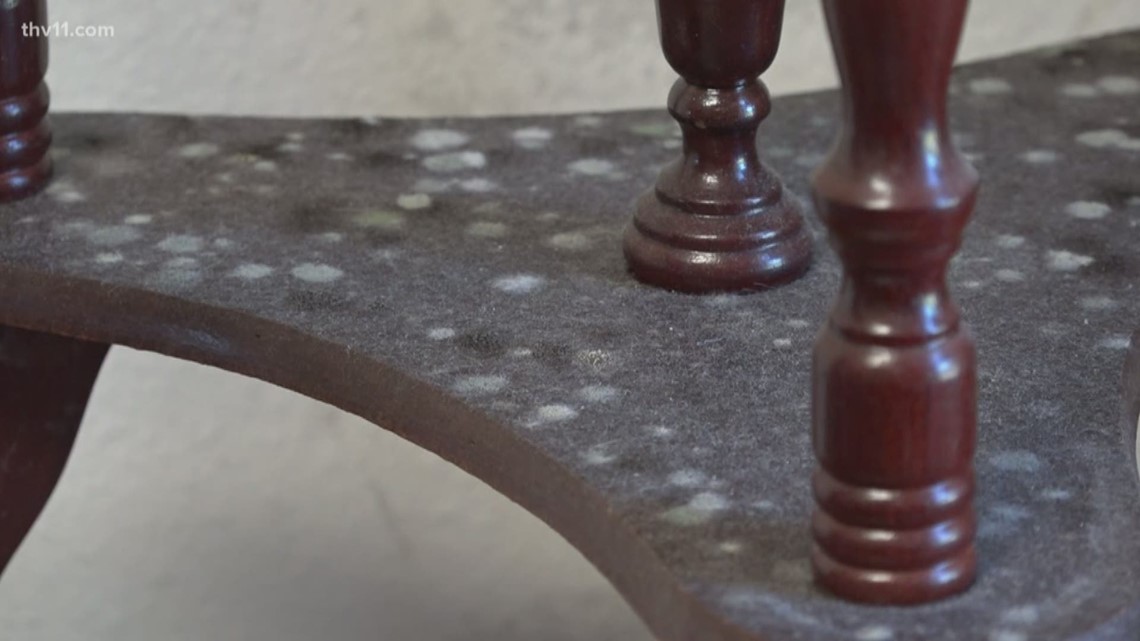
The historic flooding of the Arkansas River left behind all sorts of problems for people along the water, including issues with allergies.

Dr. Eddie Shields is an allergist at the Arkansas Allergy and Asthma Clinic. He said the mold count is almost always extremely high this time of year.

«Mold is a year-round allergen in Arkansas but it does peak during the warmer months,” he said.

RELATED: Weeks after evacuating homes, residents begin assessing damage caused by flood

But Dr. Shields said the recent flooding in Arkansas could make the problem worse. Mold spreads quickly and drives up the spore count, making the air in the areas affected by flooding unhealthy.

«I don’t think it’s going to be a widespread problem but definitely people that have flooding in their house could play a factor,” Dr. Shields said.

Dr. Shields said to protect yourself if you are cleaning up your home after the flood.

«Wear a mask to protect your nose and inhaling mold spores. Eye protection as well,” he said.

Greg Miros owns Enviro Products International. He is busy treating homes along the river in the Little Rock area for mold.

‘Wear a mask and take all the walls down all to where the water lines are at least. I would go up another foot higher because water will make its way,” Miros said.

Miros recommends staying away from Clorox. Instead, his company uses a mold inhibitor to kill off the mold safely.

RELATED: As flood waters recede, many wonder what to do in order to rebuild their homes

«It can be used around your animals, children. A lot of other types of products are Clorox types products which are very dangerous to work with,” Miros said.

Dr. Shields said if you do have issues, to get check with your doctor for treatment.

«If you are moving back into a home and then you start having a lot of sneezing and itchy eyes then you may very well be sensitive to mold and we can do some allergy testing,” he said.

Miros said to remove moisture from your home using fans and dehumidifiers. 

To contact Miros to safely get rid of mold in your home, call 501-258-6174.

source https://www.thv11.com/article/news/health/mold-caused-by-the-arkansas-river-flooding-could-be-making-you-sick/91-64615be3-d223-4c5f-a7e1-27696c74ff73

How To Grow Healthy Squash Plants — Yahoo Lifestyle

If you planted summer squash in your garden this season, you know that, when healthy, it is a very generous plant. Whether you started from seeds or planted three or four baby plants, you are probably already eyeing your garden plot, wondering if your backyard will soon be overrun by crookneck and zucchini vines. Squash is incredibly easy to grow but, even though you planted in rich soil, fertilize on the recommended intervals, mulch and keep roots moist, you may still run into a few problems. Read through this list to diagnose your squash and zucchini issues and learn how to solve common problems.

Mold

During excessive rainy spells in the summer months, squash can develop botrytis, or gray mold. It usually occurs when dead blossoms start to rot in rainy, humid weather. If you run across gray mold on your squash, cut the stems and toss them into the compost pile. During prolonged rainy spells, rake up fallen blooms to reduce the chances of the disease developing.

Blossom End Rot

Those sunken dark spots on the bottom of squash are called blossom end rot (BER for short). It’s not a disease but a sign of calcium deficiency an occurs due to uneven watering (wet-dry cycles in the soil), root damage, or too much nitrogen in the soil. You can still eat squash with BER however, simply cut away the sunken area. Treat plants with a calcium spray specifically designed for BER, keep soil consistently moist, and mulch around the plants.

Wilting Leaves

Soil may have adequate moisture but, during midday heat, squash leaves can still tend to wilt. Squash vines have a lot of leaf area to support, and during the hottest part of the day, it’s common for leaves to wilt. (Many plants, including hydrangeas, wilt in the middle of the day and revive as the evening cools.) Instead of immediately reaching for the garden hose and watering, check the plants again in the early evening to see if leaves have revived. Remember to mulch around the base of vines to help retain soil moisture.

Brown and Crispy Leaf Edges

When young leaves on squash vines develop brown, crispy edges, there’s a possibility you are dealing with pesticide damage. Quite often a pesticide is applied when the plants are too young and not able to tolerate the chemicals; the vine never outgrows the damage, remains stunted, and may never bear fruit. Always use extreme caution when applying pesticides and follow label directions exactly.

Squash Vine Borer

When squash vines wilt overnight, you have probably been invaded by the squash vine borer. The adult red and black flying insects lay eggs on the base of vines and undersides of leaves. Squash vine borers can infest a plant so heavily that they’ll tunnel into fruit through the stem, but as the growing season comes to a close, borers will burrow directly into fruit. Small holes in the sides of squash are likely a clue that a borer hides inside.

The easily visible borer eggs are tiny red specks—look for them on vines and undersides of leaves, pluck them or scrape them off and squish them whenever you find them. If vines wilt, yank them up, cut them open and look for borers. Never put borer-infested vines into your compost – burn them or bag them and put them in the garbage.

WATCH: The Biggest Mistakes to Avoid When Growing Tomatoes

Powdery Mildew

Late in the growing season, a white powdery substance often shows up on squash leaves. This is powdery mildew, a fungus disease. Once started, a fungicide spray can control it but can’t cure it. Many other plants, including bee balm, lilac and garden phlox, also get powdery mildew and create a source of infection. As powdery mildew disease progresses, leaves will first become completely white, then turn ashen gray. Ultimately, leaf sections between the veins fall away, creating a raggedy appearance. When the growing season ends and it is time to pull the vines, gather as much of the infested plant material as you can and destroy it; do not toss it in the compost pile.

source https://www.yahoo.com/lifestyle/grow-healthy-squash-plants-213734923.html

For a damaged wood front door, paint might be the only solution — The Oakland Press

Q: We are so tired of looking at our front door. It was moldy, and we tried scrubbing the mold but it didn’t work. So we sanded it, and sanded through the veneer. We’d like to paint the door, but what is the process?

A: Painting the door seems to be the best solution at this point.

You can paint it while it is still hanging in the doorway, or you can take it down and set it horizontally on sawhorses or a flat surface. An exterior door is heavy, so leaving the door on its hinges while you paint saves you from needing to muscle it around. Also, there’s no risk of bending the hinges, and you don’t need to rig up a temporary way to close off your house.

But painting the door while it is horizontal also has advantages. Drips are less likely, as are paint blobs on the hinges or floor. It’s easier to paint all six sides: the top, bottom and both side edges, as well as the front and back. Painting all sides minimizes shrinking and swelling of a door as weather changes and helps prevent water damage to the door if it’s splashed by wind-driven rain. If you decide to take down the door for painting, use shims to support the bottom edge while you remove the hinge pins, and keep track of which pin matches each hinge, in case a pin is slightly bent. To free a stubborn pin, hammer a thick nail up on the bottom of the pin.

Whether the door is vertical or horizontal, remove all the hardware attached to the door or carefully cover it with painter’s tape.

Where you sanded through the veneer, your door is probably ready for paint. But you also need to make sure all other surfaces, including the molding around the top and bottom panels, are clean and scuffed up. Clean by moistening a cloth or sponge in water with a little all-purpose cleaner added. Clean the cloth or sponge and wipe off the residue. When dry, scuff by hand-sanding with a fine-grit sanding sponge or 180-grit sandpaper. Vacuum any dust, or wipe it away with a microfiber dust cloth. Don’t use a spray intended as a dusting aid — it might contain silicone oil, which keeps later finishes from curing properly.

To complete your preparation, spread a dropcloth and gather tools. Have a good-quality two-inch sash brush with synthetic bristles that end at an angle, which will help you get paint evenly into corners and recesses. Also get a «weenie roller» — a skinny type about 1 inch wide and up to 6 inches long — plus a paint tray sized for the roller and a spare roller cover or two.

For paint, use a satin, semigloss or gloss water-based paint, possibly one made specifically for doors. Read the label and buy the recommended primer, unless you’re getting paint that doubles as primer. Water-based paint has a tendency to stick to other painted surfaces (or, in the case of doors, to weatherstripping) even after the paint is dry to the touch. Door paint resists sticking, and it’s also easier to clean if fingerprints collect — which they are sure to. Examples include Modern Masters Express Yourself Front Door Paint ($34.47 to $40.69 a quart, depending on color, at Home Depot) and Sherwin-Williams’s HGTV Home Interior & Exterior High Gloss Paint and Primer for cabinets, doors and trim ($16.48 a quart at Lowe’s).

Moisten the bristles and the roller, making them easier to clean, and blot out excess water against a cardboard scrap or a rag. For each coat, brush paint over each door edge. As you finish the edge, run the brush along the corners to remove any drips. Don’t load the brush with paint for this; the bristles should be nearly dry.

Then paint each panel. First, brush paint on the molding around the edge. Switch to the roller for the main expanse, because rolling is faster and creates a more even coat. If you don’t want the slightly textured surface left by the roller, immediately go over the paint with the brush nearly dry.

Finally, paint the flat areas around the panels. If you have left the handle and lock in place, paint around them first using the brush. Then, switch to the roller. Painting the center vertical panel usually comes first, but your door doesn’t have that, so start with the top horizontal piece, then the outside verticals as far down as the middle horizontal. That’s next, then the rest of the verticals, and finally the bottom horizontal. Or you can do all the horizontals, then the two verticals. The key is to make sure you are always adding new paint next to an area where paint is still wet. As you finish each section, follow after the roller with a single pass of the brush if you want to smooth the roller texture or to get rid of drips. But don’t tidy up more in areas where the paint looks thin or rough. Wait for the paint to dry, then touch it up or apply a second coat.

Between coats of the same paint, you can save time and clean up mess by wrapping each tool — and even the paint tray — tightly in plastic bags or plastic wrap so paint doesn’t dry on them.

source https://www.theoaklandpress.com/lifestyles/for-a-damaged-wood-front-door-paint-might-be-the/article_6a022dea-7b42-11e9-a647-ef657c97e259.html

How to save water-damaged documents — Oklahoman.com

As storms pelted Oklahoma this spring and caused flooding across the state, it’s likely many property owners were left with water-damaged paper documents and books.

Brenda Hill, family and consumer sciences educator with the Oklahoma State University Cooperative Extension Service, said despite living in a digital age, many families still keep important papers at home. Retrieving items such as birth certificates, marriage licenses, or even sacred books after a storm can be a difficult task, but restoration and preventive measures can be taken to ensure future safe keeping, Hill said.

“For the best results, slowly dry papers and books. Wipe book covers with a solution of equal parts of rubbing/denatured alcohol and water,” said Hill advises.

She said pages should be separated for sufficient drying. When partially dry, stack and press the books to help keep the pages from crumbling. Alternate drying and pressing the books until they’re thoroughly dry, she added. This will help prevent mildew from growing. You also can use a fan during this process to help the books dry faster. Hill said several household supplies also may be used as drying solutions. Sprinkling cornstarch or talcum powder and letting it sit for several hours can absorb unwanted moisture, she said.

Patricia Nunes with The Oklahoma Historical Society provides preventive care to important historical documents. Aware of severe flooding in Oklahoma, the historical society takes steps to ensure books and documents are safe from damage. However, in cases where that’s not possible, Nunes advises taking measures to prevent further damage and mold growth first.

“One of our first recommendations for wet items is to keep them frozen until a professional conservator can work on them,” Nunes said.

In the end, even with seemingly successful drying and care, paper items still can disintegrate depending on the amount of pressure they can withstand.

“In the event the documents start to fall apart, you may want to contact official agencies and start the process of replacing Social Security cards, marriage licenses, birth certificates and other important documents,” said Hill.

source https://oklahoman.com/article/5633974/how-to-save-water-damaged-documents

Why mold follows water damage and how to stop it before it spreads during a flood — Augusta Free Press

news

Credit: fotosipsak

Water damage is no joke, and during a flood is one of the most common times that you are going to experience the most of it. It’s the year 2019, and with numerous floods that are almost as bad as 1993, there have been numerous homes and even commercial buildings compromised. Even just a little bit of seepage from flood waters can ruin the structural integrity, as well as pose numerous health risks for you when it comes to causing mold to grow in your homes. In this guide, we’ll teach you some good tips that can help you remove the risk for mold before it can start.

Remove Excess Water

Make sure you get a wet/dry vacuum or hire a company that specializes in home water removal as quick as possible. Moisture is the most common thing that can not only damage your home’s structural integrity, but it’s also a cesspool for bacteria and mold, especially when it sits for long periods of time.

Use Fans, Wet Vacs, and Shampooers, and Open Windows

Getting some industrial sized fans and opening windows on hot sunny dry days can greatly increase the chances of your home drying out faster, and even works great on carpets.

Buy Dehumidifiers

Don’t just settle with a cheap dehumidifier that won’t do the job. Also, if you have flood damage, you’re probably going to need more than one dehumidifier in order to remove excess moisture that evaporates into the air some.

Shampoo Your Carpets

What? You need to get them wet again? Yes, you do, but use a professional solution and you can easily mix in a little bit of Lysol cleaner to help not only eliminate bacteria and disinfect everything, but also to help kill unwanted mold as well (and get the smell better in there too).

Sanitize Everything

Okay, so maybe not every single thing, but baseboards, walls, and floors at least – pretty much anything the storm water or flood water touches. Storm water is full of germs and bacteria, especially river flood waters that lay stagnant. If you can’t wash and scrub your baseboards or walls with bleach, be sure to use a strong solution of Lysol to water as well (use about 10 oz. of Lysol per gallon of water) in order to kill all the germs.

Your Furniture May Be Hiding Something

Furniture is often a secret carrier of mold after and during a flood. While you may have the whole house clean and are working on drying it, even moisture and mold spores in the air can float down and seep into your couches, loveseats and more.

Conclusion

This year marks a great flooding time for much of the United States, and it’s imperative that you have a good protective method in place when it comes not only to water damage to your home, but also to mold. It can literally cause serious bodily harm if the spores are inhaled and grow in your lungs, as well as cause a lot of damage. If you’re in the real estate market, water damage can even destroy the integrity of your home’s value very quickly as well, so it’s best to take action as soon as possible.

Visit SanDiegoWaterDamageSD.Com Instant Estimate today!

uva basketball team of destiny

Team of Destiny: Inside Virginia Basketball’s Run to the 2019 National Championship, by Jerry Ratcliffe and Chris Graham, is available for $25.

The book, with additional reporting by Zach Pereles, Scott Ratcliffe and Scott German, will take you from the aftermath of the stunning first-round loss to UMBC in 2018, and how coach Tony Bennett and his team used that loss as the source of strength, through to the ACC regular-season championship, the run to the Final Four, and the thrilling overtime win over Texas Tech to win the 2019 national title, the first in school history.


augusta free press

source https://augustafreepress.com/why-mold-follows-water-damage-and-how-to-stop-it-before-it-spreads-during-a-flood/

Hurricane-Associated Mold Exposures Among At-Risk Patients — Medscape

Authors and Disclosures

Nancy A. Chow, PhD1, Mitsuru Toda, PhD1,2, Audrey F. Pennington, PhD2,3, Enock Anassi, MD4, Robert L. Atmar, MD5, Jean M. Cox-Ganser, PhD6, Juliana Da Silva, MD2,7, Bobbiejean Garcia, MPH8, Dimitrios P. Kontoyiannis, MD9, Luis Ostrosky-Zeichner, MD10, Lauren M. Leining, MPH5,11, Jennifer McCarty, MPH12, Mayar Al Mohajer, MD5,12, Bhavini Patel Murthy, MD2,13, Ju-Hyeong Park, ScD6, Joann Schulte, DO14, Jennifer A. Shuford, MD8, Kimberly A. Skrobarcek, MD2,15, Samantha Solomon16,17, Jonathan Strysko, MD1,2, Tom M. Chiller, MD1, Brendan R. Jackson, MD1, Ginger L. Chew, ScD3 and Karlyn D. Beer, PhD1

1Division of Foodborne, Waterborne, and Environmental Diseases, National Center for Emerging and Zoonotic Infectious Diseases, CDC; 2Epidemic Intelligence Service, CDC; 3Division of Environmental Health Science and Practice, National Center for Environmental Health, CDC; 4Harris Health System, Houston, Texas; 5Baylor College of Medicine, Houston, Texas; 6Respiratory Health Division, National Institute for Occupational Safety and Health, CDC; 7Division of Global HIV and Tuberculosis, Center for Global Health, CDC; 8Texas Department of State Health and Services; 9The University of Texas MD Anderson Cancer Center, Houston, Texas; 10McGovern Medical School/Memorial Hermann-Texas Medical Center, Houston Texas; 11UTHealth School of Public Health, Houston, Texas; 12Baylor St. Luke’s Medical Center, Houston, Texas; 13Division of State and Local Readiness, Center for Preparedness and Response, CDC; 14Houston Health Department, Houston, Texas; 15Division of Healthcare Quality Promotion, National Center for Emerging and Zoonotic Infectious Diseases, CDC; 16Harris County Public Health, Houston, Texas; 17Public Health Associate Program, Center for State, Tribal, Local, and Territorial Support, CDC.

Corresponding author
Nancy A. Chow, yln3@cdc.gov, 404-639-5467.

Luis Ostrosky-Zeichner reports grants and personal fees from Astellas, personal fees from Merck & Co., grants and personal fees from Pfizer, grants and personal fees from Cidara, grants and personal fees from Scynexis, personal fees from F2G, grants from Amplyx, personal fees from Mayne, personal fees from Gilead, personal fees from NovaDigm, personal fees from United Medical, and personal fees from Stendhal outside the submitted work. Dimitrios P. Kontoyiannis reports honoraria for lectures from Merck & Co., Gilead, and United Medicine and also reports consulting fees from Merck & Co., Astellas, Cidara, Amplyx, and Mayne. No other potential conflicts of interest were disclosed.

source https://www.medscape.com/viewarticle/913762

Looking Back with Aurore Eaton: Henry Flagg French — The man who gave us the “French drain” — The Union Leader

The website of a popular home improvement retailer has a page titled “How to Install a French Drain.” The text states that “Drainage problems in your yard can lead to unsightly pooling and even mold or water damage in or around your home. Fortunately, you can collect runoff water and channel it to an appropriate outlet with a French drain. What is a French drain? A trench filled with a perforated pipe and gravel or rock that allows water to drain naturally.”

Henry Flagg French

Photograph of Henry Flagg French, circa 1880.

Looking Back with Aurore Eaton sig

It would be logical to assume that the “French drain,” in common use today, was invented in France. Remarkably, the name originates from its association with a man from Chester, N.H., Henry Flagg French.

The most recent series of “Looking Back” columns told the story of Henry’s half-brother, Benjamin Brown French (1800-1870), who held prominent positions with the federal government in Washington, D.C. He is most remembered for his personal journal that describes private and political life in the nation’s capital from the 1840s through the 1860s.

Benjamin’s close friend and confidant throughout his life was his half-brother Henry Flagg French. Their father was Daniel French (1769-1840), a successful lawyer who lived and practiced law in Chester. Daniel French served as the state’s Attorney General and as a judge on its Supreme Court. He was twice widowed, and remarried twice. Benjamin Brown French was the only child from his marriage to Mercy Brown (1778-1802). Daniel French’s second marriage, to Betsey Flagg (1778-1812), produced four children. Henry Flagg French’s mother was Sarah Flagg (1782-1878), Daniel’s third wife and Betsey’s sister. Henry was the eldest of the six children from that union.

Although Henry was 13 years younger than Benjamin, their age difference didn’t seem to matter as the two men enjoyed an easy compatibility. Also, they both happened to marry sisters. Benjamin’s first wife was Elizabeth “Bess” Smith Richardson (1805-1861) whom he married in 1825, and Henry’s first wife was Anne Richardson (1811-1856) whom he married in 1838. Bess and Anne’s father was New Hampshire’s Chief Justice William Merchant Richardson.

Henry studied at Pinkerton Academy in Derry, and at Pembroke Academy in Pembroke. He apprenticed with his father in Chester, and completed his education at Harvard Law School. He began practicing law in Chester in 1834 and succeeded his father as the town’s postmaster in 1838. Henry moved to Portsmouth in 1840 to continue his law career, and relocated to Exeter in 1842. He served as a Rockingham County solicitor and as a bank commissioner and was appointed in 1855 as a Justice of the Court of Common Appeals. He moved to Boston in 1859 to establish a law office.

But Henry’s great passion was for finding ways to improve agricultural systems. He was a leader in agrarian organizations, and a prolific writer for farming journals. Henry took a particular interest in trying to solve water drainage problems related to fields, swamps, and farmhouse basements. After traveling to the United Kingdom and the Netherlands to study European techniques, he developed improvements suitable to the needs of Americans.

In 1859 Henry published a 381-page, illustrated book, “Farm Drainage – The Principles, Processes, and Effects of Draining Land with Stones, Wood, Flows, and Open Ditches, and Especially with Tiles.” Henry wrote in his preface “The Agriculture of America has seemed to me to demand some light upon the subject of Drainage … This treatise is an attempt to answer that demand, and to give to the farmers of our country, at the same time, enough of scientific principles to satisfy intelligent inquiry, and plain and full directions for executing work in the field… It has been my endeavor to show what lands in America require drainage, and how to drain them best, at least expense …”

The book contained a history of the art of drainage going back to ancient times; technical analyses of various drainage methods; and detailed descriptions and drawings of useful tools and materials. The illustrations include charts, graphs, and “how to” diagrams. The basic drainage scheme that French perfected and promoted through his influential book became known as the “French drain.” His practical approach has stood the test of time, and has proven to be adaptable to both small-scale and large-scale projects.

source https://www.unionleader.com/voices/looking_back/looking-back-with-aurore-eaton-henry-flagg-french—/article_764dd0e1-68bc-502b-baf8-fbe52ed60a20.html

New leak gives us our best look yet at the Pixel 4 design — BGR

With the official unveiling of Google’s highly-anticipated Pixel 4 lineup now just a few months away, a number of high-profile leaks have recently shed a bit more light on what we can expect to see out of Google’s next-gen smartphone models. And given how impressive Google’s Pixel 3 line was, it stands to reason that the Pixel 4 will live up to the hype and will offer a premium user experience positioned to rival the iPhone and Samsung’s Galaxy S10 series.

Design wise, recent renders have revealed that the Pixel 4 will likely feature a square camera module on the back, similar to many of the iPhone 11 rumors we’ve seen over the past few weeks. More recently, the folks over at Unbox Therapy managed to get their hands on metallic molds of both the Pixel 4 and Pixel 4 XL. The molds are typically used by case manufacturers looking to get a head start on case design and are often based on reliable information from the supply chain.

The video below provides us with a good look at the overall Pixel 4 and Pixel 4 XL form factor. And again, the most interesting takeaway is the square camera module on the back which, according to some rumors we’ve seen, may include 3 cameras.

Also of note is a report that the Pixel 4 lineup may ditch the unseemly notch that appeared on the Pixel 3. Consequently, the Pixel 4 design will boast a more prominent forehead similar, though perhaps smaller, than what we saw on the Pixel 2.

Other notable tidbits include the fact that the Pixel 4 line won’t include a physical fingerprint sensor. Consequently, Google appears ready to embrace facial recognition as an unlocking scheme. In turn, it will certainly be interesting to see how face unlock on the Pixel 4 measures up against Apple’s Face ID.

source https://bgr.com/2019/06/11/pixel-4-release-camera-design-iphone-11-similar/