State Of Emergency Declared In Missouri Due To Severe Weather And Flooding — Mdcp.nwaonline.com

JEFFERSON CITY — On May 21, Governor Mike Parson declared a state of emergency in Missouri in response to severe weather and ongoing flooding. The Department of Health and Senior Services reminds Missourians to stay safe during cleanup of tornado and flood damage, as responding to damaged areas can pose serious health risks including:

• Downed or broken power lines caused by storms or which in floodwater pose an electrocution hazard.

• Floodwater can contain raw sewage and pose other risks, including infectious diseases, hazardous chemical exposure, and debris that can cause injuries.

• Direct contact with floodwater can cause skin rashes, an infection of cuts or wounds or stomach illnesses including vomiting and diarrhea.

• Sharp objects and debris, such as glass or metal objects, may be lurking in debris from severe storms or in floodwater.

• Animals, insects, snakes and other reptiles that have been displaced due to storms or flooding may be submerged or hiding in debris in or near flood waters.

When responding to severe weather or handling debris caused by severe weather or flooding, be sure to wear proper clothing and safety gear. And upon breaks or finishing work for the day exposed hands, feet and any other skin should be washed with soap and clean water. Clothing exposed to floodwater should be removed as soon as possible.

After working in or near debris or flood waters, immediately wash any cuts or scrapes with soap and clean water, and monitor any cuts, scrapes or wounds for redness, swelling or drainage. Seek prompt medical attention if any of these symptoms develop.

Anyone involved with cleanup should have had a booster dose of tetanus-diphtheria (TD) vaccine within the past 10 years. Contact your local health department or your primary care physician if you need a TD vaccine. If you get a deep cut or puncture wound, seek immediate medical attention and ask about a tetanus booster.

Additionally, recent historic flooding may have created an environment hospitable to mold in affected homes and other buildings. Structures damaged by severe weather and strong winds may also have been opened for rainwater to enter and can also create an environment for mold to grow. Proper cleanup is key to protecting health and preventing illness.

If mold is present, individuals with certain allergies may exhibit symptoms such as sneezing, runny nose, upper respiratory irritation, cough and eye irritation. Additionally, exposure to excessive amounts of mold can cause an increase in the frequency or severity of asthma symptoms.

DHSS offers the following tips to clean mold safely and properly:

• Wear personal protective equipment such as gloves, a mask and goggles to protect your eyes, nose, mouth and skin.

• Throw away any items that were wet with rainwater or flood water and couldn’t be cleaned and dried completely within 24-48 hours. Take photos of any items discarded for insurance purposes.

• Flood-related mold on non-porous surfaces should be cleaned with a solution of one part bleach to 10 parts water. Use caution: do not breathe fumes and avoid contact with skin.

• Open all doors and windows while you are working in the building, and leave as many open as you safely can when you leave.

• Use fans and dehumidifiers to remove moisture when electricity is safe to use

• Do not cover mold. Remove it instead. Painting or caulking over mold will not prevent it from growing.

As cleanup efforts continue, DHSS and local public health staff are working in affected areas throughout the state to help restaurants, groceries and other food-related businesses reopen quickly and safely for you and your family. These establishments are required to be inspected before reopening where DHSS and local public health staff help identify and correct any potential risks.

There are many precautions you should take when handling food, kitchen appliances and cooking utensils stored in storm damaged or flooded homes as well.

Sanitization: Items that can be sanitized should be washed with soap and clean water and rinsed with clean water, then sanitized in one of the following methods:

• Place in water. Bring water to a boil, and boil for a minimum of three minutes, or

• Place in a freshly-made solution of one teaspoon of unscented liquid 5.25 percent chlorine bleach per gallon of safe drinking water for 1 minute.

Allow items to air dry completely before using or storing.

Safe drinking water: It is important to establish a source of safe drinking water in your home. You will need this not just for drinking, but for proper sanitization of items in contact with flood waters also.

Bottled water that did not come in contact with flood water is safe to drink. Tap water may be used but may need to be boiled first. If you have a private well, water samples should be collected and tested before consuming after a flood. You may contact your local public health agency or DHSS at 573-751-3334 to obtain a free well-water testing kit.

Sorting food items: Many food items are not edible if stored in a storm damaged or flooded building. Remember, when in doubt, throw it out, and never try to determine safety by tasting foods. Tasting and smelling are not reliable methods of detecting bacteria.

Residents should throw out any food that may have come in contact with debris or flood waters. This includes any food not in a waterproof container, such as cardboard boxes, bottles and jars with screw caps, home-canned items and containers with pull tops.

Commercially canned items in metal cans and food in retort pouches like those commonly used to package tuna may be sanitized and saved.

If the home lost power: Refrigerated items generally remain unspoiled if the power was out for less than four hours and the door remained closed. Frozen items may be safely refrozen if ice crystals remain visible in the food.

Handling cooking utensils: Discard wooden cutting boards, plastic utensils, baby bottle nipples and pacifiers. You can sanitize and save all other cooking and eating utensils.

DHSS urges residents to be extremely cautious with food and cooking utensils stored in storm damaged or flooded buildings. Stored food and cooking utensils can become home to growing bacteria like salmonella and listeria, which can cause potentially serious food-borne illnesses. The bottom line is: when in doubt, throw it out.

About the Missouri Department of Health and Senior Services: The department seeks to be the leader in protecting health and keeping people safe. More information about DHSS can be found at http://health.mo.gov.

General News on 06/06/2019

source https://mdcp.nwaonline.com/news/2019/jun/06/state-of-emergency-declared-in-missouri/
Proctor voters approve $330K bond | Local News — Rutland Herald

PROCTOR — Residents approved taking out a $330,000 bond to renovate the town clerk and treasurer’s office by a 58 to 43 vote at a special meeting on Tuesday.

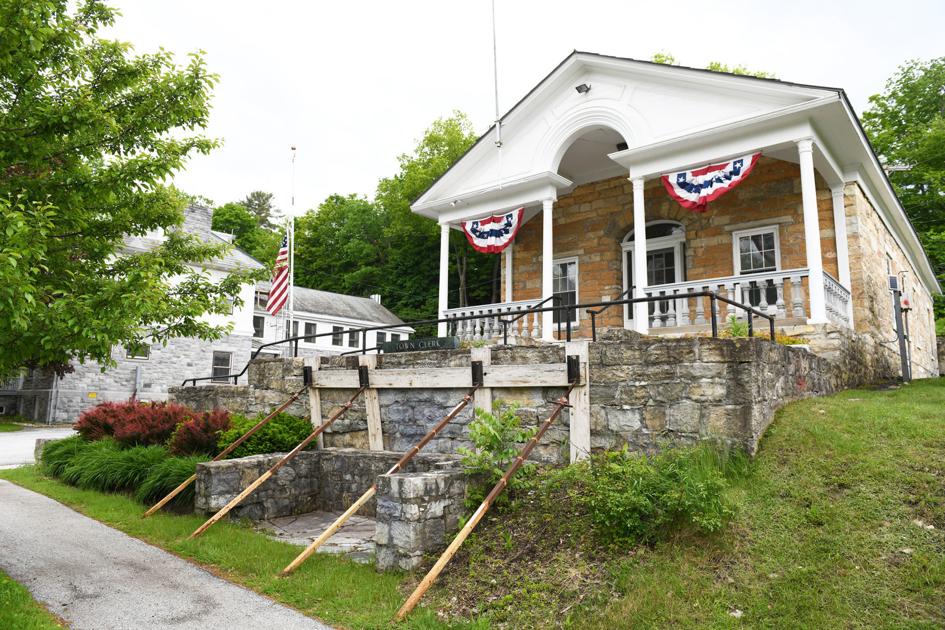
Town Manager Stan Wilbur said Wednesday that a voice vote was held Monday, where voters also approved using $90,000 in town surplus funds to help with shoring up the front wall of the Town Office, a separate but related project.

At Town Meeting Day in March, voters rejected an article that would have used $160,000 in town surplus funds to renovate the town clerk and treasurer’s office. That plan didn’t involve making the office compliant with the American with Disabilities Act, said Wilbur. He said members of the public, at meetings, expressed a desire to see this added work rolled in with the renovation project. Wilbur said the plan voters approved Tuesday includes an exterior lift and stairwell.

Wilbur said there may be funds available for the office renovations that will reduce the amount of bond funds that have to be used.

“We are hoping to receive a grant from the Vermont Community Development program,” he said. The most the program awards is $100,000.

The renovations are to address problems with the office such as mold and water damage caused by a flood several years ago.

Regarding the front of the building, the wall has been sagging and is in need of repair, said Wilbur. He hopes work will begin as soon as possible. In addition to $90,000 in town surplus funds, a $20,000 Historic Preservation Grant from the state is also being applied. He said Wright Construction Company has been awarded the contract.

Wilbur said work on the wall can’t begin for at least 30 days, as there needs to be a period where voters can petition for a re-vote. The same goes for the bond, except that work likely wouldn’t begin until winter or spring.

Select Board Chairman Bruce Baccei told the Herald in March after the renovation vote failed that he believes voters rejected the proposal because it didn’t include the ADA upgrades, not because of the cost.

Wilbur said Wednesday the bond proposal, including the ADA elements, is about $130,000 more expensive than the plan floated in March.

In late April, the asbestos issue was handled, causing the clerk’s office to be closed for about a week. Asbestos was found in pipes within the building when the scope of the mold problem was being explored. The Town Office is a former Vermont Marble Company building. Its origins date back to the late 1800s.

keith.whitcomb

@rutlandherald.com

source https://www.rutlandherald.com/news/local/proctor-voters-approve-k-bond/article_311d8ca1-1973-5378-b7f9-78df84e974c2.html

What is the Underwriter Thinking? — Insurance Journal

Got a really interesting question this week. The essence of it is that the agent has a customer with a homeowners’ policy. The company is planning to renew coverage with the house on Actual Cash Value (ACV), rather than Replacement Cost (RC). The company has asked for a specific repair that the customer just doesn’t see as necessary. The agent wanted to know what they should do about this.

By now, you’ve already started to form opinions and you don’t even have all of the details yet. That’s cool. I do it, too. But let me give you a few thoughts on this topic from an underwriter’s perspective by answering a few questions that might already be on your mind.

Why ACV?

Actual Cash Value is a method of valuing property that attempts to estimate what the property is worth at the time of loss. I see property valuation methods as estimates at best. There are many variables that can go into estimating the replacement cost value of a piece of property and even more when you estimate the ACV.

ACV is calculated by first estimating the replacement cost of the piece of property. Depending on the property, there are several ways of doing that. For buildings, there is building valuation software. You could use that same software to estimate the replacement cost of personal property. You could also have receipts that detail the cost of the items new or go to a retail store and find out what the items actually cost today.

ACV is the replacement cost with a deduction for depreciation. Now that we have an estimate of the replacement cost, we have to figure out how to depreciate it. One simple method of calculating depreciation is by finding (or estimating) the effective useful life of the property, subtract the amount of time the item has been in service (how long ago it was bought), and then divide the remaining useful life by the effective useful life. Multiply that number by the replacement cost. All good? Here’s what that looks like.

useful lifetime in use = remaining useful life

replacement cost x remaining useful life / useful life = ACV

There are other methods of finding ACV, but this will do for now.

Back to the question: why did the underwriter decide that the risk was going to be written on ACV? What we know so far is that the underwriter has identified some repairs that they deem as necessary and there is at least one of them that the insured has decided is unnecessary and doesn’t want to do it.

My underwriter mind reading implant tells me that it is likely that the company has written this risk for at least 3-4 years and there is some history. It feels likely that there is some small claims activity. From what we know, there is some issue with repairs that need to be made.

An underwriter shouldn’t have an issue with one small repair. In fact, I have seen underwriters approve risks conditionally with necessary repairs on the promise that the insured was planning to work on them over the policy year. These could be things like some obvious wood rot at a window or door, or some soffits that need to be repaired or replaced.

The problem is that there appear to be several of these repairs, and we know of one repair that the insured doesn’t want to make. That kind of push back is a problem for underwriters. It tells them that the insured either cannot afford to make the repairs (not a statement about the character of the insured), that the insured doesn’t want to make the repairs (a potential statement about the character of the insured), or that the insured is waiting for something to happen so that the insurance policy will repair the existing damage (a definite statement about the character of the insured).

Again, my underwriter mind reading implant tells me that the existing damage, and the attitude of the insured worked together to create increased risk in the underwriter. That, and the existing relationship with the insured, is why they decided to renew with an ACV valuation. The underwriter actually wished that this was new business so that they could decline it and be done with it.

Why the repair requirements?

This goes back to the last question. Why does the insured have to make these repairs? Why can’t they just wait for something to happen so that the insurance policy pays for it?

That’s not what insurance is for. A homeowners’ policy is not designed to provide for the regular required maintenance of the dwelling. It’s meant when something unexpected happens, like a hurricane, a fire, or Godzilla shows up.

As to the repairs themselves, existing damage to a building increases the probability of loss to the dwelling from different causes. No. the maintenance of a dwelling can’t change the probability of hurricane, flood, or Godzilla. On the other hand, the existing damage does create some additional thoughts for the underwriter.

My underwriter mind reading implant tells me that the underwriter wonders about what damage they can’t see. Existing visible damage is an indicator of the presence of damage that can’t be seen. I once tried to renovate a bathroom and when I got all of the tile out of the shower, I discovered water and mold damage to the wood frame. That was extra work and extra money.

Any damage that you can see from outside the house, whether it’s a cracked window, or a missing soffit, means that it’s possible that something that’s outside the house can get inside the house. A small piece of missing soffit is an invitation for squirrels, mice, rats, and bats. A small crack in a window is an invitation for water to enter the dwelling. Water

Why the repair requirements? It’s because the damage that we can see makes us concerned that there is more that we can’t see, and the probability is higher that future damage is coming.

What is the underwriter really trying to do here?

Let me check with my underwriter mind reading implant one more time and see what really might be going on in the mind of the underwriter. The underwriter’s primary goal is to write profitable business. My guess is that the underwriter either knows that they have written the risk for some time without many issues, or that they have a relationship with the agent that needs to be maintained. These two factors can cause an underwriter to be reluctant to nonrenew a risk.

From what we’ve seen of the risk, it looks like the underwriter wouldn’t have approved this risk if it was new business. It has too many potential issues. So, what is the underwriter trying to do? They could be trying to help the agent by offering a quote. It’s not the quote that the agent would prefer, and it’s not necessarily something that the insured wants. It puts the insured in the position to look for their coverage somewhere else.

That might be exactly what the underwriter is looking to do.

About Patrick Wraight

Patrick Wraight, CIC, CRM, AU, is director of Insurance Journal’s Academy of Insurance. He can be reached at pwraight@ijacademy.com.

Was this article valuable?

Here are more articles you may enjoy.

source https://www.insurancejournal.com/blogs/academy-journal/2019/06/05/528388.htm

Museum Offers to Help Save Historic Photos from Flood Damage — County 3

While some volunteers fill sandbags to save people’s property from flooding, the Sheridan County Museum and Historical Society is offering to help if important heirlooms have already been damaged by flooding.

Residents in neighborhoods where Big Goose Creek enters town near West Loucks Street, winding back and forth in lazy oxbows, saw some of the worst damage from last week’s flooding. In addition to being temporarily homeless, the Dykhorst family is working to save what they can of something priceless: family photographs.

When the flooding began Sunday afternoon, Michael Dykhorst helped his neighbors move belongings out of their basement. When he came home, the sump pump was keeping the house he shares with his parents and grandmother dry. As soon as he flushed the basement toilet, Dykhorst said, the pump gave out and water instantly backed up, quickly flooding the basement.

Dykhorst, a historian and author, was storing original photos important to his research and family photos in the basement. He saved a lot in a panic, but most of the photos sustained some damage.

As a member of the museum board, Dykhorst thought to call and ask the archivists for help with salvaging what he could.

—Advertisement—
Story Continues Below

—Advertisement—
Story Continues Below

Mikayla Larrow, executive director of the museum said many people’s gut reaction is to toss water damaged photos and documents, but she would advise anyone facing that heartbreaking dilemma to seek the museum’s advice.

While they are not a fully equipped paper conservatory, they may have some tips and tricks to dry out and preserve items that have “taken a bath,” even if it isn’t because of a catastrophic flood. It could be a burst pipe or a box dropped in a puddle, Larrow said.

As for the Dykhorsts, they are staying in a motel and will soon move back onto the property, but in a fifth-wheel camper. The water left a residue and a stench behind in the home that will take a while to air out. Many of the photos dried, but with an permanent curl. Most of them will have to be scanned, then disposed of before mold sets in.

Call the museum at (307) 675-1150 for help with damaged photos, documents, and books.

Leave a comment


source https://county3.news/2019/06/05/museum-offers-to-help-save-historic-photos-from-flood-damage/

Proctor voters approve $330K bond vote | Local News — Rutland Herald

PROCTOR — Residents approved taking out a $330,000 bond to renovate the town clerk and treasurer’s office by a 58 to 43 vote at a special meeting on Tuesday.

Town Manager Stan Wilbur said Wednesday that a voice vote was held Monday, where voters also approved using $90,000 in town surplus funds to help with shoring up the front wall of the Town Office, a separate but related project.

At Town Meeting Day in March, voters rejected an article that would have used $160,000 in town surplus funds to renovate the town clerk and treasurer’s office. That plan didn’t involve making the office compliant with the American with Disabilities Act, said Wilbur. He said members of the public, at meetings, expressed a desire to see this added work rolled in with the renovation project. Wilbur said the plan voters approved Tuesday includes an exterior lift and stairwell.

Wilbur said there may be funds available for the office renovations that will reduce the amount of bond funds that have to be used.

“We are hoping to receive a grant from the Vermont Community Development program,” he said. The most the program awards is $100,000.

The renovations are to address problems with the office such as mold and water damage caused by a flood several years ago.

Regarding the front of the building, the wall has been sagging and is in need of repair, said Wilbur. He hopes work will begin as soon as possible. In addition to $90,000 in town surplus funds, a $20,000 Historic Preservation Grant from the state is also being applied. He said Wright Construction Company has been awarded the contract.

Wilbur said work on the wall can’t begin for at least 30 days, as there needs to be a period where voters can petition for a re-vote. The same goes for the bond, except that work likely wouldn’t begin until winter or spring.

Select Board Chairman Bruce Baccei told the Herald in March after the renovation vote failed that he believes voters rejected the proposal because it didn’t include the ADA upgrades, not because of the cost.

Wilbur said Wednesday the bond proposal, including the ADA elements, is about $130,000 more expensive than the plan floated in March.

In late April, the asbestos issue was handled, causing the clerk’s office to be closed for about a week. Asbestos was found in pipes within the building when the scope of the mold problem was being explored. The Town Office is a former Vermont Marble Company building. Its origins date back to the late 1800s.

source https://www.rutlandherald.com/news/local/proctor-voters-approve-k-bond-vote/article_311d8ca1-1973-5378-b7f9-78df84e974c2.html

Lawmakers approve reforms to improve military housing — 13newsnow.com WVEC

WASHINGTON, D.C., USA — The problems facing more than 200,000 residents of privatized military housing, at more than 160 bases across the country—mold, water damage, rodents and insects—have been well documented.

Now, finally, there are some solutions.

The House Armed Services Readiness subcommittee unanimously approved some important amendments to the 2020 National Defense Authorization Act.

«The subcommittee mark requires the military services to have a comprehensive tenant’s bill of rights for residents of privatized military housing,» said Rep. John Garamendi (D-California). «The mark also prohibits the use of non-disclosure agreements in connection with entering into, continuing or terminating a lease for on-base military family housing.»

In other words, creating more transparency and giving residents more power in what, until now, has been an uneven playing field.

«We have done some great work that is important to our service members, their families and the communities neighboring our military installations,» said Rep. Doug Lamborn (R-Colorado) «This mark would, among other things, prohibit the use of non-disclosure agreements in connection to on-base privatized military housing and direct the military services to have a tenant’s bill of rights for residents.»

Today’s markup also included provisions requiring the Department of Defense to develop installation master plans to mitigate effects from climate vulnerabilities such as sea-level rise.

Additionally, subcommittee chairman Garamendi called the administration’s plan to take money away from the Department of Defense and direct it to the border wall, «inappropriate, ill-advised and very troublesome.»

The full Armed Services Committee votes next week. The entire House of Representatives is expected to vote on the 2020 NDAA by July 4. The House version will have to be reconciled with the Senate version and signed by President Donald J. Trump before becoming law.

source https://www.13newsnow.com/mobile/article/news/national/military-news/lawmakers-approve-reforms-to-improve-military-housing/291-b76299d4-fc23-4308-94cc-31a40021f9dd

Local entrepreneurs open new business to help home and business owners with property damage — Newsbug.info

LAFAYETTE – Indiana residents, Jerry and Jessica Beck, have answered the call to serve the local community, becoming the designated local “Paramedics of Property Damage” with the opening of their new PuroClean franchise located in Lafayette, Indiana. The husband and wife team will lead a team of highly trained technicians to help home and business owners with water, fire, mold, and other property issues, 24/7. PuroClean of Lafayette will serve Tippecanoe and surrounding counties, including Lafayette, West Lafayette, Monticello, Kokomo, Logansport and Rossville.

“We are extremely excited to offer world-class restoration and remediation services to our community and could have not asked for a better company to represent in our area,” said Jerry Beck. “We were in search of a business opportunity to help diversify our portfolio and chose PuroClean as we felt its servant leadership and focus on relentless customer service aligned well with our values to create a great experience for our customers in their times of need.”

Over the last 20 years, the couple has worked together as owners of Poisel Construction Inc., a construction company which specializes in excavations for basements and pools, grading, clearing land, installing driveways, septic system installation, and demolition. The company has been in their family for the past five decades. From an early age, Jerry learned the necessary tools to lead the company from his grandfather and by the time he graduated high school, he was running the business. In 2001, the Becks purchased the company from Jerry’s grandparents and quickly grew their team from two to over 10 employees. Jerry will serve in the company as an operations manager. His wife, Jessica, who has a degree in Business Administration and will handle the administrative roles. The couple has hired Matt Booth as team leader and production manager; Booth, who has 17 years of experience in the restoration industry and IICRC, ASD, WRT, and AMRT certifications, will head the franchise’s day-to-day operations.

“PuroClean is proud to expand our services into Lafayette to help community members recover from property damage situations,” said Steve White, President and COO. “Local property owners in the area can rely on Jerry and Jessica, and their team to respond 24/7 with urgency and sensitivity to professionally salvage their property.”

PuroClean has been coming to the aid of homeowners and businesses in the United States and Canada for over 20 years with its franchise network of more than 280 offices.

About PuroClean

PuroClean of Lafayette serves Tippecanoe and surrounding counties, including Lafayette, West Lafayette, Monticello, Kokomo, Logansport and Rossville. Known as the “Paramedics of Property Damage®,” PuroClean provides water damage remediation, flood water removal, fire and smoke damage remediation, mold removal, and biohazard cleanup to commercial and residential customers. Founded in 2001, PuroClean has a comprehensive network of 280-plus franchise offices across North America. PuroClean technicians are thoroughly screened, insured, and trained in utilizing the latest in mitigation technology and procedures, while operating under a strict code of ethics. Each PuroClean office is independently owned and operated. For more information about PuroClean, contact 800-775-7876 or visit www.puroclean.com; for franchise information, visit www.puroclean.com/franchise.

source http://www.newsbug.info/lafayette_leader/business/local-entrepreneurs-open-new-business-to-help-home-and-business/article_febc5a34-8c53-543f-842e-df51bb432ccb.html

American Red Cross, restoration specialists working around the clock after historic flooding — KNWA

FORT SMITH, Ark. (KFTA) — The Arkansas River is leaving some Sebastian County neighborhoods in disarray.

Relief organizations and local businesses are working around the clock helping flood victims and their water-damaged homes.

Volunteers from all across the country are coming to Fort Smith to help Arkansans get back on their feet.

«Any time there is a major disaster, the American Red Cross in a matter of 24 hours can set up what is essentially a multi-million dollar operation overnight,»says Andy Brubaker, the Executive Official Lesion Lead for the Arkansas flooding disaster.

Inside the Fort Smith Police Department, the disaster delivery services center for the American Red Cross is buzzing.

«We are trying to coordinate feeding, we are trying to coordinate sheltering, we have an IT support team here. We have folks with mental health, disaster health services. We have folks who are working with elected officials,» Brubaker said. «We want to take care of the basic needs — food, water, shelter.»

Over 100 volunteers are coordinating relief operations across the entire state, some working twelve hours a day and seven days a week.

Across town, flood damage restoration specialists are also working around the clock.

«Once the demolition has been done we will set drying equipment. Then after the dying equipment, you usually dry about three days. Once it has been dried, then the repairs will start,» says Mike Haney, Account Manager for ServiceMaster Restore.

ServiceMaster Restore is going into some homes that have six to eight feet of water.

«This is called an air mover, it’s basically a high-powered fan. Just for an average 2,000 square foot home, about 30 or 40 of these is often needed in these cases to properly dry it out. That gets the air circulating,» Haney said.

His warning for flood victims: «the longer water sits and it stays moist, the more damage is done. Mold can grow in as short as 72 hours.»

The cleanup process may be just beginning, but the help is pouring in.

source https://www.nwahomepage.com/news/fox-24/american-red-cross-restoration-specialists-working-around-the-clock-after-historic-flooding-1/2053577432

Webbers Falls homeowners return to homes after devastating flooding — KFOR Oklahoma City

WEBBERS FALLS, Okla. – Homeowners are starting to be allowed back into their homes in Webbers Falls after the devastating floodwaters from the Arkansas River left behind major damage.

Many homes in the town of about 600 people were underwater in the flooding. After nearly two weeks of standing water, this is what homeowners are dealing with now.

Thick, sticky mud with a strong odor is all over Marlene and Andy Paul’s home. In addition to a refrigerator and grandfather clock being knocked over, there’s damaged furniture from the floods and you can even see mold starting to grow on the walls.

The images are devastating for this married couple who was living here on their retirement.

Marlene says they used up their savings to fix this home up six years ago and it was all gone in a matter of days.

“We thought that was it on our furniture until we die,” Marlene Paul said. “We’re up there. We don’t know what’s going to happen in the next few years to our health.”

Outside their home, their garage still stands beneath several feet of water from the Arkansas River.

The floodwaters were so strong that the whole structure moved.

This family is not alone. Their neighbors are also dealing with the same monumental destruction.

Marlene and her husband Andy are now dealing with insurance and applying for federal assistance.

The mayor of Webbers Falls says a FEMA crew will be out soon to assess the damage. She estimates that a few hundred homes have been affected.

35.510930 -95.129960

source https://kfor.com/2019/06/04/webbers-falls-homeowners-return-to-homes-after-devastating-flooding/

Engineering firm to aid city on water projects — Houston Herald

Members of the Houston City Council approved a Springfield engineering firm Monday to continue helping it solve water issues caused by flooding more than two years ago.

Olsson will work with the city as it continues to partner with FEMA on various projects. The most recent is bank stabilization along a creek that runs through Emmett Kelly Park. The targeted area is near Chestnut Street and U.S. 63.

The City of Houston received notification in April that it will receive another $103,783 from FEMA following 2017 flooding.

The funding will allow for repairs along the shoreline of Brushy Creek near the city’s wastewater treatment plant and the bank stabilization.

Due to the severe storm, tornadoes, straight-line winds and flooding that occurred between April 29, 2017, and May 11, 2017, the City of Houston applied for and received monies for a FEMA federal disaster declaration.

The city received $99,499 (city 25 percent matching made the total about $132,010) for debris removal, electrical transformer replacement, flood and mold damage to the Houston Visitors Center, wastewater treatment plant, Village Trail fence, pavilion and trail, Main Street bridge repair and bank stabilization for Emmett Kelly Park.

Through a request for FEMA to re-evaluate two remaining areas, an additional $103,783 (City of Houston matching 25 percent, making the project costs $138,377) was approved to complete the projects.

Olsson will help prepare bid documents for the work.

Wells distributes planning, zoning rules

A Houston City Council member passed out copies of the town’s planning and zoning document M…

In other matters, city council members:

•Approved a bid from Flynn Drilling Co. of Troy for installation of a new pump at a city well on Augusta Street. The cost is $72,828 for a pump and $2,910 for a valve. The funds were included in the 2019 city budget.

•Discussed the city’s procedures for water and sewer connections at multi-unit dwellings with a single meter.

•Heard Robbie Smith, fire chief, report on several grants, including one recently approved by the MFA Foundation (See Herald, May 30). He outlined another that would pay for GIS mapping that could be used by all city departments.

•Conducted one housekeeping matter that clarifies the city clerk doesn’t need to reside in the city limits.

•Approved an ordinance that requires members of the Houston Park Board to reside in the Houston School District. 

•Heard a former city employee is returning to city hall in a part-time role. Carol Pittman will work 16-24 hours to assist while one employee goes on maternity leave and the city clerk’s office takes on additional responsibilities as interim city administrator.

•Adjourned into a closed session.

Mayor Pro Tem Kim Bittle oversaw the meeting in absence of Mayor Willy Walker.

source https://www.houstonherald.com/news/engineering-firm-to-aid-city-on-water-projects/article_f8c9e5d2-86db-11e9-8856-9bd739a94688.html