Saving the Historic Coke Building Proves Too Costly — WUWF

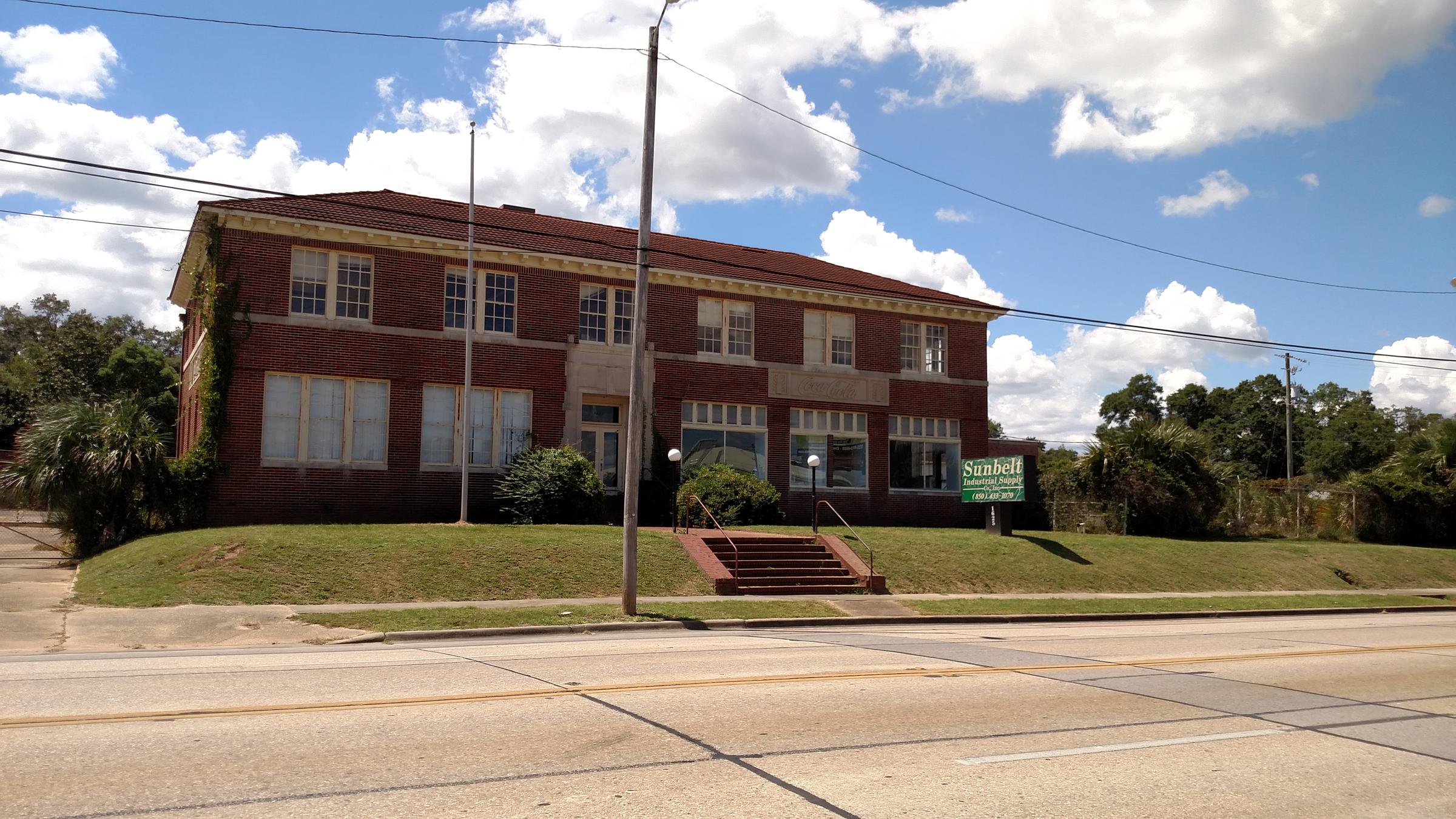
Keep Pensacola Beautiful has dropped plans to purchase and restore the historic Coca-Cola building on North Palafox Street near downtown.

The project fell through because it became too large and too expensive.

“Unfortunately, you know, it was just too big of a hurdle for us to tackle,” said Sigrid Solgard, executive director of Keep Pensacola Beautiful. “We were pretty disappointed about it, that Keep Pensacola Beautiful can’t be the ones to save this building.”

On Monday, just as the organization was wrapping up their community fundraising effort, they received the final assessment report that detailed the extent of damage to the 1930s structure and the cost to fix it.

“The timing wasn’t great,” Solgard said. “But, basically what the report said was that due to the neglect of the building for the last eight years and the unfinished modifications that the owner began doing to the building, there is just so much water damage, and therefore mold damage, that it would cost about $8 million just for remediation.”

According to Solgard, that amount of money would have just about tripled their overall projected budget of under $5 million for the five-year plan.

Additionally, the $8 million extra would have been required up front, before they could move in or start any renovation.  

“The amount of remediation that it would take would need to be done at one time, since the building is such a wide-open space. There’s not really a good way to seal off portions of the building to just remediate that,” said Solgard, adding that in this situation just turning on the air conditioner could be dangerous.

“For example, the mold spores would just be sent all over the place and you’d basically be duplicating your remediation work.”

In moving to purchase and restore the old Coca-Cola bottling plan, Keep Pensacola Beautiful planned to use a portion of the building as their new headquarters. Plans also included a 20,000-square-foot learning and community garden, an indoor/outdoor event space, coffee shop, and small business incubator.

In the process, the organization hoped to trigger a revival of the Northern Palafox Corridor, which currently has 13 vacant, blighted buildings in a mile stretch.

With the project now off the table, the question is ‘what’s next?’

“You know, we’ve kind of found this part of our organization that we intend to keep pushing at and keep working towards, that whole blight reduction, historic building revitalization,” Solgard explained of their plan to move forward with their mission of beautification.  

As for the building, she says they really don’t know what’s going to happen.

“I know there are some other organizations in the community who are about saving and preserving historic properties, so I hope there’s something they can do and Keep Pensacola Beautiful will obviously continue to advocate for the preservation of this building.”  

Although the decision to pull the plug on the project came down to money, it wasn’t because the community fundraising effort fell short of the $350,000 goal by October 1 for the down payment.

“Before we found out about the remediation needs, we had intended to keep moving forward, whether or not we got to our fundraising goal or not, we had some options that we were going to explore to continue working towards getting that building,» explained Solgard. «But, with the mold and remediation costs, there was just no way for us to just float $8 million.”

The fundraising effort did generate just over $100,000 (cash) for the effort, in just three months, which Solgard is grateful for.

In the coming days, the staff will be reaching out to donors to find out if they want their money back or would like to put it toward another Keep Pensacola Beautiful initiative.

“What we want to do is start an endowment for our organization to kind of ensure the longevity and sustainability for our organization. So, we’re going to offer that as an option, as well as keeping their donations in a building acquisition fund,” said Solgard, pointing out that Keep Pensacola Beautiful eventually would like to stop renting and purchase a permanent home within the community, with the continued goal of finding a blighted property they can renovate and revitalize.

source https://www.wuwf.org/post/saving-historic-coke-building-proves-too-costly

Can You Freeze Cheese, and Should You? — Healthline

Cheese is best enjoyed fresh to maximize its flavor and texture, but sometimes it’s not feasible to use large amounts of it within the use-by date.

Freezing is an ancient food preservation method that has been used for over 3,000 years.

It’s an effective way to increase the shelf life of foods, reduce waste, and save money.

This article tells you all you need to know about freezing cheese.

Wrapping cheese before freezingShare on Pinterest

Cheeses with a higher water content freeze at higher temperatures than those with a lower water content. For example, cottage cheese freezes at 29.8℉ (-1.2℃), but cheddar freezes at 8.8℉ (-12.9℃) (1).

Though freezing doesn’t destroy the nutrients in cheese, it affects its texture and quality (2, 3, 4).

When cheese is frozen, small ice crystals form on the inside, disrupting the internal structure of the cheese. When it’s thawed, water is released, causing the product to dry out, become crumbly, and potentially develop a mealy texture (1, 5).

Frozen cheeses may also be less meltable when they’re stored for a longer time. For example, mozzarella that has been frozen for 4 weeks melts to a lesser extent than mozzarella that has been frozen for 1 week (5, 6, 7).

Moreover, freezing inactivates microbes in cheese, such as bacteria, yeasts, and mold. This helps extend the shelf life, preventing it from going bad (1, 2).

However, freezing doesn’t kill these microbes — it only damages them. Thus, they may become active again when the cheese thaws (2, 8, 9).

In cases of ripened cheeses like blue cheese and Camembert, live mold and bacteria populations are deliberately added to give these varieties distinctive textures and flavors.

As freezing damages these microbes, it can stop these cheeses from ripening properly when thawed, potentially decreasing their overall sensory quality.

Summary

Freezing cheese causes ice crystals to develop, disrupting the cheese’s structure. This may affect the texture and make it drier, more crumbly, and mealy. It can also halt the ripening process of cheeses with beneficial, active mold populations.

Any cheese can technically be frozen, but some varieties respond to freezing better than others.

Here are some of the best and worst cheeses to freeze (1):

Best cheeses to freeze

As a general rule, it’s best to freeze cheeses that are designed to be used in cooked dishes rather than eaten fresh.

Hard and semi-hard cheeses like cheddar, Swiss, brick cheese, and blue cheese can be frozen, but their texture will often become crumbly and mealy. They will also be harder to slice.

Mozzarella and pizza cheese are generally suitable for freezing as well, particularly shredded pizza cheese. Still, its texture and melting properties may be negatively affected (6).

Some semi-soft cheeses like Stilton or soft goat cheese are well suited to freezing, too (10).

Plus, cream cheese can be frozen but may separate upon thawing. However, you can then whip it to improve its texture (10).

Worst cheeses to freeze

Grated hard cheeses like Parmesan and Romano can be frozen, but it’s more sensible to keep them in the refrigerator, where they will keep for up to 12 months. That way, you won’t experience the loss in quality that comes with freezing.

In general, hand-crafted cheeses with delicate flavors and aromas don’t freeze well and are best bought in smaller portions and eaten fresh.

Freezing is also not recommended for fresh curd cheeses like cottage cheese, ricotta, and quark due to their high moisture content.

Similarly, soft, ripened cheeses, such as brie, Camembert, fontina, or Muenster, are best eaten fresh and can be ripened in the refrigerator.

Likewise, while blue cheese can be frozen, low temperatures can damage the molds that are essential to the ripening process. Therefore, these cheeses are better enjoyed fresh.

Lastly, processed cheeses and cheese spreads are unsuitable for freezing.

Summary

Hard and semi-hard cheeses with lower moisture and higher fat contents are best suited for freezing. Delicate, hand-crafted cheeses, processed varieties, and most soft cheeses are generally unsuited for this preservation method.

If you decide to freeze your cheese, there are several steps you can take to ensure the least loss of quality.

Preparation

First, properly prepare the cheese for storage.

Portion it into quantities you’re likely to use in one go. For large block cheese like cheddar, don’t freeze more than 1 pound (500 grams) per portion. Cheese can also be grated or sliced before freezing.

The product can be stored in its original packaging or wrapped in foil or cheese paper. Sliced cheese should be separated with parchment paper.

The wrapped cheese should then be placed in an airtight ziplock bag or container. This is essential to prevent dry air from getting into the cheese and causing freezer burn.

Freezing

Freeze the cheese as rapidly as possible to at least -9 °F (-23 °C) to prevent the formation of large, disruptive ice crystals. Use the quick freeze function on your freezer if it’s available (2, 11).

Cheese can be kept frozen indefinitely, but for best quality, use the cheese within 6–9 months.

Thawing

Frozen cheese should be thawed in the refrigerator at 32–34 °F (0–1°C) for 7–8 hours per 1 pound (500 grams) of cheese. Shredded cheese for pizza toppings or cooking can be added straight out of the bag without thawing.

Additionally, the quality can be improved by tempering the cheese in the refrigerator after thawing. This means leaving it in the refrigerator for a few days to several weeks, depending on the type, to let it ripen a little (5, 12).

Keep in mind that like any food, cheese that has been frozen and thawed should not be re-frozen.

Cheese that has been frozen is best suited for cooked dishes in which changes to texture are less noticeable, such as in sauces or on pizza and grilled cheese sandwiches.

Summary

To freeze cheese, portion, wrap, and pack it in an airtight container before rapidly freezing it. Use it within 6–9 months. Frozen cheese should be thawed in the refrigerator and is best used in cooked dishes.

Freezing cheese can reduce waste and prolong shelf life.

Still, it may cause the product to become drier, more crumbly, and mealy.

Higher-fat, industrially produced cheeses like cheddar are better suited for freezing than soft cheeses and delicate, handcrafted varieties.

Overall, cheese is best enjoyed fresh for maximal flavor and texture, though freezing can be a convenient way to keep some cheeses on hand for use in cooking.

source https://www.healthline.com/nutrition/can-you-freeze-cheese

State Supreme Court won’t hear demolition appeal — Herald Palladium

<![CDATA[

]]>

<![CDATA[

]]>

ST. JOSEPH — The Michigan Supreme Court has declined to hear an appeal of an order to demolish a badly dilapidated house on Niles Avenue, near the Main Street intersection, in St. Joseph.

But that might not be the final word, according to the city’s attorney.

“Given the history of this property, it would not be surprising to face more legal and procedural hurdles before demolition is complete,” attorney Laurie Schmidt said by email.

The order filed Monday stated that the Supreme Court denied the request “because we are not persuaded that the questions presented should be reviewed by this Court.”

The owner had argued that the demolition order was issued without due process of law, and that he wasn’t given enough time to make repairs.

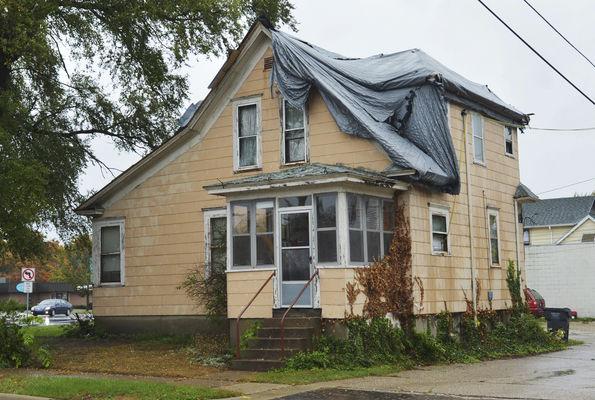
This is the latest development in the years-long effort by city officials to get Dennis Knuth, the house’s owner, to repair or remove the structure that has had a tarp over its roof since 2016.

Under the name of Bailey and Biddle, the LLC listed as the appellant, the owner sought a reversal of the Court of Appeals decision that upheld the city’s 2017 demolition order. That was preceded by concurring decisions by the Berrien County court and the city’s Property Maintenance Board of Appeals that the house was uninhabitable because of extensive mold and water damage, and should be torn down.

In February the Court of Appeals ruled that “there is no fundamental constitutional right to repair a structure that is unfit for human occupancy, and any private right to repair must yield to the city’s higher interest in protecting the safety of its citizens.”

The owner also was given a full hearing before the property maintenance board, the court pointed out.

This latest ruling puts the demolition order back into effect, Schmidt said, and the owner has 45 days, or until Nov. 14, to demolish the house. If that is not done, the city will take steps to tear down the building, she added. The cost would be added to the tax bill.

Depending on the condition of the building, some environmental procedures might need to be taken before demolition takes place, the attorney explained.

That’s unless the owner takes any additional action.

“There could be more legal hurdles depending on what approach is taken. It is possible they continue to contest the demolition order,” Schmidt said.

Schmidt said she hadn’t heard from the appellant’s attorney, so she didn’t know at this point what their plans were.

The appellants’ attorney could not be reached for comment.

City inspectors began to notice exterior defects at the property at 1051 Niles Avenue starting in 2013, including the damaged roof. The owner was given more than a year to fix the problems, but no work was done. The issue resurfaced in 2015, and the owner took out a permit to fix the roof, but again no work was done, despite repeated reminders.

“The Appellant placed a tarp over the roof, but the tarp would often come loose, revealing a hole in the roof. The hole was large enough that birds regularly flew into the home,” court documents stated.

Neighbors complained to city officials that the house is a safety hazard and an eyesore near a major intersection.

In 2017 the city inspector obtained a search warrant to enter the house. Inside he found extensive water damage, mold, debris, crumbling walls, and holes in the floor.

A demolition order was issued, and was appealed to the property maintenance board. The city inspector claimed that it would cost $122,000 to repair the house that had a market value of around $50,000, after repairs. The owner said that repairs would cost half that amount. An engineer hired by Knuth said the building was structurally sound.

The Court of Appeals found cracks in the owner’s arguments.

“Although appellant claimed that it could perform the repairs itself, the record showed that appellant had contributed to the structure’s dilapidation by failing to undertake necessary repairs despite years of notices from the city,” the court ruled. “Thus, there was sufficient evidence from which reasonable minds could determine that it was unreasonable to repair the property.”

Knuth has been cited for property code violations at other locations in St. Joseph.

<![CDATA[

]]>

source https://www.heraldpalladium.com/news/local/state-supreme-court-won-t-hear-demolition-appeal/article_9f9a7e3f-e6e3-5802-9919-2bf7c6b113a4.html

Restoration 1 Opens New Offices in Montgomery, Augusta and New Haven for Restoration Services — PRUnderground

Industry: Home & Residential

Restoration 1 in Montgomery, New Haven and Augusta provide 24-hour property restoration services in local cities for homeowners and businesses in your community.

Waco, TX (PRUnderground) October 2nd, 2019

Restoration 1 is proud to announce the addition of not one but three new property restoration offices in communities near you. The restoration giant is happy to reveal Restoration 1 of Montgomery, Restoration 1 of Augusta, and Restoration 1 of New Haven. Now, more than ever, local communities like yours need top-rated property restoration teams to deal with the storm season, the coming winter and your typical forms of property damage such as water, fire or mold growth.

Restoration 1, as a nationwide restoration company, works to open new locations regularly throughout the year. Their service is based around 24/7 restoration services for residential and commercial clients dealing with a crisis. Hurricane season is currently in full swing, and it has already brought multiple named storms, including hurricanes and tropical storms that have wreaked havoc along the eastern states. These storms lead to serious water damage and wind damage. Regardless of the type of damage you face, the three new Restoration 1 offices are available to help.

Restoration 1 of Montgomery proudly offers a broad range of property restoration services in Montgomery, Prattville, Wetumpka, Pike Road and Millbrook. Their current service offerings include fire and smoke damage, water damage, mold removal, storm damage cleanup, sewage removal and other key restoration services to help.

Restoration 1 of Augusta is focused on reversing any type of disaster to your home or business. The local office offers water damage restoration, mold removal, sewage cleanup and other key property restoration services in Augusta, Aiken, Grove Town and other neighboring cities in Georgia.

Restoration 1 of New Haven specializes in storm damage cleanup, flood damage cleanup, sewage cleanup and other forms of water damage restoration in Connecticut. The new office proudly serves West Haven, Fair Haven, Milford, Bridgeport and other key cities throughout the great state of Connecticut.

Of course, not all property damage stems from a major disaster. In the case of a plumbing leak or appliance leak, Restoration 1 offers the same high-level service at any hour. Even on weekends and holidays, Restoration 1 is committed to helping its community thrive and survive.

The Restoration 1 home office is proud to include Montgomery, Augusta and New Haven in its extensive roster of property restoration services. These new additions will allow more homeowners and businesses to recuperate after any size disaster at any time.

These three new locations proudly become part of the Restoration 1 family this year. Contact Restoration 1 of Montgomery at 334-500-4320, Restoration 1 of Augusta at 706-607-5728 and Restoration 1 of New Haven at 203-902-5834!

About Restoration 1

Founded in 2008, Restoration 1® is an award-winning franchise that specializes in a wide array of emergency mitigation, restoration, and reconstruction services. An industry innovator, the Texas-based company uses advanced technologies and tools to perform restoration for both residential and commercial properties that have been damaged due to water, smoke, fire, mold, storms and more. There are more than 120 locations throughout the U.S. with plans to expand to more than 500 locations nationwide in the next four years. For more information about Restoration 1®, visit http://www.restoration1.com.

Print Friendly, PDF & Email

source https://www.prunderground.com/restoration-1-opens-new-offices-in-montgomery-augusta-and-new-haven-for-restoration-services/00167727/

Fallout 76 helmet recalled because of mold can now be worn in Fallout 4 — GamesRadar

The Fallout 76-inspired T-51b helmet is a collectible that went on sale at GameStop in June and was later recalled due to a potential mold hazard that could pose a health risk if worn. Now, a virtual version of that helmet can be worn in Fallout 4 thanks to a mod uploaded by Nexus Mods user Herby247, and rather aptly, it’ll give you constant radiation poisoning if you wear it.

Modder Herby247 took the opportunity to parody the recalled collectible by modding the «Moldy T-51 Helmet» into Fallout 4. Herby makes special note of the polyester/cotton liner insert that supposedly can cause respiratory infection in users, and clarifies that wearing the power armor T-51b helmet in Fallout 4 will cause constant radiation damage.

A few words of note about this clever little mod. You’ll need the Fallout 4: Nuka-World DLC pack to access the mod, and the modder says mods that change rules for naming power armor items might interfere with the «moldy» adjective showing up in the title. Herby also says the T-51 helmet mod hasn’t been extensively tested and to «use at your own risk.»

The physical T-51b helmet was recalled in September due to its mold-prone fabric insert which the US Consumer Product Safety Commission says poses a «a risk of respiratory or other infections in individuals with compromised immune systems, damaged lungs or an allergy to mold.» About 20,000 units were affected and the CPSC says to return the item to GameStop for a full refund.

Here are the best Fallout 4 mods for Xbox One, PS4, and PC.

source https://www.gamesradar.com/fallout-76-helmet-recalled-because-of-mold-can-now-be-worn-in-fallout-4/

The Fallout 76 helmet recalled for mold risk has been modded into Fallout 4 — PC Gamer

(Image credit: Bethesda)

The history of Fallout 76 collectibles has had almost as bumpy a road as the game itself, beginning with the whole canvas bag fiasco, continuing with a rather unattractive (and expensive) (and widely mocked) leather jacket, and culminating most recently with a T-51 power armor helmet that had to be recalled due to a mold risk

The T-51 replica helmet, made by Chronicle and sold by Gamestop, contained a polyester/cotton blend fabric liner that posed a risk of mold exposure, which could potentially lead to a respiratory infection or other health issues.

If you weren’t one of the lucky customers who bought a moldy T-51 power armor helmet for $150, at least you can experience it virtually. Naturally, a modder has added the moldy power armor helmet to Fallout 4.

The Moldy T-51 Helmet mod adds a helmet that, when worn, will give your character constant radiation damage. Flavor text states the polyester/cotton blend fabric liner resulted in a recall of the power armor helmets during the war due to the adverse effect on the wearer’s health.

You’ll need to own the Nuka-World DLC to put the moldy helmet on your character’s head and start damaging their lungs. The moldy liner can be found under ‘Misc Mods’ in your power armor crafting menu. Enjoy.

source https://www.pcgamer.com/the-fallout-76-helmet-recalled-for-mold-risk-has-been-modded-into-fallout-4/

I.V. Community Room Closed Until End of Oct. After Mold Discovery — Daily Nexus

The Isla Vista Community Room, located at 970 Embarcadero Del Mar, will be closed until the end of October following the discovery of mold in the walls caused by air conditioner leaks found on Sept. 13.

A remediation team was hired to do a complete cleanup of the conference room, restroom and janitor closet and is currently expected to finish the cleanup by Friday, according to Grey. Leonard Paulasa / Daily Nexus

The air conditioner condensate pump failed in the I.V. Clinic Conference room resulting in water damage in the restroom, storage room, and conference room,” Skip Grey, assistant director of Santa Barbara County’s general services, said in an email.

A remediation team was hired to do a complete cleanup of the conference room, restroom and janitor closet and is currently expected to finish the cleanup by Friday, according to Grey. 

Jonathan Abboud, general manager of the Isla Vista Community Services District (I.V. CSD), gave an update regarding the room’s condition at the I.V. CSD meeting on Sept. 24. The I.V. CSD normally uses the Community Room to hold its meetings every other Tuesday, but the board meeting relocated to St. George Youth Center due to the air conditioning leaks.

According to Abboud, the two leaks — one in the heating, ventilation and air conditioning (HVAC) system and the other in the walls from water pipes — were first discovered on Sept. 13. Abboud was then told by Santa Barbara County’s general services that it would be two weeks before the leaks were fixed.

However, on Sept. 20, Abboud said he was told that the room would be closed indefinitely until a team can come in and inspect it due to mold being discovered in the walls.

“They’re fixing the HVAC leak soon, but the leak in the wall with the piping needs to wait for the hazmat to come in. There was mold in the walls because of the leaks,” Abboud said.

New cabinets, flooring, drywall and paint are required to repair the damage and Grey hopes to have the room reopened by the last week of October.

“It’s a bad situation, but I know we’re going to be working hard so the county is getting this done,” Spencer Brandt, board president of the I.V. CSD, said. “It’s a sort of an inopportune time for this to happen with the UCSB students back in session.”

Arturo Martinez Rivera is an asst. news editor at the Daily Nexus. He can be reached at arturo@dailynexus.com or news@dailynexus.com.

source http://dailynexus.com/2019-09-30/i-v-community-room-closed-until-end-of-oct-after-discovery-of-mold/

LA hospital resumes elective surgeries after mold contamination — Becker’s Hospital Review


Los Angeles County+USC Medical Center resumed elective surgeries Sept. 27 after the hospital suspended medical procedures due to mold contamination in a surgical equipment sterilization room, according to the Los Angeles Times.  

The hospital is performing an increasing amount of elective surgeries and expects to return to full capacity soon, the Los Angeles County health department said in a statement to the Los Angeles Times.

Officials had discovered a «minor, localized water leak,» and did not find mold anywhere else in the hospital, the statement said.

«This sterilization room was contained and closed for abatement, and all patients and staff remained safe,» the health department told the Los Angeles Times. «The hospital is utilizing alternate sterilizer equipment capacity, located both on campus and in its sister facilities, to maintain services for its patients.»

Physicians at the 600-bed medical center learned about the contamination Sept. 25 when the hospital’s CMO, Brad Spellberg, MD, sent an email to staff warning that elective surgeries would not resume for an estimated two weeks due to «severe water damage and mold.»

It is still unknown what type of mold was discovered or who found it.

More articles on healthcare quality:
Flu season may be severe, health officials say
43 Minnesota hospitals recognized for high employee flu shot rates
Connecticut reports first EEE death since 2013

More articles on healthcare quality:
Flu season may be severe, health officials say
43 Minnesota hospitals recognized for high employee flu shot rates
Connecticut reports first EEE death since 2013

© Copyright ASC COMMUNICATIONS 2019. Interested in LINKING to or REPRINTING this content? View our policies by clicking here.

source https://www.beckershospitalreview.com/quality/la-hospital-resumes-elective-surgeries-after-mold-contamination.html

Bell: Watch for early signs of corn ear molds — Agri News

Farmers just can’t catch a break this season. After coping with the most difficult spring planting conditions in recent memory, challenges continue as we approach late season.

Maturity of the 2019 corn crop is all over the board given staggered planting dates as farmers dodged rain and wet conditions. The few fields planted during late April and early May experienced very hot, dry conditions during pollination.

Conversely, fields planted more than a month later, during early June, benefited from cooler conditions during pollination but are well behind in maturity.

Given the variation in weather across the state, farmers are likely to observe a wider variety of ear molds this year.

Additionally, with corn earworm out in full force, there is a greater opportunity that farmers may experience an increased incidence of ear fungal diseases.

Corn earworm feeding creates easy entry points for diseases of the ear. Early signs of ear rot indicate corn harvest may be troubled with some level of molds, although it is still too early to predict the severity of damage.

Several pathogens causing ear molds usually infect the plant from pollination to 21 days after silking. The primary infection point is through the silks and into the ovule or developing kernel.

Several mold pathogens thrive in warm and wet weather conditions, while others are more common in hot, dry environments. Although infection occurs early, symptoms do not usually appear until R5, or dent.

When evaluating ear molds, it is important to understand and identify which infections have developed.

Common Ear Molds

Diplodia, gibberella and fusarium favor wet weather with heavy morning dew and humid days. Initial infection of diplodia ear rot appears at the base of the ear with a white-colored fungus.

As the disease progresses, the mold and kernels turn grayish or grayish-brown and may rot the entire ear. Although it does not cause mycotoxins, it can reduce grain test weight and can result in significant docks at the grain elevator.

Gibberella ear mold, distinguished by its pink to reddish color, begins at the top of the ear and, in highly susceptible hybrids, can affect the entire ear. Gibberella does produce mycotoxins, vomitoxin and zearalenone, so the grain must be handled separately and tested for contamination.

Fusarium, the most common of all ear molds, is distinguished by the white to light pink-colored fungus appearing on scattered kernels, especially those damaged by insects.

Fusarium infects the corn ear in patches or on single kernels. The kernels turn tan or brown, and the mold appears to be white, gray or pink in color.

One of the three species of fungi causing fusarium ear rot also produces mycotoxins. Because the symptoms for all three species are similar, a lab test is needed to identify the infecting fungus.

Less Common Ear Molds

Trichoderma and aspergillus ear molds are less commonly observed but may be found in fields this year. Trichoderma is a thick green mold that grows on and between kernels.

The species infecting this area do not produce mycotoxins but will affect grain quality. Incidence tends to be associated with damage, whether by birds, insect feeding, or mechanical injury.

Aspergillus features a gray-green powdery mold and occurs in hot, dry years. It produces a mycotoxin, known as aflatoxin, so the corn should be handled separately and tested.

Accelerate harvest if needed. There is no rescue treatment for ear molds, so it is important to identify fields with the highest levels of the disease and harvest those first.

Ear molds will continue to develop in the field even after the corn reaches physiological maturity and begins to dry down. Even after corn is harvested, molds will continue growing until the grain is dried to 13% to 15% moisture.

If weekly scouting is a challenge on your farm, work with your local Mycogen team or retailer to prioritize scouting by hybrids.

source http://www.agrinews-pubs.com/opinion/bell-watch-for-early-signs-of-corn-ear-molds/article_efa201fe-a60e-53de-8cb1-3623effe4fa2.html